Air Freight from China to Australia: Costs & When to Use It
- Air China → Sydney/Melbourne runs $3.20–6.50/kg airport-to-airport — among the cheapest major air lanes from China.
- Transit: 2–4 days airport-to-airport on direct or one-stop services; 4–7 days door-to-door.
- Chargeable weight (÷6,000 volumetric rule) decides your real price — dense cargo flies cheap, bulky cargo doesn't.
- Because sea to Australia already takes just 3–4 weeks door-to-door, air is justified mainly for urgency and consignments under ~300 kg.
- Australian biosecurity applies to air too: timber, food, seeds, and plant materials face screening — declare them upfront.
Air freight from China to Australia costs $3.20–6.50 per kilogram airport-to-airport on chargeable weight, with 2–4 days of transit to Sydney or Melbourne and 4–7 days door-to-door. Thanks to short distance and heavy passenger-cargo capacity, it is one of the most affordable major air lanes out of China — often 30–40% cheaper per kg than China–US air on comparable weights.
This guide draws on our air desk's weekly Australia bookings — e-commerce replenishment, electronics, spare parts, and samples. We cover the rate structure by weight break, the chargeable-weight math that surprises new shippers, the routings that fly, and a decision framework for when air genuinely beats sea on this lane.
How Much Does Air Freight from China to Australia Cost?
Rates are quoted per kilogram on chargeable weight and step down at standard breaks. Representative November 2026 bands to Sydney (SYD) — Melbourne and Brisbane track within ±5%:
| Weight break | PVG (Shanghai) → SYD | CAN (Guangzhou) → SYD | HKG → SYD | SZX → SYD | Transit |
|---|---|---|---|---|---|
| 45–100 kg | $5.40–6.50/kg | $5.20–6.30/kg | $5.00–6.10/kg | $5.30–6.40/kg | 3–4 days |
| 100–300 kg | $4.30–5.40/kg | $4.10–5.20/kg | $3.90–5.00/kg | $4.20–5.30/kg | 2–4 days |
| 300–500 kg | $3.70–4.70/kg | $3.50–4.50/kg | $3.40–4.40/kg | $3.60–4.60/kg | 2–3 days |
| 500–1,000 kg | $3.40–4.30/kg | $3.20–4.10/kg | $3.20–4.00/kg | $3.30–4.20/kg | 2–3 days |
| 1,000+ kg | Quote on request | Quote on request | Quote on request | Quote on request | 2–3 days |
Fixed add-ons our quotes itemize: China export declaration ($40–80), origin pickup and terminal handling ($0.20–0.45/kg, minimum ~$90), Sydney or Melbourne airport handling and clearance ($160–320 per consignment), and metro delivery ($40–90). Express courier (DHL/FedEx/UPS) covers the sub-45 kg market at $6–10/kg door-to-door in 3–5 days — for a 12 kg sample box, courier usually beats air freight's minimum charges.
How Does Chargeable Weight Work on This Lane?
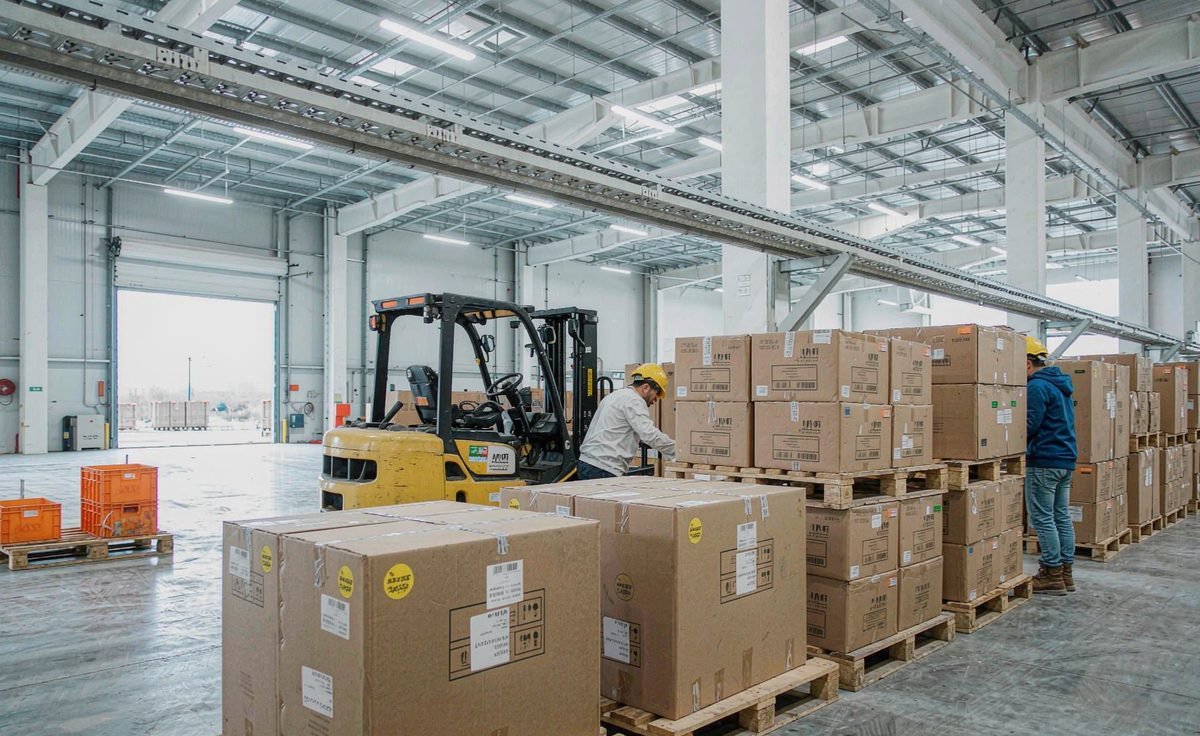
Airlines bill the greater of actual weight and volumetric weight, where volumetric = (length × width × height in cm) ÷ 6,000 per carton, summed. Worked examples from recent Australia bookings:
- Dense: 340 kg of phone cases totalling 0.5 CBM → volumetric 83 kg → billed 340 kg at the 300–500 kg break → ~$3.70/kg × 340 = $1,258.
- Bulky: 95 kg of plush toys in 1.6 CBM → volumetric 267 kg → billed 267 kg, not 95 → nearly 3× the naive cost.
Break-even density is 167 kg per CBM. Above it, air economics favor you; below it, every cubic metre is taxed at 167 kg whether it weighs 30 kg or 160 kg. Compress packaging, and compare against sea before committing bulky cargo. The full formula with more examples is in our guide to air freight volumetric weight.
Which Air Routings Serve Sydney and Melbourne?
- Direct services — China Eastern and Qantas operate passenger widebodies with belly cargo on Shanghai–Sydney, and multiple carriers connect Guangzhou, Hong Kong and Shenzhen to Sydney and Melbourne daily. Direct is the default on this lane.
- One-stop via Singapore or Auckland — used when direct space sells out before Christmas; adds 1–2 days.
- Via the Gulf (Dubai, Doha) — a fallback with good 500 kg+ capacity, adds 1–2 days.
Airport-to-airport transit is 2–4 days. Door-to-door adds pickup, export clearance, airline terminal handling, Australian import clearance and — Australia-specific — biosecurity screening of the consignment, then delivery: 4–7 days total. Australian clearance for air cargo mirrors sea: 10% GST, 0–5% duty (0% with a valid ChAFTA COO where applicable), and biosecurity rules; the mechanics are the same as we detail in our Australia customs clearance guide.
When Does Air Freight to Australia Beat Sea?
The honest answer on this lane is more nuanced than on long-haul trades, because sea to Australia is already fast (20–30 days door-to-door). Air's premium buys you roughly two to three weeks — worth paying for some cargo, not others:
Air wins when…
- Consignment is small. Under ~300 kg, sea's fixed costs (origin charges, clearance minimums, LCL destination fees of $150–250+) dominate. A 120 kg air shipment at $4.30/kg ≈ $520 all-in — often cheaper than LCL once sea's fixed fees are counted, and three weeks faster.
- Cargo is dense and high-value. Electronics, accessories, beauty devices, and components at 20+ USD/kg value pay air freight at 2–6% of value.
- It's a stockout or launch. Two extra weeks on shelves before Christmas is worth more than the freight premium on almost any fast-moving SKU.
- It's samples or pre-production. Approval cycles in days, not weeks, shorten your whole sourcing calendar.
Sea wins when…
- Cargo is bulky and plannable. Furniture, homewares, and packaging at 2+ CBM are 4–8× cheaper by sea, and sea's 3–4 week door-to-door is manageable with a rolling forecast.
- The calendar allows a 3-week cycle. The best-run Australian importers treat air as an emergency valve, not a channel — roughly 5–15% of volume.
A quick comparison method: quote both (we do this on request), add destination fixed fees to each, and divide the premium by the weeks saved — if that "insurance cost" is under 1–2% of the shipment's selling value, air is buying real optionality. For the sea side's numbers, see our complete 2027 China–Australia shipping guide and the transit time benchmarks.
What Restrictions Apply to Air Cargo Entering Australia?
Two layers apply. First, the airline side under the IATA Dangerous Goods Regulations: lithium batteries need UN38.3 documentation and carrier approval (power banks and e-mobility devices are restricted), aerosols and many liquids are limited, and powders face enhanced screening. Second, the Australian biosecurity layer, which applies to air exactly as to sea: timber items, seeds, food, and plant materials need declarations and sometimes permits, and undeclared organic material is the fastest route to inspection and destruction orders. Tell us what the cargo actually is at quote stage — 90% of air freight problems on this lane are avoidable declarations, not physical restrictions.
Mini-Case: 190 kg of E-Bike Controllers, Sea Quote vs Air Reality
A Brisbane e-mobility retailer faced a stockout on e-bike controllers in September 2026. The LCL sea alternative: 0.9 CBM / 190 kg at $85 per CBM ocean plus a $280 destination package — about $1,050 all-in, landing in 24 days, after which onshore sales for the quarter were at risk. Air via Hong Kong: 190 kg at the 100–300 kg break (dense cargo, billed actual) at $3.95/kg plus $260 fixed = roughly $1,010 all-in, delivered in 5 days. Air was cheaper and 19 days faster — the exception that proves the rule: on short lanes with dense cargo and small consignments, check air before assuming sea wins.
How Do You Prepare a Shipment So It Flies Without Delays?
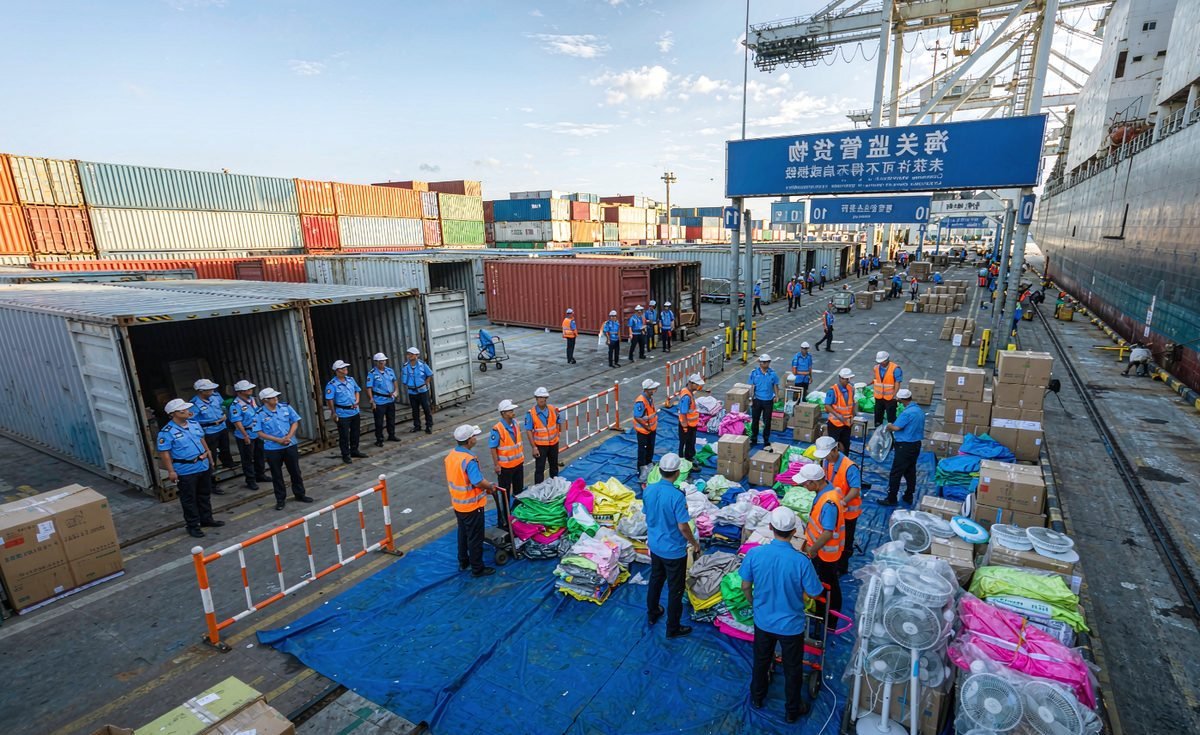
Air freight punishes preparation gaps faster than any ocean product — a missed flight is a missed day, not a missed week, but the fees compound either way. Pre-flight checklist we run with clients:
- Carton-level data at quote stage. Dimensions and weight per carton, not a vague total. The chargeable weight — your actual price — is computed line by line, and a single oversized carton can move the whole shipment into a worse break.
- Accurate goods description and value. The export declaration and the Australian entry both derive from the invoice; descriptions like "parts" or "gifts" trigger security screening holds and customs queries on both ends.
- Battery and DG status declared upfront. Anything with a lithium battery — even a device with a small built-in cell — needs UN38.3 documentation and carrier acceptance. Declared at booking, it adds days; discovered at the terminal, it adds days and fees.
- Biosecurity-sensitive goods flagged. Timber items, seeds, food, and plant materials need declarations and sometimes permits for Australia. Undeclared organic material is the classic air cargo destruction order.
- Consignee details finalized before uplift. The Australian broker needs the entity name, ABN (where applicable), and delivery address before the aircraft departs — cargo that lands into prepared paperwork clears in a day.
Timing also matters within the week. Chinese airports are busiest Thursday to Saturday as factories push pre-weekend cargo; Tuesday and Wednesday departures face measurably less screening congestion and space competition, and Gulf-hub fallbacks are easier to secure midweek. For urgent consignments we quote the flight, not just the rate — a Tuesday uplift versus a Saturday uplift is sometimes the difference between 3 and 6 days door-to-door.
What Does the Full Door-to-Door Air Process Look Like?
For planning, here is the end-to-end sequence for a typical 200 kg consignment from Shenzhen to Melbourne:
- Day 0: supplier cartons collected; cargo arrives at our air export facility; weighed, measured, and photographed per carton; chargeable weight fixed and rate confirmed.
- Day 1: export customs declaration lodges and clears electronically; security screening completed; cargo built onto the airline pallet.
- Day 2: uplift on the direct or one-stop service; meanwhile the Australian broker pre-lodges the import declaration with duty and GST assessed.
- Day 3–4: arrival at Melbourne; airline terminal breakdown; consignee notified; biosecurity screening on the declaration data.
- Day 4–5: customs release for clean entries; airport-to-door delivery, typically same or next day within metro Melbourne.
Total: 4–6 days door-to-door with clean paperwork — against 20–27 days by sea. The control points that protect that timeline are all at the front: carton data on day −2, documents on day 0, DG and biosecurity status resolved before booking. Cargo that enters the pipeline prepared moves at pipeline speed; cargo that enters with questions loses a day at every checkpoint.
Frequently Asked Questions
How much does air freight from China to Australia cost?
Airport-to-airport rates from Shanghai (PVG), Guangzhou (CAN), Shenzhen (SZX) or Hong Kong (HKG) to Sydney or Melbourne typically run $3.20 to $6.50 per kilogram on chargeable weight, with all-in door-to-door quotes around $4.50–8.00 per kg including pickup, clearance and delivery. It is one of the cheapest major air lanes out of China.
How long does air freight from China to Australia take?
Airport-to-airport transit is 2–4 days on direct or one-stop services to Sydney, Melbourne or Brisbane. Door-to-door, including pickup, export clearance, airline handling, Australian clearance and biosecurity screening plus delivery, plan on 4–7 days total.
How is chargeable weight calculated on the China–Australia air lane?
Carriers bill the higher of actual gross weight and volumetric weight, calculated as length × width × height in centimetres divided by 6,000. Cargo denser than 167 kg per CBM bills on actual weight; lighter, bulkier cargo bills on volume — and packaging compression directly cuts your cost.
When is air freight to Australia worth it instead of sea freight?
Air is worth it for shipments under about 300 kg that are urgent, dense, or high-value: samples, spare parts, electronics, and stockout recovery. Because China–Australia sea transit is already short (3–4 weeks door-to-door), air's premium is justified mainly by urgency and small consignment economics, not by distance.
- China to Australia Customs Clearance: Documents, Duties & Process
- Shipping from China to Australia: The Complete 2027 Guide
- China to Australia Transit Times: Ports, Schedules & Delays
- Air Freight from China to Malaysia: Costs & When to Use It
- Air Freight from China to Ghana: Costs & When to Use It
- Air Freight from China to Belgium: Costs & When to Use It
Get Today's Rate & Lock Your Discount
Waymore Shipping offers FCL & LCL ocean freight from every major port in China — Shanghai, Ningbo, Shenzhen, Guangzhou, Qingdao, Xiamen, Tianjin and more. Rates updated weekly with carrier discounts.