Air Freight from China to Saudi Arabia: Costs & When to Use It
- Indicative November 2026 rates: $3.40–$4.60/kg all-in to Riyadh (RUH) or Jeddah (JED) on 100 kg+ shipments.
- Door-to-door transit 5–7 days vs roughly a month by sea to Jeddah or Dammam.
- Chargeable weight = greater of actual vs volumetric (cm³ ÷ 6,000) — packaging drives the bill.
- Air makes sense above ~$15–20/kg cargo value, for samples, urgent restocks and pre-Ramadan deadlines.
- Saber certificates apply to air cargo too — build conformity into the lead time, not after landing.
Air freight from China to Saudi Arabia costs about $3.40–$4.60 per kg all-in on typical 100 kg+ shipments in November 2026, with door-to-door transit of 5–7 days into Riyadh (RUH) or Jeddah (JED). It's the right tool for high-value, urgent or deadline-critical cargo — and an expensive habit for anything dense and low-value that should sail instead.
Waymore's air desk loads Saudi-bound freight every week from Shanghai Pudong, Shenzhen, Guangzhou and Hong Kong — spare parts for Eastern Province factories, electronics for Riyadh distributors, and seasonal retail flying in ahead of Ramadan. Here's what the service actually costs and how we help clients decide between flying and sailing.

How Much Does Air Freight from China to Saudi Arabia Cost per Kg?
Rates below are indicative all-in airport-to-airport rates from our November 2026 quotations — per kilo on chargeable weight, including the standard airline fuel and security surcharges on Gulf routings:
| Origin → Destination | Rate (100 kg+) | Min. charge (<45 kg) | Airport-to-airport transit |
|---|---|---|---|
| Shanghai (PVG) → Riyadh (RUH) | $3.90–$4.60/kg | $200–$250 | 1–2 days (via DXB/DOH) |
| Shenzhen (SZX) → Riyadh (RUH) | $3.60–$4.40/kg | $190–$240 | 2–3 days |
| Guangzhou (CAN) → Jeddah (JED) | $3.50–$4.30/kg | $180–$230 | 2–3 days |
| Shanghai (PVG) → Jeddah (JED) | $3.40–$4.20/kg | $180–$230 | 1–2 days |
| Hong Kong (HKG) → Riyadh (RUH) | $3.70–$4.50/kg | $200–$250 | 1–2 days |
Fixed add-ons: AWB and handling $30–$50 per shipment, export customs declaration in China (included with Waymore bookings), and optional insurance at ~0.2–0.3% of value. Door pickup in the Pearl River Delta or Yangtze Delta adds $0.15–$0.40/kg. Saudia Cargo, Emirates SkyCargo, Qatar Airways Cargo and Etihad Cargo carry most of the Gulf-bound tonnage, alongside China Southern belly space — capacity swings with the Hajj and Umrah passenger calendar, since widebody belly space follows those pilgrimage rotations. Air rate direction across the market is published weekly by indexes like the Freightos Baltic Index.
How Is Chargeable Weight Calculated for Air Cargo?
Airlines bill on the greater of actual and volumetric weight — volumetric = length × width × height (cm) ÷ 6,000 per piece. Two quick examples from real bookings:
- A 180 kg pallet of phone accessories measuring 120×100×80 cm → volumetric 160 kg → billed on actual 180 kg. Dense cargo flies efficiently.
- A 95 kg carton stack of LED panel lights at 110×90×70 cm → volumetric 115.5 kg → billed on 116 kg, a 22% premium purely from packaging.
We re-verify dims at our warehouse before tendering, because airline re-weigh discrepancies generate surprise invoices and re-documentation delays at the terminal.
When Does Air Freight Beat Sea Freight to Saudi Arabia?
Sea freight to Jeddah runs 22–30 days port-to-port (benchmarks in our China–Saudi Arabia transit time guide), and even with the volatility tracked by Drewry's World Container Index, ocean still moves a kilogram for a tenth of the air rate. The decision framework we run with clients:
| Situation | Recommended mode | Why |
|---|---|---|
| Cargo value > $15–20/kg | Air | Freight is a small share of landed cost; speed compounds value |
| Stockout on a fast-selling SKU | Air | 3–4 weeks of lost margin usually exceeds the air premium |
| Buyer approval samples | Air (courier-consol) | 5-day turnaround keeps product development moving |
| Spare parts for down equipment | Air (next flight out) | Downtime costs dwarf freight on this lane |
| Pre-Ramadan retail top-up | Air for 30–60% of units | Protects the season; balance follows by sea |
| Dense goods < $10/kg value | Sea | Air premium can't be recovered in the selling price |
Regulatory context: everything loaded must comply with IATA's Dangerous Goods Regulations — lithium batteries in particular require state-of-change packing declarations, and Saudi Arabia applies its own battery import rules on top. Our DG-certified team screens every battery shipment before tender.
What Are the Steps, Documents and Clearance Notes?
- Pickup and consolidation at our Shanghai or Shenzhen warehouse (1 day).
- Export declaration through China Customs against the commercial invoice (0.5–1 day).
- Uplift direct or via a Gulf hub — DXB, DOH and AUH feed both RUH and JED multiple times daily.
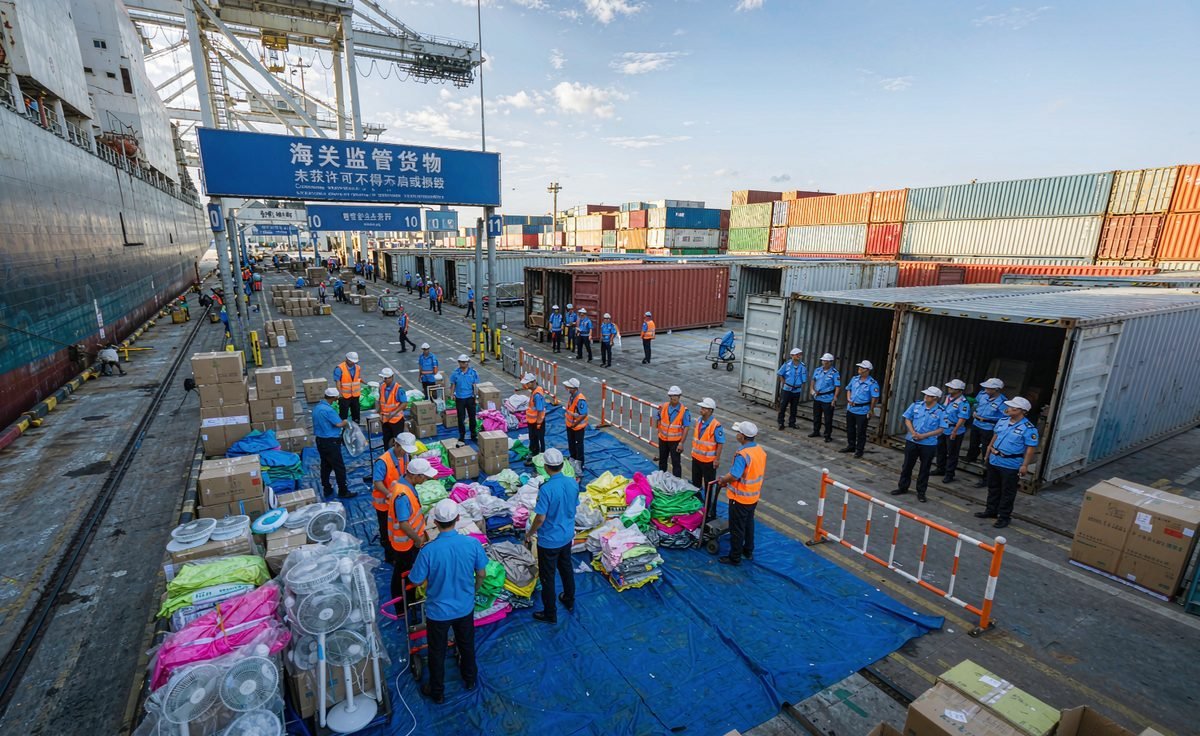
- Saudi import clearance through FASAH at the gateway airport; conforming shipments with valid Saber certificates typically release in 1–2 working days.
- Delivery to Riyadh, Jeddah or Dammam consignees (same-day to next-day trucking).
Documents: commercial invoice, packing list, air waybill, certificate of origin — plus the Saber Shipment Certificate of Conformity for most goods and SFDA registration for food supplements, cosmetics and medical devices. Air cargo follows the same conformity regime as sea; the difference is only speed, which makes pre-arrival document readiness even more important. Full document detail lives in our Saudi customs clearance guide, and if you want duties and the 15% VAT handled invisibly, see our DDP shipping guide for Saudi Arabia.
Mini-case: keeping a Dammam line running
In October 2026, a plastics manufacturer in Jubail had a blown servo drive stopping one of two production lines — lost output ≈ $9,000/day. The replacement unit (220 kg, Shanghai) flew PVG → RUH via Doha at $4.15/kg all-in plus $60 trucking to Jubail; door-to-door in 4.5 days, total freight ≈ $1,090. Nine hours of daily downtime avoided paid for the freight before the part was even installed. We now hold their spare-parts air profile on file for one-click next-flight-out bookings.
How Can You Cut Your China–Saudi Air Freight Cost?
- Hit the breakpoints. Rates step down at 100/300/500/1,000 kg — consolidate POs to reach the next tier; a 480 kg booking at the 300 kg rate often prices below two 240 kg splits.
- Fix volumetrics first. Nest, compress, repack — the LED example above shows a 22% bill reduction from packaging alone.
- Consider hybrid splits. Fly the revenue-critical 20–40%, sail the rest; we run this structure weekly for Riyadh retailers before Ramadan.
- Book the week, not the day. Space confirmed 5–7 days ahead consistently undercuts same-day uplift; current deals are on the weekly rate discounts page.
For the full lane picture — sea rates, ports and the 2027 calendar — start with the complete 2027 China–Saudi Arabia shipping guide, then price your actual shipment at the free quote form.
Air Freight vs Express Courier: Which for Small Saudi-Bound Parcels?
Below roughly 45–50 kg, express integrators (DHL, FedEx, UPS) often beat general air freight on door-to-door speed and simplicity — typically 3–5 days with customs brokerage bundled, at $6–$10 per kg for the Saudi lane. General air freight wins from about 100 kg upward, where the per-kilo rate drops to the $3.50–$4.60 band shown above. Between those bands, compare case by case: a 60 kg consignment of samples may price similarly either way, but express provides single-carrier tracking and simpler liability, while consolidated air freight gives better control of packing and dims. Our desk quotes both for any shipment under 150 kg so clients see the real crossover on their own cargo.
What Service Levels Exist — Airport-to-Airport vs Door-to-Door?
- Airport-to-airport (A2A): the rate tables above. You or your broker handle pickup in China and clearance/delivery in Saudi Arabia. Cheapest, most hands-on.
- Door-to-airport: Waymore picks up ex-factory and delivers to the departure terminal; your Saudi consignee handles arrival. Common for importers with local brokers.
- Door-to-door: full journey managed, including RUH/JED clearance and delivery to Riyadh, Jeddah or Dammam addresses. Adds $0.30–$0.60/kg in China plus destination handling; the default for most of our clients.
- Next-flight-out (NFO): emergency service for AOG-style spare parts; same-day tender, premium pricing, booked case by case.
The service-level choice affects transit as much as the flight itself — a 1-day flight inside a mishandled ground process is still a 6-day shipment. Our door-to-door product owns both ground legs, which is why our quoted timelines hold.
How Does Insurance and Claims Work on Air Cargo?
As noted above, airline liability defaults to ~22 SDR per kilogram under the Montreal Convention. For the electronics and high-value goods that dominate this lane, that's inadequate: a 200 kg consignment of smartphones worth $80,000 has a default claim ceiling of roughly $6,000. All-risk air cargo insurance at 0.2–0.3% of declared value covers the full warehouse-to-warehouse journey. Claims need the AWB, a damage/loss report issued at the destination terminal, the commercial invoice and the insurance certificate — our team files on the client's behalf and, in a typical year, resolves the handful of claims we see within three to five weeks.
When Are the Peak and Quiet Windows on China–Saudi Air?
Air pricing on this corridor breathes with two calendars. The Gulf calendar pushes demand 6–8 weeks before Ramadan, when Riyadh and Jeddah retailers top up inventory that sea freight can no longer reach in time — expect 10–20% premiums and book two weeks ahead. The Chinese calendar adds pressure before Chinese New Year (mid-February 2027), when factories rush shipments before closing; the two post-CNY weeks are usually the softest air pricing of the year. Pilgrimage seasons shift widebody capacity toward Jeddah and Madinah, which can help — more belly space — or hurt, depending on how Umrah/Hajj rotations reallocate. The practical rule: quote early, ship early, and treat the last ten days before either holiday as premium territory.
Frequently Asked Questions
How much does air freight from China to Saudi Arabia cost per kg?
Indicative November 2026 all-in rates run about $3.60–$4.60 per kg from Shanghai or Shenzhen to Riyadh (RUH) and $3.40–$4.40 to Jeddah (JED) on 100 kg+ chargeable weight, plus a $30–$50 air waybill and handling fee. Shipments under 45 kg pay minimum charges that push the effective rate 20–40% higher.
How long does air freight from China to Saudi Arabia take?
Airport-to-airport transit from Shanghai Pudong, Shenzhen or Guangzhou to Riyadh or Jeddah is 1–3 days depending on whether the flight is direct or via a Gulf hub such as Dubai or Doha. Door-to-door, including China export clearance and Saudi import clearance, plan on 5–7 days versus roughly a month by sea.
What documents are needed for air cargo into Saudi Arabia?
The baseline is a commercial invoice, packing list, air waybill and certificate of origin. Most goods also require a Saber Shipment Certificate of Conformity, and SFDA-regulated items (food supplements, cosmetics, medical devices) need prior SFDA registration. Saudi customs clears air shipments through the same FASAH system used for ocean freight.
When is air freight worth it for Saudi-bound cargo?
Air pays when cargo is high-value relative to weight (roughly above $15–20 per kg), when a stockout would cost more than the freight premium, for samples and pre-production units, and when pre-Ramadan deadlines leave no sea-freight buffer. For dense, low-value goods, sea freight to Jeddah or Dammam remains dramatically cheaper.
- Shipping Fitness Equipment from China to Saudi Arabia: Requirements, Costs & Tips
- Shipping Plastic Products from China to Saudi Arabia: Requirements, Costs & Tips
- Shipping Textiles & Apparel from China to Saudi Arabia: Requirements, Costs & Tips
- Air Freight from China to Pakistan: Costs & When to Use It
- Air Freight from China to Poland: Costs & When to Use It
- Air Freight from China to Germany: Costs & When to Use It
Get Today's Rate & Lock Your Discount
Waymore Shipping offers FCL & LCL ocean freight from every major port in China — Shanghai, Ningbo, Shenzhen, Guangzhou, Qingdao, Xiamen, Tianjin and more. Rates updated weekly with carrier discounts.