Amazon FBA Shipping from China: The Complete Playbook
- FBA shipping from China always needs import clearance handled by you or your forwarder — Amazon never acts as importer of record.
- Sea LCL costs roughly $90–$150 per CBM to US FBA warehouses; air freight runs $4.50–$6.50 per kg. Sea wins above ~150–200 kg.
- Labeling failures (missing FNSKU, bad box labels) and missed delivery appointments are the top causes of rejected FBA loads.
- Book FBA shipments DDP so duties, taxes and trucking to the fulfillment center are one transparent all-in price.
- Plan stock arrivals at least 35 days before your projected sell-out date if shipping by sea.
Amazon FBA shipping from China means moving your goods from a Chinese factory to an Amazon fulfillment center — cleared through export and import customs — before Amazon puts them on the shelf. For most sellers the cost-effective formula is simple: sea freight (FCL or LCL) for baseline stock, air freight for urgent restocks, always shipped DDP so duties and final trucking are included.
This playbook is written by our operations team, which dispatches FBA-bound consignments from Shenzhen, Ningbo and Shanghai every week. It covers real 2026 costs, the sea-vs-air decision, Amazon's labeling and carton rules, and a step-by-step workflow you can copy for your next replenishment.
What Happens Between Your Factory and the FBA Warehouse?
Unlike a standard port-to-port shipment, an FBA first leg is a door-to-door move with a very demanding final receiver. Here is the chain, step by step:
- Factory pickup and export packing. Goods are collected from your supplier, checked against the packing list, and palletized or carton-stacked to FBA standards.
- Export customs clearance in China. Your forwarder files the export declaration using the supplier's documents. Correct HS codes and declared values here prevent problems later.
- Ocean or air main leg. FCL for full containers, LCL consolidation for smaller volumes, or air freight when speed matters.
- Import clearance at destination. Someone must act as importer of record with a customs bond. US Customs and Border Protection requires a formal entry for commercial shipments, and Amazon explicitly refuses this role.
- Delivery with an FBA appointment. The trucking carrier books a delivery window in Amazon's system, arrives inside it, and the FC checks cartons against your shipment ID.
Because Amazon is such a rigid receiver — fixed appointment windows, strict carton rules, no patience for paperwork errors — the weakest link is almost never the ocean leg. It is the last 48 hours before check-in.
How Much Does Amazon FBA Shipping from China Cost?
Rates move with the market — track indexes like the Drewry World Container Index for the direction — but these are realistic 2026 door-to-FC benchmarks for US West Coast destinations:
| Route | Best for | Typical cost (2026) | Door-to-FC transit |
|---|---|---|---|
| Express courier (DHL/FedEx/UPS) | Samples, urgent top-ups under 100 kg | $6.50–$9.50 per kg | 5–8 days |
| Air freight (DDP) | Urgent restocks, 100–500 kg, high value density | $4.50–$6.50 per kg | 8–12 days |
| Sea LCL, DDP | Replenishment under ~13 CBM | $90–$150 per CBM | 30–40 days |
| FCL 40HC, DDP | Bulk stock, 55+ CBM or heavy cargo | $2,800–$4,500 per container | 28–35 days |
Three factors swing these numbers more than anything else:
- Chargeable weight. Air and express charge on volumetric weight (length × width × height in cm ÷ 6000 for express). Light, bulky goods like pillows can cost double what the scale suggests.
- Season. Q3 peak season and pre-Chinese New Year push rates up sharply. Booking in shoulder months saves real money.
- Incoterm with your supplier. If you buy EXW or FOB, the first-leg cost is yours to manage — which is exactly why a transparent DDP quote from your forwarder is easier to budget than a supplier-arranged shipment.
Sea or Air for Your FBA Restock?
Ask one question: what does a stockout cost me per day? Air freight typically costs 15–25 times more per kg than sea, but it saves roughly three weeks of transit. If your best seller is about to run dry and each day of lost sales exceeds the air premium divided by remaining days, air pays for itself.
Our rule of thumb for FBA clients:
- Under 150 kg and urgent: air or express courier.
- Over 150–200 kg and more than 5 weeks of cover left: sea, always.
- In between: split the shipment — a small air batch to bridge the gap, the main volume by sea LCL.
The full trade-offs — dimensional weight, reliability, cost per kg by route — are broken down in our air freight vs sea freight comparison.
A quick worked example makes the point. Say your product weighs 300 kg per 1 CBM batch, sells 20 units a day, and you have 18 days of stock left. Air at $5.50/kg costs about $1,650 and lands in 10 days; sea LCL at $120/CBM costs about $120 plus fees and lands in 35 days — after your stockout. The air premium of roughly $1,500 buys 25 days of avoided stockouts, which at your sales rate is the obvious call. Now rerun the same numbers with 60 days of stock left and the answer flips completely: sea, every time. This is why we ask for your daily sales velocity on every FBA quote — the mode decision is math, not habit.
Which FBA Rules Sink First-Time Shippers?
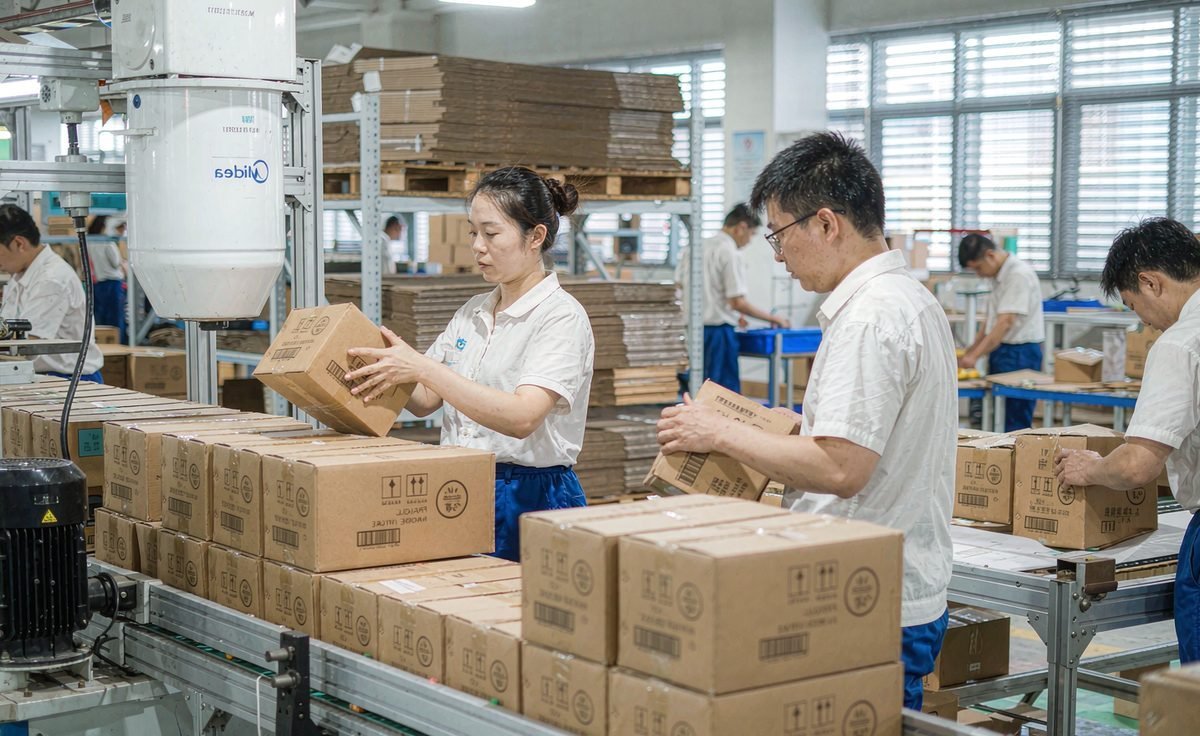
Amazon's receiving requirements are public, detailed and unforgiving. These three areas cause most rejected loads we see:
Labeling: FNSKU and box ID
Every sellable unit needs a scannable FNSKU barcode that covers any manufacturer barcode. Cartons need the FBA box ID label on a flat surface, away from seams and corners. Use thermal or laser printing — inkjet labels smudge in container humidity and fail FC scanners. We routinely relabel mislabeled cartons at our Shenzhen warehouse before uplift; it costs a dollar a carton and saves a week of FC rejection.
Carton and pallet requirements
Keep individual boxes under 50 lb (22.5 kg) unless a single unit is heavier, and mark any box over 50 lb clearly on top. Boxes must pass a drop test, contain only one destination SKU set per shipment plan, and never mix FBA and non-FBA stock. For LCL and FCL to US FCs, ship on standard 48×40-inch pallets, stretch-wrapped, with labels visible on two sides.
Appointments and delivery windows
FCs do not accept drive-in deliveries. Your trucker must have a confirmed appointment, and missing it can mean rescheduling days later — during which your container accrues demurrage and detention. Our guide to demurrage and detention fees explains how those charges snowball and how free time works. A forwarder that manages FBA appointments daily simply doesn't miss them.
What Is the Waymore FBA Playbook, Step by Step?
- Quote and plan backwards. Send us your destination FC, ready date and CBM/weight. We quote DDP all-in and set a ship date at least 35 days before your projected sell-out (sea) or 12 days (air).
- Collect from supplier. Pickup from any factory cluster — Shenzhen, Dongguan, Yiwu, Ningbo — with carton count and weight verified at our warehouse.
- Pre-flight the labels. We cross-check FNSKUs and box IDs against your shipment plan and relabel anything non-compliant.
- Export clearance. Handled by our licensed China team with correct HS codes and values.
- Main leg with tracking. Weekly sailings from every major Chinese port; milestone updates from pickup to FC check-in.
- Import clearance and duties. Under DDP we clear customs, pay duties and taxes, and absorb the paperwork — see our DDP shipping from China guide for exactly what's included.
- Appointment and delivery. Trucker books the FC window, delivers inside it, and you get the POD the same day.
A recent example: a US kitchen-goods seller shipped 9 CBM of LCL to a Phoenix FC. Their previous forwarder missed two appointments and burned 11 days in a container yard. On the Waymore routing, the appointment was booked before the vessel berthed, delivery happened on day 33 after pickup, and total landed cost came in 18% below their previous all-in rate — mostly by eliminating storage fees and re-delivery charges.
What Mistakes Do First-Time FBA Shippers Make?
Beyond labeling and appointments, these are the recurring failures our teams intercept — usually before they reach Amazon, occasionally after:
- Shipping before the shipment plan exists. Cartons created in Seller Central after cargo is already packed means labels don't match the physical boxes. Always finalize the plan first, then label.
- Letting the supplier choose the freight mode. Factories default to whatever courier account they hold, which is rarely the cheapest or the fastest option for your margin. Own the first leg yourself, or via your forwarder.
- Ignoring chargeable weight. A 4 CBM shipment of lampshades weighs 60 kg but bills as 4 CBM by sea and roughly 667 kg volumetric by air. Get both numbers before choosing a mode.
- No buffer in the arrival date. Planing stock to land the week of sell-out leaves zero room for customs exams, port queues or Amazon receiving backlogs.
- Mixed SKU cartons without a plan. Amazon expects case packs matching your plan; mixed cartons slow FC check-in and can trigger receiving delays measured in weeks.
None of these are difficult to avoid — they just require someone to own the process end to end. That ownership, from factory floor to FC appointment, is precisely the job of a forwarder that ships to FBA warehouses daily.
Frequently Asked Questions
How much does it cost to ship to Amazon FBA from China?
As a 2026 benchmark for US-bound FBA shipments: express courier runs roughly $6.50–$9.50 per kg, air freight $4.50–$6.50 per kg, LCL sea freight $90–$150 per CBM, and a 40HC FCL container $2,800–$4,500 door-to-FC. Final cost depends on destination port, season, chargeable weight and whether duties are included (DDP vs FOB).
Is sea freight or air freight better for Amazon FBA restocks?
Use sea freight for your baseline inventory and air freight only for urgent restocks. Sea LCL typically costs 15–25 times less per kg than air, so for any shipment above roughly 150–200 kg sea wins on cost. Air saves 20–30 days of transit, which is worth paying for only when a stockout would cost you more than the freight premium.
Do I need DDP shipping for Amazon FBA?
Amazon will not act as importer of record and will not clear your cargo through customs, so your first-leg shipment must be shipped DDP (Delivered Duty Paid) or with your own US import bond and broker. Under DDP, the forwarder handles export clearance, import clearance, duties and final delivery to the fulfillment center, so you have no surprise charges.
What labeling does Amazon FBA require from China shipments?
Every sellable unit needs a scannable FNSKU barcode covering any other barcode, cartons need a FBA box ID label on a flat surface away from seams, and master cartons should show "Fulfilled by Amazon" plus your shipment reference. Labels must be printed with thermal or laser printers, not inkjet, so they survive humidity inside a container.
How long does FBA shipping from China take?
Door-to-FC times from China to US warehouses: express courier 5–8 days, air freight 8–12 days, LCL sea freight 30–40 days via Los Angeles or Long Beach, and FCL 28–35 days. Add 3–7 days for Amazon receiving and check-in, which slows down during Q4 peak season.
What happens if Amazon rejects my FBA delivery?
Rejected deliveries are usually caused by missing appointments, wrong labels or cartons that fail Amazon's prep rules. The truck is turned away and storage and redelivery fees start piling up. A forwarder experienced in FBA schedules the appointment in advance, checks carton compliance before dispatch, and can reroute to a local warehouse for relabeling within a day.
- Amazon FBA US: Full Shipping Playbook from China
- Amazon FBA EU: Pan-EU Shipping from China Explained
- Amazon FBA UK: Shipping from China Post-Brexit
- FBA Carton Requirements: China to Amazon Warehouses Checklist
- Shipping from Yiwu Wholesale Market: A Step-by-Step Playbook
- Peak Season 2028 Playbook: Booking Windows That Save Money
Get Today's Rate & Lock Your Discount
Waymore Shipping offers FCL & LCL ocean freight from every major port in China — Shanghai, Ningbo, Shenzhen, Guangzhou, Qingdao, Xiamen, Tianjin and more. Rates updated weekly with carrier discounts.