Case Study: How a Home Appliance Brand Succeeded by DDP vs FOB Total Cost Comparison
- FOB stopped looking cheap once the brand added destination charges: USD 690 per container in fees the FOB quote never mentioned.
- True DDP-vs-FOB difference was only USD 120–180 per container — mostly the forwarder's risk premium, not freight economics.
- The brand split its lanes: DDP for its UK direct-to-warehouse flow, FOB where it reclaimed import VAT itself.
- VAT reclaim structure — not the freight rate — was the largest hidden variable in the whole comparison.
- Fixed per-unit landed cost under DDP made retail pricing stable through a volatile rate year.
FOB is cheaper than DDP only until you price the destination side — and when this home appliance brand finally did, the true gap was USD 120–180 per container, not the USD 700+ their FOB quotes implied. This freight case study home appliance brand teams can copy shows the full landed-cost model line by line, why VAT structure mattered more than freight, and how the company ended up splitting its lanes between the two Incoterms instead of "choosing a winner."
The client is a UK-based small kitchen appliance brand — kettles, air fryers, blenders — importing ~40 40HC containers a year from Ningbo and Zhongshan to Felixstowe and a Midlands DC. They had always bought FOB Shanghai/Ningbo, on the theory that controlling their own freight kept them lean. Their controller, chasing why gross margin forecasts kept missing, asked us to build the comparison properly.
What did the FOB baseline actually cost?
The FOB quote covered goods on board at the Chinese port — typically USD 2,350 per 40HC on their lane that year, in line with the Asia–Europe swings tracked on the Drewry World Container Index. Everything after the ship's rail arrived as separate invoices, mostly from a UK destination agent the factories' forwarder chose:
| Charge | Average | Notes |
|---|---|---|
| Ocean freight (FOB basis) | USD 2,350 | The number everyone compares |
| Destination THC + documentation | USD 385 | Fixed per box |
| Customs entry + duty payment handling | USD 145 | Per entry |
| Import duty (2.5–4.7% by appliance type) | USD 160–310 | On ~USD 68,000 goods value |
| Drayage Felixstowe → Midlands DC | USD 420 | Varies with fuel |
| Destination agent "admin" charges | USD 90–180 | The unpredictable line |
| Destination subtotal | ≈ USD 1,290 | Invisible in FOB quotes |
Two structural problems emerged. First, cost volatility: the destination agent's admin charges and fuel-linked drayage moved quarterly, so the controller's per-unit landed cost was a moving target — retail pricing was being set against last quarter's numbers. Second, accountability gaps: when a container sat at Felixstowe over a weekend because an entry document was incomplete, nobody owned the demurrage line; it landed, of course, on the buyer. A third issue surfaced once we counted: the destination agent's invoices arrived 30–45 days after delivery with consolidated lines the finance team could not map to individual containers, so gross-margin reporting by product line ran on estimates rather than actuals. For a brand selling three price tiers of appliances, that estimating error alone was masking which products were actually profitable — a management problem wearing a freight costume, and the one that finally convinced the board to take the Incoterms review seriously.

How did the DDP comparison change the picture?
We quoted the identical lane, volume, and schedules on DDP terms: one all-in price per container covering ocean freight, both THC legs, UK clearance, duty payment, and delivery to the DC door. The DDP number came in at USD 3,640 per 40HC fixed for the quarter. Against the FOB all-in average of roughly USD 3,490, the difference was USD 150 per container — about 4%. We explain the mechanics behind that premium in our primer on DDP shipping from China and walk through the term definitions in Incoterms 2020 explained.
Then the model got honest about the two items most comparisons skip. The first was VAT. Under their FOB setup the brand was importer of record and reclaimed UK import VAT each quarter — a cash-flow timing benefit worth real money annually. Under the quoted DDP structure the forwarder's UK entity acted as importer, and reclaim became complicated. We restructured the DDP so the brand stayed importer of record with the forwarder handling clearance as agent — preserving reclaim. This single line changed the ranking more than any freight number; our guide to freight collect vs prepaid touches the same who-pays-when logic.
The second was risk transfer. DDP moved delay accountability to the forwarder, whose incentives aligned with clean documentation — the same discipline documented in our demurrage and clearance case studies. As FIATA guidance on Incoterms usage stresses, the term only works as well as the parties actually performing it, and UK customs administration lives under HMRC's import rules, which the DDP provider must navigate daily.
What happened when rates spiked mid-year — the stress test
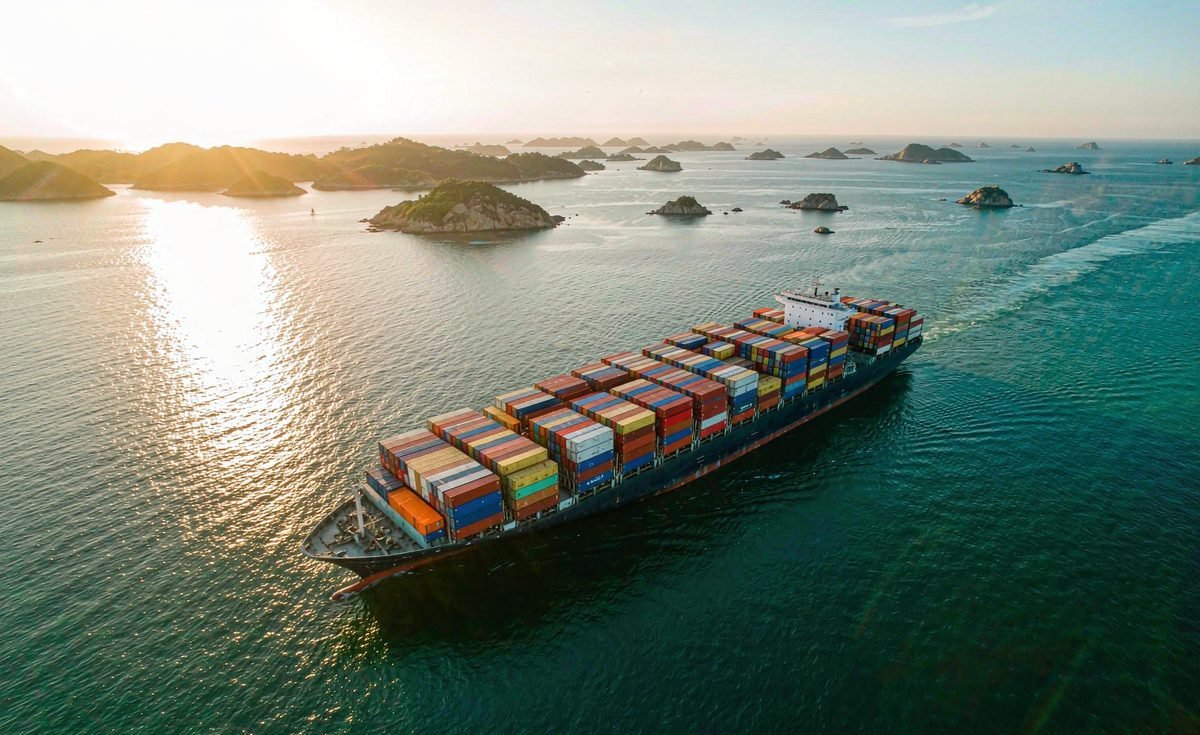
The model's first real test arrived when base rates on Asia–North Europe jumped several hundred dollars per container in a matter of weeks, the kind of swing visible on the Freightos Baltic Index. On FOB lanes the brand faced the spike directly: spot quotes repriced, and their per-unit landed cost jumped mid-quarter, forcing an awkward conversation with a wholesale customer about a promo price already agreed. On the DDP lanes, the fixed quarterly price absorbed the spike — the forwarder carried the timing risk, which is precisely what the USD 150 premium had bought.
The follow-up quarter reversed the picture: rates softened, and the DDP price locked before the fall now sat above the spot market. The brand's takeaway was not "DDP wins" or "FOB wins" but a structural one — DDP converts freight risk into a fixed cost; FOB keeps the risk with you. Which is better depends entirely on whether your business can absorb volatility better than a forwarder can price it. Their controller now thinks about it exactly like the choice we lay out in fixed vs floating freight rates: the premium is an insurance price, and insurance is worth buying on the lanes where volatility hurts most. Reading the rate cycle helps time the lock — our walkthrough of the SCFI and CCFI rate indexes shows how to spot the turning points without becoming an analyst.
There is also a supplier-relations dimension worth recording. Under FOB, the Chinese factories' forwarders chose the ocean carriers and the UK destination agent — which meant the brand had no contractual relationship with either, and no leverage when service slipped. Renegotiating to a named DDP provider (and on remaining FOB lanes, insisting on nominating the destination agent) shifted that leverage. The brands' factories initially resisted — nominated forwarders can reduce the rebates factories earn from their forwarders — but accepted once order volumes were tied to the arrangement. This is a quieter benefit of the exercise than the cost lines, and in practice the one the client cites first.
What were the measurable results?
| Metric | Baseline (all FOB) | After (hybrid model) | Change |
|---|---|---|---|
| All-in logistics cost per 40HC | ~USD 3,490 (avg) | USD 3,640 (DDP lanes) / 3,430 (FOB lanes) | +/- 1–4% by lane |
| Landed-cost forecast accuracy | ±11% | ±2% on DDP lanes | 5× tighter |
| Destination admin charge variance | USD 90–180/mo drift | Zero (fixed price) | Eliminated |
| Containers delayed >3 days at UK port | 6/year | 1/year | –83% |
| Annual net logistics spend (40 boxes) | ~USD 139,600 | ~USD 137,200 | –USD 2,400 (–1.7%) |
| Finance hours on freight invoice reconciliation | ~9 h/month | ~3 h/month | –6 h/month |
The net spend moved less than the controller expected — and that was the point. The comparison was never about finding a cheaper Incoterms; it was about discovering that FOB's apparent advantage was mostly unpriced destination work, and that predictability had a fair market price of roughly USD 150 per box.
What lessons does this home appliance brand case teach?
Lesson 1: Compare Incoterms on all-in landed cost, never on the freight line
The USD 2,350 FOB and USD 3,640 DDP quotes describe the same physical journey. Any comparison that stops at the freight number is comparing two different spans of it.
Lesson 2: VAT structure can outrank freight economics
Importer-of-record design determines whether six-figure annual VAT flows back to you. Before signing any DDP deal, ask exactly who imports, and model the cash flow.
Lesson 3: Hybrid beats dogma
The brand kept FOB on lanes where its own broker performed well and VAT reclaim was smooth, and moved direct-to-DC replenishment to DDP where predictability mattered most. The "right" Incoterm is per-lane, per-purpose.
Lesson 4: Predictability is worth a measurable price
Five-times-tighter forecast accuracy changed pricing decisions upstream — promotions, wholesale quotes, margin floors. Assign that value when you weigh the DDP premium, and pressure-test any DDP quote with the questions in our hidden fees guide so the fixed price is genuinely fixed.
The exercise also left the brand with a reusable asset: the landed-cost model itself. It now lives as a spreadsheet the purchasing team runs for every new SKU and every new supplier negotiation, so Incoterms choice happens per product, at quotation stage, instead of as a company-wide assumption set once and forgotten. That habit — running the comparison before the PO rather than auditing it after the year — is the durable version of the savings this case reports, and it costs nothing to copy.
Frequently Asked Questions
What is the real cost difference between DDP and FOB from China?
FOB quotes look cheaper because they stop at the loading port — destination THC, customs clearance, duties, VAT, delivery and handling all land later on separate invoices. In this case study, a home appliance brand found destination-side charges averaging USD 690 per container on FOB terms. DDP prices those into one number; after modeling, the true difference per container was only USD 120–180, mostly the forwarder's risk premium.
When should an importer choose DDP over FOB?
DDP suits importers without their own customs broker, those selling into markets where duty/VAT handling is complex, and anyone who needs a fixed per-unit landed cost for pricing. FOB suits larger shippers with destination agents, bonded warehousing, or VAT-registered businesses that prefer to control and reclaim import VAT directly.
Does DDP mean the seller in China handles everything?
Under DDP Incoterms 2020, the named seller bears costs and risk to the named destination including clearance and duties. In practice for China-to-Europe or China-to-US lanes, the China supplier rarely operates abroad — the obligation is fulfilled by the supplier's nominated forwarder, so the buyer should vet that forwarder's destination capability rather than assuming the factory arranges it personally.
Is import VAT still reclaimable under DDP shipping?
It depends on who is the importer of record and how the transaction is structured. In many EU and UK setups, DDP arranged by the seller's forwarder makes reclaiming VAT harder or impossible for the buyer, which is an economic cost beyond the freight number — one reason this case study's model compared cash flow and VAT recovery, not just invoices.
- Freight Case Study: The Holiday Inventory Timeline That Worked for a Fitness Brand
- Case Study: How a Toy Importer Succeeded by Passing Destination Customs Inspection
- Case Study: How an E-bike Retailer Succeeded by Navigating Battery DG Rules to the EU
- Case Study: How a Solar Panel Distributor Succeeded by Container Utilization Optimization
- Case Study: How a Building Material Importer Succeeded by Saving Demurrage with Pre-Clearance
- Case Study: How a Textile Buyer Succeeded by Splitting FCL vs LCL Across Seasons
Get Today's Rate & Lock Your Discount
Waymore Shipping offers FCL & LCL ocean freight from every major port in China — Shanghai, Ningbo, Shenzhen, Guangzhou, Qingdao, Xiamen, Tianjin and more. Rates updated weekly with carrier discounts.