DDP Shipping from China to Japan: Costs, Rules & Pitfalls
- DDP to Japan is one of the easiest DDP markets: light taxes (10% consumption tax), fast NACCS clearance, 3-7 day ocean transit.
- Realistic pricing: $55-110 per CBM DDP LCL to Tokyo/Osaka; a 40HC of general merchandise lands $1,800-3,200.
- RCEP certificates can zero out Japanese duty — a lever most DDP sellers ignore and we use by default.
- Product compliance (PSE, MIC, Food Sanitation Act) is the real risk on this lane, not customs mechanics.
- Consumption-tax creditability matters: some buyers should import under their own tax registration instead of DDP — we advise case by case.
DDP shipping to Japan means your cargo travels from a Chinese factory to your door in Tokyo, Osaka or Nagoya for one fixed price that includes ocean freight (3-7 days), the AFR advance filing, Japanese customs clearance, import duty (often 0% with RCEP preference), the 10% consumption tax, and final delivery. Typical all-in pricing runs $55-110 per CBM for consolidated LCL — the gentlest DDP economics of any major lane we serve.
Japan is where DDP works almost perfectly: taxes are light, clearance is fast, and logistics are punctual. The risks are elsewhere — in product approvals and tax paperwork. Here's the full picture from our weekly DDP files to Tokyo and Osaka.
Why DDP to Japan Is Easier Than Most Markets
- Low tax stack: unlike Argentina (40-70% of CIF) or the EU (20%+ VAT plus duty), Japan's effective added cost is roughly 10-15% of CIF in most cases. DDP pricing stays sane.
- Fast clearance: NACCS same-day releases mean our destination partner's exposure to storage and free-time risk is minimal — savings that flow into your rate.
- Short transit: 3-7 days ocean means less insurance exposure, less weather risk, and faster cash conversion for you.
- RCEP leverage: with proper origin documentation, duty on many HS codes phases to zero. We build RCEP qualification checks into every DDP quote — see our China-Japan customs guide for the mechanics.
General DDP mechanics (importer-of-record structures, when DDP beats CIF) are covered in our main DDP shipping from China article; this page is Japan-specific.
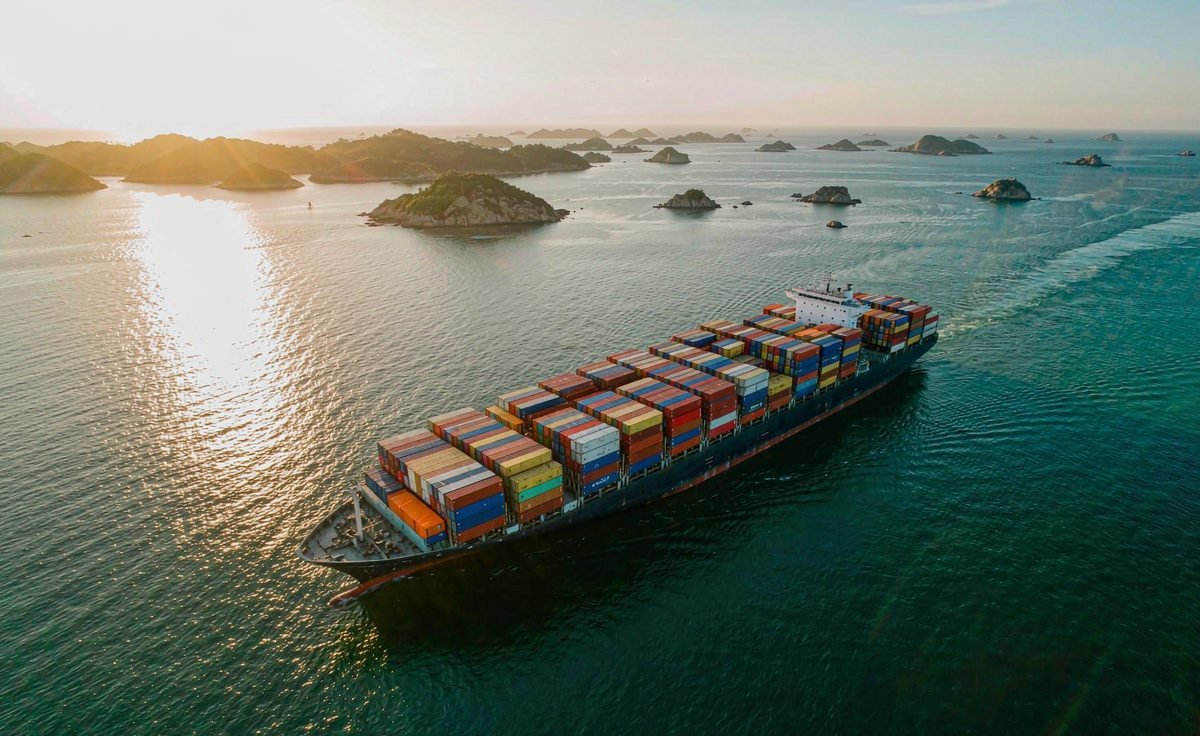
The Full DDP Cost Build-Up: Ningbo to Osaka
Real November 2026 example — 9 CBM of LED lighting components, RCEP-qualifying, declared honestly:
| Cost component | Amount (USD) | Share |
|---|---|---|
| Ocean LCL (9 CBM @ $18) | $162 | 7% |
| Origin THC, docs, export customs, pickup | $145 | 6% |
| Import duty (RCEP: 0% on CIF $4,800) | $0 | 0% |
| Consumption tax 10% | $480 | 21% |
| AFR + clearance + terminal + agent fees | $310 | 13% |
| Delivery in Osaka metro | $120 | 5% |
| DDP margin & handling | $1,100 | 48% |
| Total DDP price | $2,317 | $257/CBM quote basis |
Note the honest structure: with duty at zero and only 10% consumption tax, service and margin dominate the price. If a quote comes in far below this with a fat "duty included" line, someone is under-declaring — Japanese customs reference-price checks catch that pattern, and our guide on spotting "too cheap" quotes explains how to see it coming.
Typical DDP market ranges (November 2026)
| Cargo type | DDP LCL to Tokyo/Osaka | DDP 40HC |
|---|---|---|
| Electronics parts, accessories (low/zero duty) | $55-90/CBM | $1,800-2,600 |
| Houseware, kitchenware, furniture | $70-110/CBM | $2,200-3,200 |
| Apparel & textiles (higher MFN duty) | $85-130/CBM | $2,600-3,800 |
| Food-contact goods (extra compliance handling) | $90-140/CBM | $2,800-4,200 |
The Rules: Importer of Record, AFR, and Tax Handling
Importer of record
Under DDP, our Osaka/Tokyo partner company is the importer of record: it files the AFR advance notification, the NACCS import declaration through a licensed customs specialist, and pays duty and consumption tax at entry. You need no Japanese entity or tax registration. If your company does have Japanese registration, ask about a CIF + your-broker structure — sometimes better for tax credit reasons (below).
AFR advance filing
Japan's Advance Filing Rules require electronic cargo data before vessel departure from China. We handle this for every Japan booking; late or mismatched AFR data delays discharge. (It parallels US AMS and EU ENS regimes.)
Consumption tax and creditability
The 10% consumption tax is built into the DDP price — but if the importer of record is our partner, the tax invoice is in their name and you cannot claim the consumption-tax credit on your Japanese sales. For many small buyers that's fine. For established Japanese companies with real tax registration, importing under your own JCT registration (even at slightly higher admin cost) may recover that 10%. We run this comparison for clients before quoting — it's a genuine 10% swing decision.
The Top 5 DDP Pitfalls on the Japan Lane
- Pitfall 1: Missing PSE or MIC approvals. Japan will not release electrical or radio products without them, and there is no quick fix at arrival. Verify approval scope at PO stage. Our compliance walkthrough lives in the Japan customs guide.
- Pitfall 2: RCEP certificates that don't match reality. A certificate listing "LED lamps" for a shipment of mixed components will be rejected; the MFN duty then applies plus corrections. We match certificate line items to actual packing lists.
- Pitfall 3: Food Sanitation Act surprises. Food-contact goods get MHLW screening and sometimes lab tests (3-7 extra days). Build this into your timeline; don't promise Japanese buyers arrival dates without the buffer.
- Pitfall 4: Consumption-tax credit lost unknowingly. As above — decide the importer structure before booking, not after your accountant asks where the tax invoice is.
- Pitfall 5: Under-declared values. Some DDP sellers inflate the "DDP margin" by declaring half-value and pocketing the tax gap. That's fraud, and when customs values up the shipment, the goods — your goods — sit. Insist on seeing clearance documents with declared values.
Mini-case: a Tokyo cosmetics-tools seller was quoted $38/CBM DDP — 40% below our number. She booked it; two months later her 11 CBM was valued-up by customs, the "forwarder" went silent, and storage hit ¥4,000/day. We took over the file, re-declared honestly, paid the correct tax, and delivered in 6 days. She now pays our $82/CBM — and gets every clearance document the same day.
DDP vs FOB vs CIF for Japan: Quick Comparison
| Term | Who handles clearance & tax | Best for |
|---|---|---|
| FOB | Buyer with own JCT registration + customs broker | Established Japanese importers maximizing tax credits |
| CIF | Buyer at destination, controls destination leg | Buyers comparing local brokers and delivery vendors |
| DDP | Forwarder/partner, fully managed fixed price | Overseas sellers shipping to Japanese buyers; new importers; Amazon-adjacent flows |
For term definitions, review the official FIATA guidance and the Incoterms 2020 rules before fixing your contract terms — and note that UNCTAD tracks how DDP-style seller-managed imports perform across Asian trade lanes.
When DDP Is the Wrong Choice for Japan
We turn clients away from DDP sometimes, and it's worth being explicit about when. Skip DDP if:
- You are a registered Japanese business with JCT credit needs. As covered above, losing the 10% consumption-tax credit usually costs more than DDP's convenience saves.
- You ship to Japan weekly at scale. At that cadence you'll want your own NACCS-capable broker relationship, bonded storage strategy, and direct carrier contracts — DDP's fixed-price convenience becomes a tax on volume.
- Your goods need special import treatment (temporary admission for exhibitions, repair-and-return flows, or duty drawback programs). These filings want your own importer identity.
- Your margins depend on aggressive duty minimization. A DDP operator optimizes for smooth files, not for every basis-point of tariff engineering a specialist broker might chase.
For everyone else — cross-border sellers without a Japanese entity, overseas brands shipping to Japanese distributors on delivered terms, and first-time importers testing the market — DDP is the lowest-friction entry into one of the world's most organized customs environments. The single best hybrid we see: DDP for your first two or three shipments while you learn the lane, then a move to FOB/CIF with your own broker once volumes justify it. We hand clients over to that structure all the time; a good forwarder keeps your business either way.
DDP LCL or DDP FCL for Japan? A Worked Comparison
Japan's low freight base makes the LCL-to-FCL break-even arrive earlier than on long lanes. Assume Ningbo origin, Tokyo door, November 2026 pricing, general merchandise:
| Volume | DDP LCL cost | DDP 20GP cost | Better option |
|---|---|---|---|
| 8 CBM / 2.5 t | $640-800 | ~$2,100-2,700 | LCL |
| 15 CBM / 5 t | $1,200-1,500 | ~$2,100-2,700 | LCL (still) |
| 22 CBM / 8 t | $1,760-2,200 | ~$2,100-2,700 | Crossover zone — compare handling |
| 28+ CBM / 12 t+ | $2,240+ | ~$2,100-2,700 | 20GP |
The crossover sits around 22-26 CBM for dense cargo and earlier for light cargo that fills a 20GP before it weighs anything. Two caveats: LCL destination charges in Japan are modest compared with South America, so small lots stay competitive longer here than elsewhere; and if your cargo is fragile or moisture-sensitive, a shared box on a high-frequency lane still means only one handling cycle — short transit is the best protection a fragile product can get. When in doubt, we price both side by side and show the math; on this lane the wrong container choice costs a few hundred dollars, not thousands, but the right one compounds across every order of the year.
Seasonality shapes DDP pricing here less than on long lanes, but it exists: late January (post-CNY restocking) and late November (retail peak) add 10-15% to DDP rates, while May-June is the quiet floor. Because Japan's clearance is fast, the seasonal premium buys uplift and trucking capacity, not port priority — so your risk in peak weeks is delay at origin, not congestion at arrival. Order three weeks earlier than your instinct says in December and January, and the DDP calendar will treat you well.
Frequently Asked Questions
What does DDP shipping to Japan include?
Under DDP, the forwarder covers ocean freight, Japanese import duty (often zero or low with RCEP preference), the 10% consumption tax, AFR filing, customs clearance, terminal charges and final delivery to your door in Japan — one fixed price per CBM or container.
How much does DDP shipping from China to Japan cost?
Typical DDP pricing runs $55-110 per CBM for consolidated LCL to Tokyo or Osaka, or roughly $1,800-3,200 for a 40HC of general merchandise, depending on duty treatment and declared value. It is far cheaper than DDP to US or EU lanes because tax and duty loads are lighter.
Who is the importer of record under DDP to Japan?
Under a true DDP arrangement the seller or their destination partner is the importer of record, filing the AFR advance notification and the NACCS import declaration through a licensed customs specialist. You need no Japanese tax registration or customs broker of your own.
What are the main pitfalls of DDP shipping to Japan?
The biggest pitfalls are missing PSE/MIC or Food Sanitation Act approvals, RCEP certificates that don't match the actual goods, under-declared values flagged by Japanese customs, and unclear liability when consumption tax invoices are needed for the buyer's books. Choose a forwarder who declares honestly and documents everything.
- Shipping from China to Japan: The Complete 2027 Guide
- Air Freight from China to Japan: Costs & When to Use It
- China to Japan Transit Times: Ports, Schedules & Delays
- DDP Shipping from China to Singapore: Costs, Rules & Pitfalls
- DDP Shipping from China to Greece: Costs, Rules & Pitfalls
- DDP Shipping from China to Spain: Costs, Rules & Pitfalls
Get Today's Rate & Lock Your Discount
Waymore Shipping offers FCL & LCL ocean freight from every major port in China — Shanghai, Ningbo, Shenzhen, Guangzhou, Qingdao, Xiamen, Tianjin and more. Rates updated weekly with carrier discounts.