
Exporting Toys & Baby Products from China: Compliance, Documents & Destination Rules
- Baseline export pack: commercial invoice, packing list, China Customs declaration, B/L — plus destination test reports.
- EU needs EN 71 + CE + DoC; US needs ASTM F963 + CPSIA Children's Product Certificate; GCC needs G-mark/Saber.
- Battery toys are UN3481 dangerous goods — UN38.3 summaries and marks prevent terminal rejections.
- High-risk restricted cases: counterfeit brands, magnetic toys, small-parts failures, unregistered baby products.
- Clean paperwork shortens customs exams — toys are sampled more than almost any other consumer category.
Exporting toys and baby products from China requires the standard export document set — commercial invoice, packing list, customs declaration, bill of lading — plus destination safety certificates: EN 71 and CE for the EU, ASTM F963 and a Children's Product Certificate for the US, with UN3481 dangerous-goods handling for battery-powered toys.
Toys are among the most heavily inspected consumer goods at destination customs. This guide sets out exactly what our documentation team prepares, country by country, and the cases where shipments get blocked.
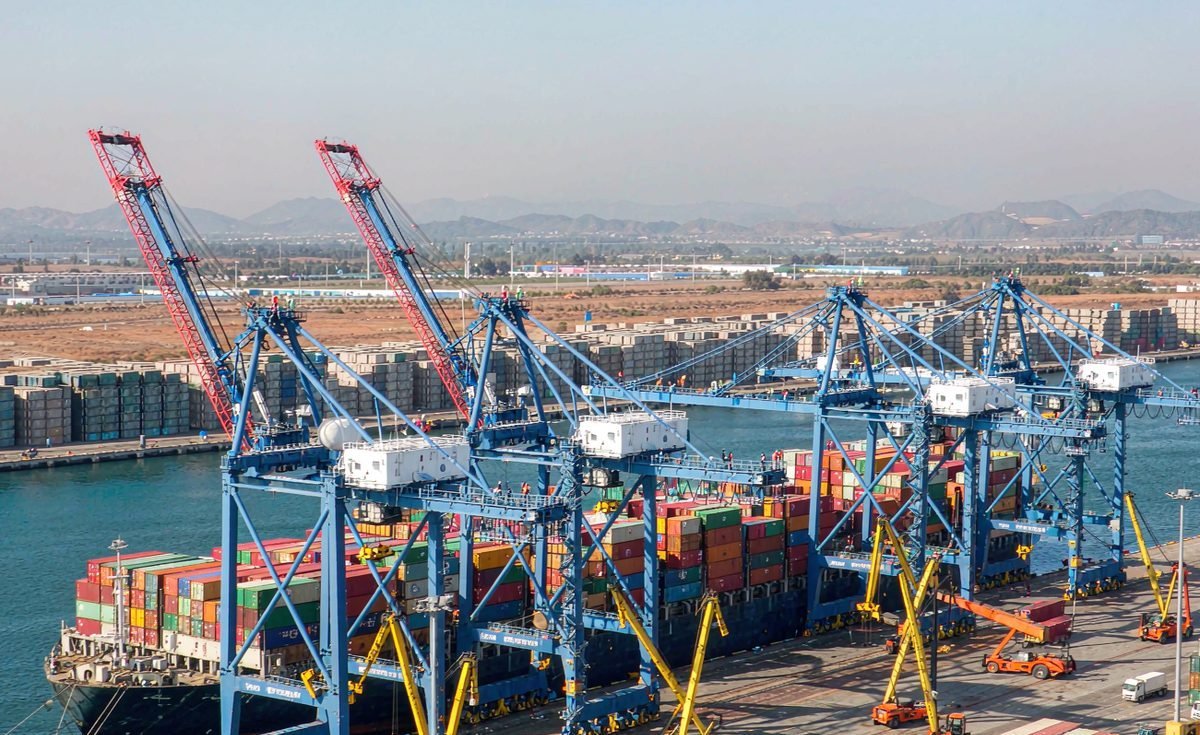
What Documents Are Needed to Export Toys from China?
Every consignment leaving Chinese ports files through the China Customs single-window system by the exporter of record:
- Commercial invoice — HS codes matter: 9503 (tricycles, dolls, puzzles and other toys), 8715 (baby carriages/strollers), 9402/9403 parts for cribs.
- Packing list — carton-level counts, weights, dimensions; customs use this to sample cartons during exams.
- Export customs declaration — filed against the factory's export license or via a licensed agent.
- Bill of Lading / AWB — consignee must match destination import registration.
- Product test reports & certificates — the destination-specific layer below.
- Certificate of Origin — RCEP/FORM E reduce duty on ASEAN routes; general CO for others.
On multi-supplier LCL consolidations, we attach each factory's separate invoice/packing set to one house bill — mismatched per-supplier paperwork is the top trigger for extended exams at destination.
What Does the EU Require for Imported Toys and Baby Products?
EU toy safety is governed by the Toy Safety Directive 2009/48/EC, with the harmonized EN 71 series as the practical test standard:
| Requirement | Covers | Notes for shippers |
|---|---|---|
| EN 71-1 | Mechanical & physical (small parts, sharp edges, magnet flux) | Applies to toys for under-14s; under-3 rules strictest |
| EN 71-2 | Flammability | Plush, costumes, masks |
| EN 71-3 | Migration of 19 heavy elements | Painted wooden toys, finger paints |
| CE marking + DoC | Importer declaration of conformity | Importer holds the DoC and technical file |
| EN 1888 | Wheeled child conveyances (strollers) | Separate standard — not EN 71 |
| REACH / SVHC | Chemicals in plastics, textiles | Phthalates in soft plastic toys frequently flagged |
EU border authorities operate RAPEX/Safety Gate alerts — toys are perennially the most-notified category. Requirements are enforced under customs frameworks run by EU TAXUD, and market surveillance can demand the technical file at any time after sale, so importers should archive reports per SKU and batch.
What Does the US Require for Imported Toys?
US compliance for children's products runs through the CPSIA (Consumer Product Safety Improvement Act):
- ASTM F963 toy safety standard — mandatory under CPSIA for toys for children ≤12 years.
- Lead limits (90 ppm paint, 100 ppm substrate) and phthalate limits (8 phthalates, 0.1%).
- Children's Product Certificate (CPC): issued by the importer, based on testing at a CPSC-accepted lab; US Customs and Border Protection (cbp.gov) can demand it at entry.
- Tracking labels: permanent batch/date marking on the product and packaging.
- FCC Part 15: for electronic/RC toys; FDA touches baby bottles and teethers sold with feeding claims (FDA import guidance).
For pre-shipment validation of a full product range, US buyers also consult Export.gov country guides — but the operative document at entry is the CPC, so ensure it exists before the container sails, not after.
What about battery-powered toys and dangerous goods rules?
RC cars, electronic plush, light-up dolls and walkie-talkies contain lithium coin cells or packs: UN3481 — lithium batteries contained in equipment. Sea shipments follow the IMDG Code (see the IMO) with UN38.3 test summaries and lithium-battery marks; air shipments under IATA DGR add stricter packaging and quantity limits. Our DG desk checks the battery spec and UN38.3 report against the booking — the UN38.3 report is the single most-often-missing document we see from Chenghai and Shenzhen toy factories.
Which Other Destinations Have Special Toy Rules?
| Destination | Scheme | Lead time |
|---|---|---|
| Saudi Arabia / GCC | G-mark (GCC toy regulation) + Saber platform CoC | 2–4 weeks |
| UK | UKCA-marked toys; EN 71-based UK conformity | 1–2 weeks after test reports |
| Australia / NZ | ACCC mandatory standards for toys 36 months and under | 2–3 weeks |
| Brazil | INMETRO certification for toys | 4–8 weeks |
| Egypt / Kenya / Nigeria | GOEIC / PVoC / SONCAP pre-shipment inspection | 1–3 weeks; book before loading |
Multiply these lead times across a product range, not a SKU: a 20-SKU toy range with mixed destinations is really twenty compliance files sharing one shipping date, which is why range-wide launches need a compliance calendar started six to eight weeks before the intended vessel.
How Should You Verify a Supplier's Test Report?
Fake and recycled test reports are common enough in the toy trade that verification is a standard step, not paranoia. Before accepting any EN 71 or ASTM F963 report as the basis for a CPC or DoC:
- Check the lab's accreditation scope. The report must come from a lab accredited for that standard (ISO/IEC 17025 with toy scope — CPSC-accepted list for US work). A report from an unaccredited "testing center" is decoration.
- Match the model, not the family. Reports covering "model series" need the exact variant listed, including colorways where materials differ. Inspectors match the report to the physical sample; a missing variant is a failing report.
- Match the batch date. Materials change. A 2023 report on a 2026 production run proves little — ask for annual re-tests or production-batch testing for high-risk SKUs.
- Verify with the lab directly. Reputable labs (SGS, Intertek, TÜV, Bureau Veritas and similar) confirm report authenticity against a report number, usually free via email or portal.
- Keep the full report, not the summary page. Destination authorities can request raw data and the technical file; a one-page certificate without the underlying report satisfies no one.
Our documentation desk runs steps 1, 2 and 4 on every first-time supplier before their cargo joins one of our consolidations — it takes a day and has caught more than one recycled report.
What Is the Compliance Timeline for a New Toy SKU?
Certification runs in parallel with production only if you start it early enough. Realistic lead times for a new plush-plus-electronics SKU heading to both the EU and US:
| Week | Compliance track | Production track |
|---|---|---|
| W1–W2 | Samples couriered to lab; EN 71-1/2/3 + REACH scoping confirmed | Tooling and pre-production samples |
| W3–W5 | EN 71 testing (2–3 weeks typical); UN38.3 report requested for the cell | Mass production starts on approved sample |
| W5–W6 | ASTM F963 + CPSIA lead/phthalates tested; CPC drafted by importer | Production continues; tracking-label artwork approved |
| W6–W7 | DoC finalized; CE/tracking labels verified on retail pack | Packing; pre-shipment inspection |
| W7–W8 | Document pack lodged with forwarder; DG declaration if batteries | Container loading and gate-in |
Start compliance at week 1 and the container sails on schedule. Start at week 6 — the default when factories "handle the certificates" — and the container waits at the CFS while a lab queue runs 2–3 weeks, accruing storage fees at USD 1.5–3.0 per CBM per day.
Who Holds Which Document After the Shipment?
- Factory: production records, material certifications, UN38.3 cell reports, export declaration copy.
- Importer (you): the CPC (US), the DoC and technical file (EU), full test reports per batch, tracking-label records — these are your legal obligations in the destination market, not the factory's.
- Forwarder: B/L, DG declarations, ISF/ENS filings, loading documentation.
Write document handover into the purchase order: full test reports and certificates against each PO, delivered before the balance payment. Factories respond to payment terms faster than to compliance theory.
What Happens During a Destination Customs Exam?
When CBP or an EU member-state authority samples your toy container, the process runs on the paperwork you prepared:
- Selection. X-ray or risk-profile flags the box; toy cargo is selected disproportionately because of safety sampling programs.
- Presentation. The importer (or broker) submits the requested documents — CPC, test reports, invoice — usually within 48 hours.
- Physical inspection. Officials open cartons, check age grading and labeling against the reports, and sometimes send samples for lab verification.
- Release or action. Clean paperwork releases in 2–5 days. Gaps trigger further detention (USD 100–300/day storage), re-export, or destruction for safety failures.
The exam itself is routine; only the outcome is expensive. Batch-matched reports and correct tracking labels are the difference between a five-day hold with no fees and a five-week dispute — the scenario our toy importer customs-inspection case study walks through in detail.
When Do Toy Exports Get Restricted or Blocked?
Which cases most often go wrong?
- Counterfeit branded toys — seized at EU/US ports; we refuse these bookings.
- Magnetic toys — high-power magnet sets fail EN 71-1 flux-index limits and are banned outright in some markets.
- Small-parts failures — toys graded 0–3 containing detachable small parts face recalls and entry refusals.
- Missing CPC (US) — cargo detained pending certificate; USD 100–300/day storage accrues.
- Unstated lithium batteries — booking rolls a week when terminal DG screening catches undeclared cells.
A detailed walkthrough of how preparation pays off is in our toy importer customs-inspection case study. For packaging and port selection, see the complete toys & baby products exporter's guide, and for freight budgeting see toys & baby products shipping costs.
Frequently Asked Questions
What documents are needed to export toys from China?
Baseline documents are the commercial invoice, packing list, China Customs export declaration and bill of lading. Toys additionally require destination test reports — EN 71 for the EU, ASTM F963 plus a Children's Product Certificate for the US — attached to the document pack so customs and retailers can verify safety compliance.
Does the US require a CPC for imported toys?
Yes. Toys for children 12 and under must comply with CPSIA, including ASTM F963 toy safety standard and lead/phthalate limits. The importer issues a Children's Product Certificate (CPC) based on CPSC-accepted lab testing, and US Customs can request it at entry.
Are battery-powered toys dangerous goods for shipping?
Toys containing lithium coin cells or battery packs classify as UN3481 (batteries contained in equipment) under the IMDG Code for sea and IATA DGR for air. They need UN38.3 test summaries and correct package marks. Undeclared batteries are the leading cause of toy bookings rejected at Chinese terminals.
Why do toy shipments get blocked at destination customs?
The most common causes are missing test reports (EN 71 or ASTM F963), counterfeit branded toys, magnetic toys failing small-parts and magnet flux rules, and mis-declared ages grading. EU RAPEX and US CPSC both actively sample imported toys, so shipments without paperwork face exams, re-export or destruction orders.
Get Today's Rate & Lock Your Discount
Waymore Shipping offers FCL & LCL ocean freight from every major port in China — Shanghai, Ningbo, Shenzhen, Guangzhou, Qingdao, Xiamen, Tianjin and more. Rates updated weekly with carrier discounts.