How to Load Home Appliances into a Container Without Damage
- Target 88%+ utilization of a 40HC's ~68 usable CBM — but never at the cost of stack limits or void fill.
- Appliance damage comes from shifting and vibration: bulkheads, straps and airbags are mandatory, not optional.
- Cartons above 35 kg, compressor units and glass-fronted appliances ride single-tier on pallets — no stacking.
- Keep the whole load's center of gravity below the container's mid-height and heavy cargo on the floor.
- Photograph every tier during loading; claims are won with evidence taken before the doors close.
Load home appliances into a container without damage by palletizing or tier-stacking cartons within their tested stack limits, bracing every 2–3 tiers with cardboard bulkheads, lashing loads to the container's rings with polyester straps, and filling all voids above 10 cm with inflatable kraft airbags. Utilization of 88% or more of usable volume is achievable without compromising protection.
Our loading crews in Shunde, Cixi and Guangzhou stuff several hundred appliance containers a year, and the claims record separating clean shipments from damaged ones almost never comes down to the freight rate or the carrier — it comes down to load plan discipline. Appliances are dense, top-heavy in their cartons, and full of fragile components mounted inside stiff shells: a load that shifts 20 centimeters mid-Pacific arrives as a warranty nightmare. Here is the working method, with real numbers.
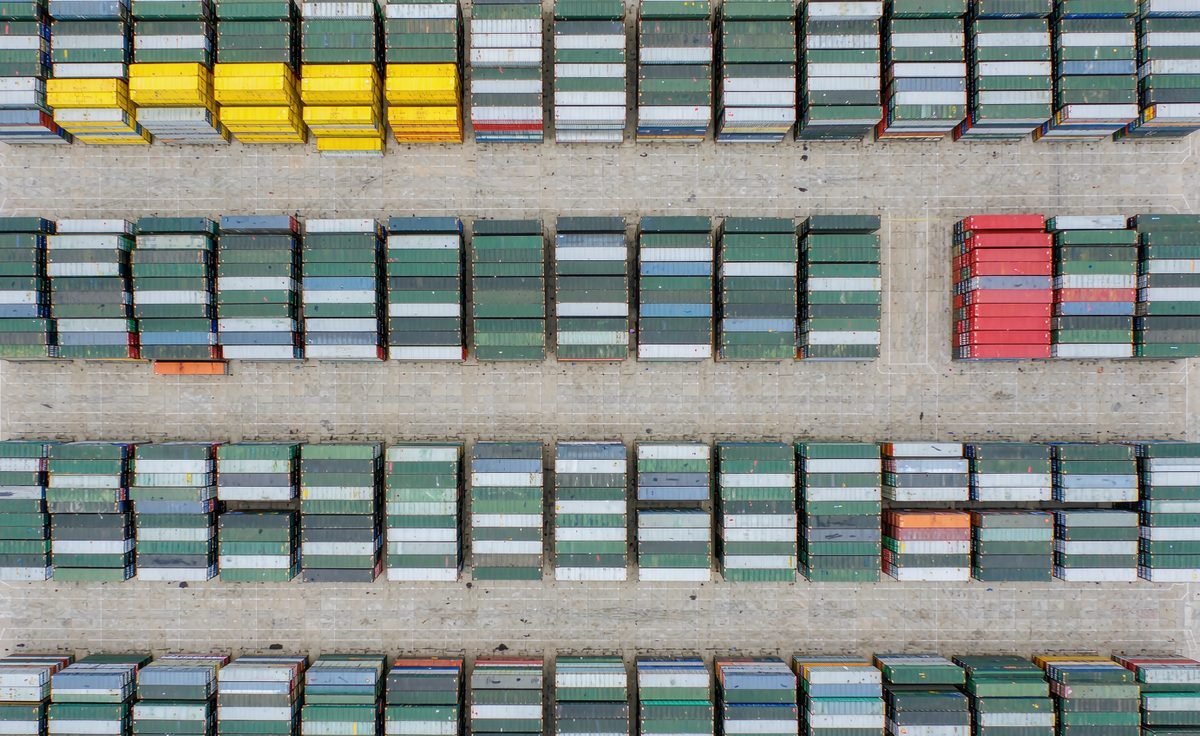
What Does the Loading Math Look Like for a 40HC of Appliances?
Start with the container's real numbers. A 40HC gives you about 12.03 × 2.35 × 2.69 m internal — nominally 76 CBM, but after accounting for carton tolerances, door-end taper and void fill, plan on ~68 CBM usable for palletized loads and ~72 floor-loaded with tight cartons. Then apply your carton dimensions. Three worked examples from actual November 2026 load plans:
| Appliance | Export carton (cm) | Carton weight | Load method | Per 40HC | Utilization |
|---|---|---|---|---|---|
| 4.5 L air fryer | 46 × 40 × 38 | 7.5 kg | Floor, 3 tiers | ~2,200 units | 90% |
| 1.7 L glass kettle | 38 × 32 × 30 | 4.2 kg | Palletized, 5 tiers | ~4,400 units | 87% |
| 12 L countertop oven | 56 × 46 × 44 | 13.8 kg | Floor, 2 tiers | ~950 units | 89% |
| 20 L dehumidifier | 58 × 50 × 78 | 34 kg | Palletized, single tier | ~290 units | 92% |
| Bar fridge, 90 L | 52 × 52 × 92 | 26 kg | Floor, single tier, wedged | ~250 units | 94% |
Note the pattern: lightweight cartons in stackable cubes drive utilization down through tier limits, while big single-tier units pack efficiently but cap at floor area. Total weight matters less than most importers assume — even the kettle container above carries only ~19 tonnes at maximum carton count, within a 40HC's ~26-tonne payload, and most mixed loads run 9–14 tonnes.
Which Cartons Can Stack — and Which Must Never Stack?
Stacking is a compression question. A double-wall 5-ply export carton with molded EPS end-caps transmits stacked weight through the foam into the appliance shell below — acceptable for robust small appliances, dangerous for anything with a compressor, glass door or thin plastic housing. Our working rules:
- Stack 2–3 tiers: air fryers, kettles, blenders, toasters, electric fans — if the carton passes a 24-hour bottom-carton compression check at 3× loaded weight.
- Single tier only: microwaves with glass doors, countertop ovens, compressor appliances (fridges, freezers, dehumidifiers, air conditioners), and any carton above 35 kg.
- Palletize when: warehouse handling at destination uses forklifts (palletized loads unload in 30 minutes, floor loads take hours), when cartons exceed 35 kg, or when destination is a multi-leg distribution center.
- Never tilt: compressor units ship upright, period. Tilted transport migrates oil into refrigerant lines; some manufacturers specify a 2–6 hour upright waiting period even after a 10-degree tilt.
How Do You Brace an Appliance Load for Ocean Transit?
Rolling, pitching and rail-shunting generate forces that a stacked-but-unbraced load cannot resist. The bracing sequence our crews follow:
- Build a flat, weight-graded floor: heaviest cartons on the floor tier, across the full width to the front wall, checking that no carton overhangs the container's corrugations.
- Insert a cardboard bulkhead every 2–3 tiers of stacked cartons — a full-width panel that spreads lashing force and prevents tier-on-tier migration.
- Lash with polyester straps to the container's internal lashing rings at each bulkhead line. Steel bands are for machinery, not cartons — they cut.
- Inflate kraft airbags into remaining voids above 10 cm, positioned against strong surfaces (bulkheads, wall liners), never against a single unsupported carton face. A 40HC typically consumes 4–8 airbags.
- Fill the door-end void last with a final bulkhead plus airbag, tensioned so the doors close with light resistance — the last 40 cm at the doors is where unbraced loads fail.
- Add desiccant strips — 12–24 per 40HC for Gulf, Africa and monsoon-season Europe sailings. Condensation kills more electronics than impacts do.
Mini-case: 300 meters of rail from Shekou to the vessel
In July 2026, a 40HC of 940 countertop ovens moved from a Foshan warehouse to Yantian by road, then spent four days in a container yard and a port-side rail transfer before loading. The factory's original plan was floor-loading with no bracing, "because the port is close." Our crew overrode it: two-tier stacking with bulkheads and four airbags, at $95 of materials. The shipment then sat eight days at the destination terminal in Santos — cumulative handling the factory never saw. Arrival survey: one damaged carton, from a forklift nick at discharging, not transit motion. The freight claim was $0; the alternative outcome at that weight and stack height was a predictable block of crushed corners.
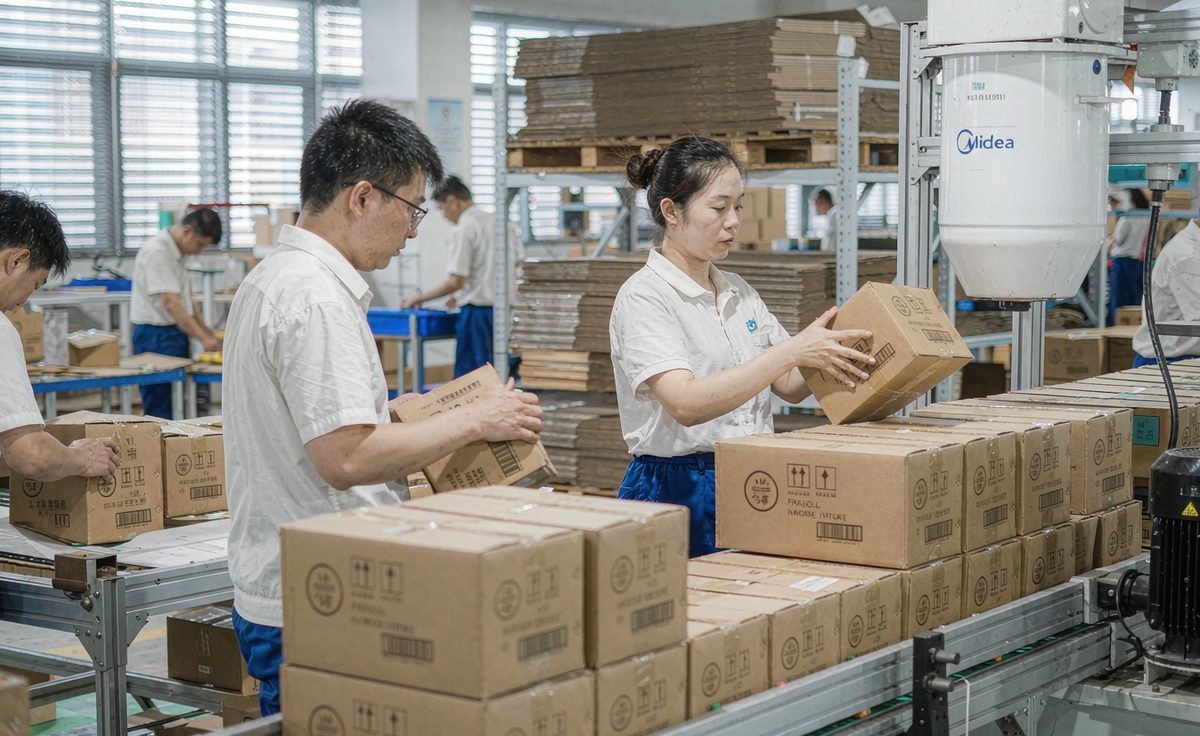
What Should You Photograph During Loading?
Evidence discipline is the cheapest insurance in appliance freight. Before the doors close, capture: the empty container's condition (floor rust, holes, door seals), carton condition as received at the warehouse, each completed tier, bulkheads and straps in place, airbags inflated, desiccant placement, and the door-end configuration. When a destination claim says "crushed on arrival," photos taken at stuffing shift the burden of proof decisively — and insurers and claims bodies like the TT Club, which specializes in transport industry liability, consistently point to pre-loading documentation as the deciding factor in most cargo claims. VGM (verified gross mass) records also cross-check the load plan: a container that weighs far below its calculated plan suggests missing cargo, far above suggests added material that was never planned.
Which Loading Mistakes Cause Most Appliance Claims?
From our claims files, five failures dominate:
- Stacking compressor units or glass-door appliances — instant claim risk, zero saving.
- Unfilled door-end voids — the top 40 cm at the doors shifts first and hardest.
- Airbags against weak surfaces — an inflated bag can crush a carton as effectively as a forklift.
- Ignoring warehouse humidity — cartons stuffed in a rain-soaked Yantian yard arrive with warped boxes and rusted panels.
- Over-filled pallets with overhang — a pallet corner sticking out 5 cm becomes a puncture point for everything adjacent.
Get the load plan right and appliances are genuinely robust ocean cargo — the shells that protect them on a retail shelf protect them at sea. If you want a professional second pair of hands, Waymore runs supervised loading, photo documentation and bracing as a standard option on FCL bookings from South China. For the wider process, start with our complete guide to shipping home appliances from China, the matching shipping cost breakdown for home appliances, and our monsoon-season guide to container desiccants.
How Do You Load a Mixed-SKU Appliance Container?
Most real appliance containers mix SKUs — 800 kettles, 600 air fryers, 150 countertop ovens from one factory. The plan that works: heavy, sturdy SKUs (ovens, large cooktops) floor-loaded at the container front in one or two tiers; medium cartons (air fryers, rice cookers) three-tiered through the middle with bulkheads every two tiers; light cartons (kettles, hand mixers) in the rear palletized section and top tiers. Sequencing matters at the destination too — if one warehouse unloads the whole box, any arrangement works; if cargo delivers to multiple stores, group by SKU in block sections so each store's pallets come out together. Weight distribution across the container floor should stay within about 60% of maximum line load in any single floor section; a container with all the heavy SKUs in the front third rides badly and can fail the VGM/placement checks at the terminal.
Mixed loads also change the bracing budget: every SKU transition is a potential shear plane, so bulkheads go at transitions, not just every two or three tiers. Budget one extra airbag and one strap line per major SKU boundary — typically $30–50 more in materials for a three-SKU container, and worth it.
How Does Weight Distribution and VGM Fit into the Plan?
Verified Gross Mass (VGM) is a legal requirement, but treat it as a load-quality check rather than paperwork. Weigh the container at the terminal scale and compare the figure against your packing list arithmetic: a result 300+ kg above plan usually means added dunnage nobody recorded; far below plan suggests missing cartons. Equally important is floor-level distribution — a 40HC carries roughly 26 tonnes of payload, but concentrated point loads matter more than totals. Appliance cargo rarely threatens the limit, yet a container where all 14 tonnes sit in the rear quarter can be refused at gate-in or, worse, flex the chassis on the road leg. Spread heavy SKUs across the floor plan, keep the center of gravity low and near mid-length, and record both weights and tier photos in the same file — that one folder answers almost every question a terminal, insurer or claims adjuster will ever ask.
Frequently Asked Questions
How many home appliances fit in a 40HC container?
A 40HC offers about 68 usable CBM with palletized loads. Real quantities depend on carton size: roughly 1,800–2,400 air fryer cartons, 3,500–5,000 kettle cartons, or 250–320 dehumidifier cartons per container. Utilization above 88% of usable volume is a well-loaded box.
Can you stack appliance cartons in a container?
Yes, within tested limits. Double-wall export cartons of small appliances stack two or three tiers high if the bottom carton carries the stacked weight without deformation. Heavy units above 35 kg, compressor appliances and glass-fronted units should not be stacked at all — they ride single-tier on pallets.
Why must refrigerators and other compressor appliances ship upright?
Compressor oil migrates into refrigerant lines when the unit tilts or lies down, which can cause poor cooling and compressor failure after installation. Keep the container's internal tilt under about 10–15 degrees, which is why we never double-stack refrigerator cartons and always wedge the bottom tier.
What bracing materials work best inside an appliance container?
Cardboard bulkheads every 2–3 tiers, polyester lashing straps tensioned to the container's lashing rings, kraft-paper airbags for voids above 10 cm, and corner boards on stacked cartons. For humid routes, add 12–24 container desiccant strips per 40HC.
Is floor-loading or palletizing better for appliances?
Floor-loading yields 3–5% more cartons and suits single-tier big units. Palletizing suits heavy cartons, multi-leg distribution and fast forklift unloading at destination. Mixed 40HCs — palletized rear half, floor-loaded front half — are common and work well when bulkheaded at the transition.
- How to Load Building Materials into a Container Without Damage
- How to Load Industrial Chemicals into a Container Without Damage
- How to Load Textiles & Apparel into a Container Without Damage
- How to Load Cosmetics & Beauty Products into a Container Without Damage
- How to Load Glass Products into a Container Without Damage
- How to Load Agricultural Machinery into a Container Without Damage
Get Today's Rate & Lock Your Discount
Waymore Shipping offers FCL & LCL ocean freight from every major port in China — Shanghai, Ningbo, Shenzhen, Guangzhou, Qingdao, Xiamen, Tianjin and more. Rates updated weekly with carrier discounts.