Shipping Ceramics & Tableware from China to Belgium: Requirements, Costs & Tips
- Shanghai/Ningbo → Antwerp direct sailings run 31–35 days; door-to-door 38–44 days.
- Expect 21% Belgian import VAT plus ~5–7% duty on ceramic tableware.
- Antwerp is Europe's LCL consolidation hub — ideal for mixed ceramics shipments under 15 CBM.
- Customs warehousing in Antwerp can defer VAT until goods actually enter the market.
To ship ceramics and tableware from China to Belgium, book ocean freight from Shanghai, Ningbo or Shenzhen to Antwerp (31–35 days direct transit), assemble the standard commercial document set plus an EU 1935/2004 food-contact declaration for tableware, and budget 21% Belgian import VAT with roughly 5–7% duty. LCL rates average $55–75 per CBM plus about €40–60 per CBM in destination charges.
Belgium punches above its weight for ceramics importers — not just for the local Belgian and Brussels market, but because Antwerp functions as the deconsolidation gateway for much of Western Europe. Here's what our consolidation desk sees on this lane.
Why Is Antwerp the Default Entry Point for Belgian Ceramics Imports?
Antwerp handles weekly direct calls from all major Chinese hubs, has deep LCL infrastructure, and sits within a one-day truck radius of Brussels, Rotterdam, Düsseldorf, Lille and Paris. For ceramics specifically, the port's consolidated warehouses offer daily deconsolidation — your pallets are available within 24–48 hours of vessel discharge rather than waiting for the consolidator's weekly cycle.
Zeebrugge serves some ro-ro and project flows, and Ostend is negligible for containers. In practice, if your buyer is in Belgium, Antwerp is the answer 95% of the time.
How Should Ceramics Be Packed for Antwerp Consolidations?
Antwerp LCL moves fast, but your cartons still face two container legs (China CFS → vessel → Antwerp CFS) plus final delivery. Our Xiamen and Fuzhou consolidation crews — Xiamen and Dehua are major porcelain origins for Belgian buyers — apply these rules:
- Nested stacking: bowls and cups nest with foam slips between each piece; plates interleave with corrugated sheets, never bare glaze-on-glaze.
- Cartons ≤ 18 kg, double-wall, taped with H-pattern on top and bottom.
- Palletize at 1.4–1.6 m height and label pallet position numbers matching the packing list — Antwerp warehouses pick by pallet, and mismatches cause storage charges.
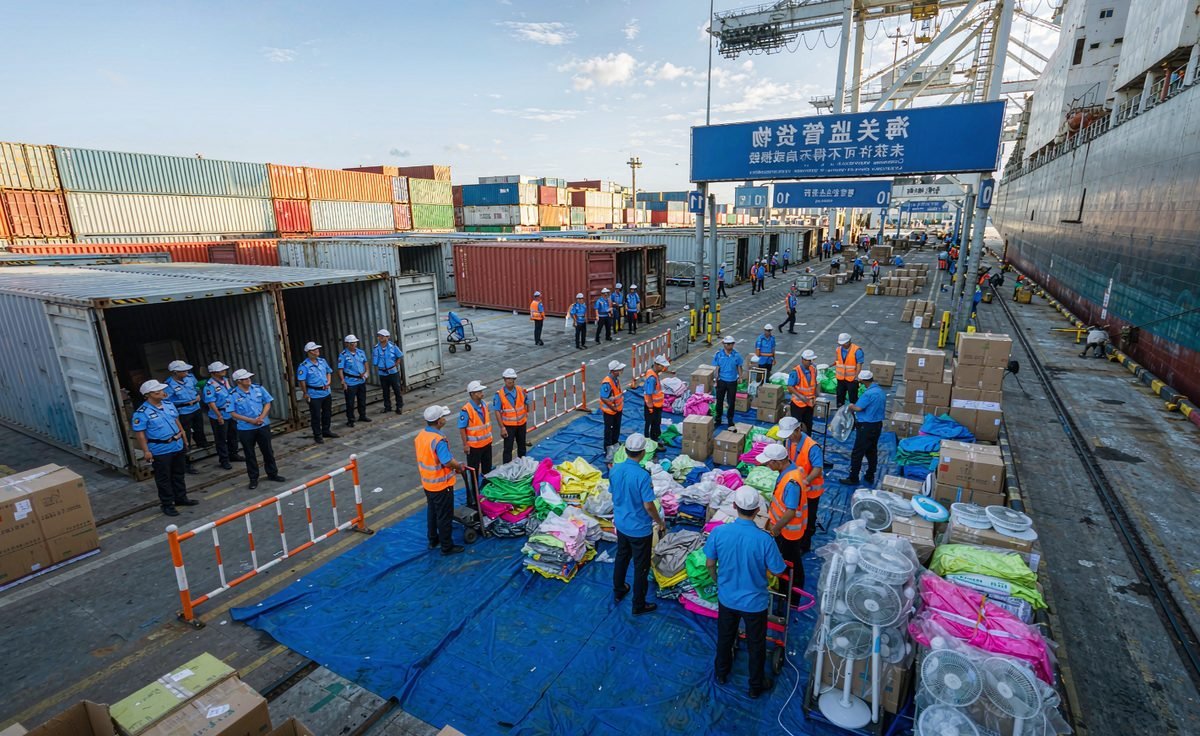
- Photograph each pallet at stuffing; this documentation is what wins a claim if damage occurs in the CFS.
What Compliance Rules Apply to Tableware in Belgium?
Belgium enforces EU product law, with the FPS Economy running market surveillance. For food-contact ceramics:
- Regulation (EC) 1935/2004 declaration of compliance from the manufacturer.
- Lead and cadmium migration test reports per Directive 84/500/EEC — Belgian inspectors do pull samples from retail channels, and non-compliant glazes trigger recalls.
- FSC/wood packaging: any wooden crating must be ISPM-15 heat-treated and stamped, enforced on both export and import sides.
Customs-wise, the EU common external tariff applies under the framework set by the European Commission's customs authority (TAXUD): ceramic tableware under HS 6911.10/6912.00 typically at 5–7% duty, plus 21% VAT. A useful Belgian-specific tool: licensed customs warehouses in Antwerp let you store goods suspended from VAT and duty until they're released for sale in the EU — valuable if you distribute across multiple countries.
What Does It Cost to Ship Tableware to Belgium?
| Profile (November 2026 indicative) | Ocean freight | Antwerp destination charges | Comment |
|---|---|---|---|
| LCL 4 CBM / 1,100 kg | $240–300 | €170–230 | Sample + first orders |
| LCL 12 CBM / 3,300 kg | $680–860 | €500–680 | LCL ceiling — compare FCL |
| FCL 20GP | $1,550–1,950 | €380–480 flat | Break-even ~13–15 CBM |
| FCL 40HC | $2,400–2,950 | €430–560 flat | Full program / mixed SKUs |
Directional market backdrop: composite spot indices such as those published by Xeneta show Asia–North Europe rates easing through late 2026, so contracts struck now with forwarders holding weekly carrier allocations — like our discounted rates program — tend to beat waiting.
Mini-Case: A Brussels Concept Store Chain
A Brussels homeware chain imports mixed loads — Dehua porcelain, Chaozhou stoneware, and lacquer trays from Guangdong. In 2026 they moved from per-supplier LCL to a multi-supplier consolidation: Waymore picks up from three factories across Fujian and Guangdong, consolidates at our Shenzhen CFS into one 40HC to Antwerp, and clears once. Result: one clearance fee instead of three, about 11% lower landed logistics cost per pallet, and a single delivery to their central warehouse in Vilvoorde every six weeks.
LCL or FCL — Where's the Break-Even for This Lane?
Because Antwerp destination charges are among Europe's lowest, LCL stays economical longer than on other lanes: up to roughly 12–15 CBM. Above that, a 20GP wins on cost and, for fragile cargo, on handling safety — an FCL is stuffed once by your supplier and unstuffed once at your warehouse, eliminating the CFS double-handling where most ceramics damage happens.
For the full door-to-door picture on this market, see our complete guide to shipping from China to Belgium, and for packing methods that cut breakage to near zero, our walkthrough on loading ceramics into a container without damage.
Frequently Asked Questions
How long does shipping from China to Antwerp take?
Port-to-port transit from Shanghai or Ningbo to Antwerp runs 31–35 days on direct services. Add 4–6 days for export formalities in China and import clearance in Belgium, so door-to-door typically lands at 38–44 days.
What are the import duties and VAT for tableware in Belgium?
Ceramic tableware under HS 6911/6912 carries roughly 5–7% duty, and Belgium applies 21% import VAT on the CIF-plus-duty value. Belgian customs offers licensed customs warehouse options that can defer VAT until goods enter free circulation.
Why do consolidators route LCL ceramics through Antwerp?
Antwerp hosts some of Europe's largest LCL consolidation warehouses with daily deconsolidation, dense trucking coverage to France, Germany and the Netherlands, and competitive destination charges — often €40–60 per CBM for ceramics.
What documents does Belgian customs require for ceramics?
A commercial invoice, packing list, bill of lading and certificate of origin. Food-contact tableware additionally requires an EU Regulation (EC) 1935/2004 declaration of compliance with lead and cadmium migration test reports, and the importer needs a Belgian EORI number.
- Shipping Solar Panels & PV Equipment from China to Belgium: Requirements, Costs & Tips
- Shipping Ceramics & Tableware from China to Qatar: Requirements, Costs & Tips
- Shipping Ceramics & Tableware from China to Turkey: Requirements, Costs & Tips
- Shipping Stationery & Office Supplies from China to Belgium: Requirements, Costs & Tips
- Shipping LED Lighting from China to Belgium: Requirements, Costs & Tips
- Shipping Ceramics & Tableware from China to Spain: Requirements, Costs & Tips
Get Today's Rate & Lock Your Discount
Waymore Shipping offers FCL & LCL ocean freight from every major port in China — Shanghai, Ningbo, Shenzhen, Guangzhou, Qingdao, Xiamen, Tianjin and more. Rates updated weekly with carrier discounts.