Shipping Plastic Products from China to Belgium: Requirements, Costs & Tips
- Transit to Antwerp: 30–35 days port-to-port; plan 40–48 days door-to-door.
- Typical costs: USD 50–76/CBM LCL, USD 2,350–3,200 (20GP), USD 3,400–4,600 (40HC).
- Duty ~6.5% for plastic articles (HS 3923–3926) plus 21% Belgian VAT.
- Packaging EPR runs through Fost Plus / Valipac; REACH and food-contact documentation complete the checklist.
- Antwerp's bonded warehouses let you defer duty and VAT until goods actually sell — a cash-flow tool.
Shipping plastic products from China to Belgium takes 30–35 days by sea to Antwerp, with typical costs of USD 50–76 per CBM for LCL or USD 2,350–4,600 all-in for FCL, and import duty of about 6.5% plus 21% Belgian VAT for most finished plastic articles under HS 3923–3926. Belgium is both a national market and Europe's most flexible distribution platform, thanks to Antwerp's bonded warehousing and central location.
Which Route Gets Plastic Cargo to Belgium Fastest?
The port of Antwerp-Bruges is Europe's second-largest container port and receives multiple direct weekly services from Shanghai, Ningbo, Shenzhen and Qingdao. For plastic goods bound for Belgium, eastern France, western Germany or the Netherlands, Antwerp is almost always the right gateway.
| Routing | Transit (port-to-port) | Best suited to |
|---|---|---|
| Shanghai / Ningbo → Antwerp (direct) | 30–34 days | Brussels, Ghent, Antwerp warehouses, western Germany |
| Shenzhen → Antwerp (direct) | 31–35 days | South China consolidations; competitive space ex-PRD |
| Ningbo → Rotterdam + 1-day truck | 29–33 days + 1 day | When Rotterdam space or rate is better that week |
| LCL consolidation (weekly) | 36–45 days incl. deconsolidation | Shipments under ~14 CBM |
Market rates track the indexes published by Drewry and the Freightos Baltic Index; our weekly discount page typically shows Antwerp among the steadiest EU lanes because of the sheer number of services calling it.
What Compliance Rules Apply to Plastic Products in Belgium?
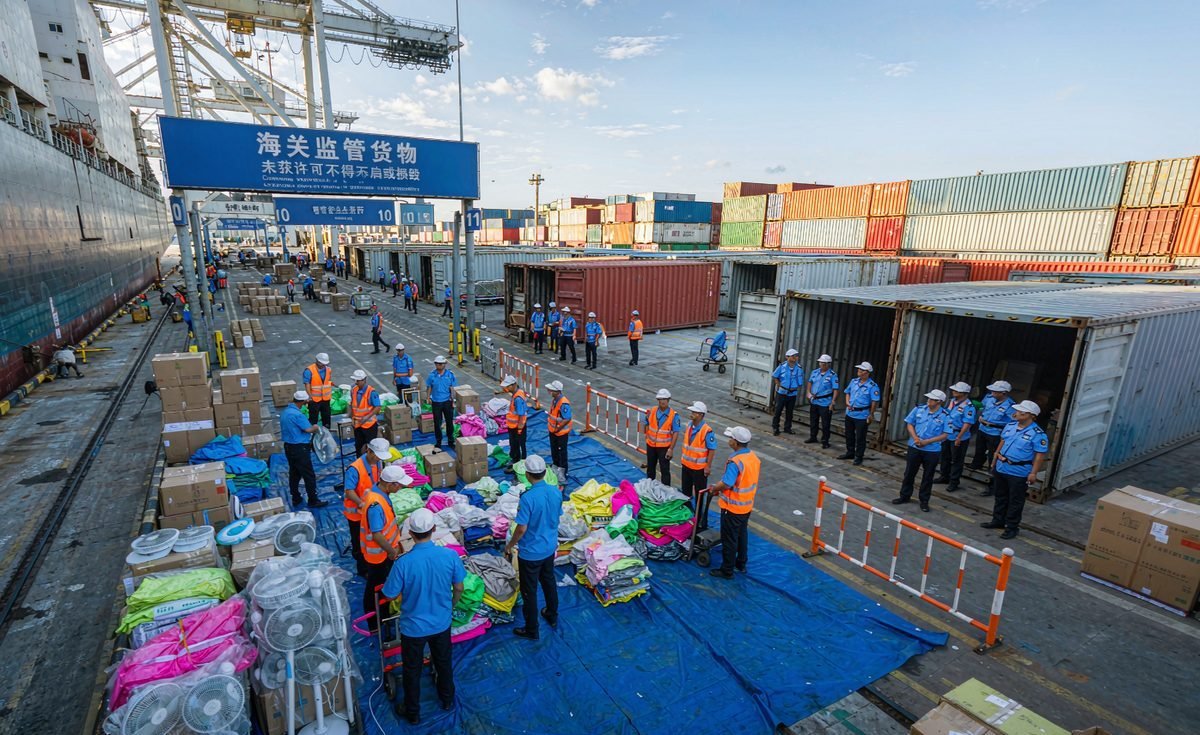
Belgium applies EU customs rules: EORI-registered importer, correct HS classification, duty around 6.5% for finished plastic articles, and 21% VAT on the duty-paid value. The Belgian layer:
- Packaging EPR: household packaging obligations sit with Fost Plus, industrial packaging with Valipac; importers of record must register and report tonnage. Foreign sellers without a Belgian entity typically appoint a fiscal representative.
- REACH: restricted substances in plastics — phthalates in flexible PVC, cadmium stabilizers, certain flame retardants. Require supplier declarations and lab reports as a condition of the purchase order; Belgian inspection services do sample-test plastic consumer goods.
- Food-contact plastics: EU Regulation 10/2011 documentation for kitchenware, containers and bottles, retained with the import dossier.
- Trilingual market: for retail-bound goods, labeling must satisfy Dutch/French/German language expectations depending on the sales region — a low-cost fix applied at the factory before stuffing beats relabeling in Antwerp.
The full document map is in our guide on compliance, documents and destination rules for plastic exports from China, and customs process detail in our China to Belgium customs clearance article.
Why Do Importers Bond Plastic Cargo in Antwerp?
Bonded warehousing is Belgium's quiet advantage for plastic goods. Goods are stored under customs suspension: no duty and no VAT until each pallet is released to whichever EU market buys it. For a wholesaler importing, say, 12 containers of plastic housewares per year but selling across five EU countries at uneven speeds, this can defer tens of thousands of euros in VAT — and simplify exports outside the EU entirely (no EU duty at all on re-export).
Mini-case from our October book: a Brussels trading company importing plastic picnic ware (HS 3924) ran a 40HC into Antwerp bonded storage at USD 3,610 all-in ocean. They released 55% of the cargo into Belgium over six weeks and sold the remainder to a UK buyer as a customs-supervised re-export — avoiding EU duty on that share entirely. Their fiscal setup (deferral license for VAT) removed the 21% cash outlay at import too. Bonded flow takes paperwork, but for repetitive importers it pays.
Operationally, plastic cargo remains volume freight: nest products to cut 20–35% of CBM, keep carton stacking strength high for the long transit, and run LCL below ~14 CBM — our weekly Antwerp consolidation from Ningbo and Shanghai moves a steady mix of housewares, bins, planters and packaging film for exactly this buyer profile.
Frequently Asked Questions
How long does shipping plastic products from China to Belgium take?
Ocean freight from Shanghai, Ningbo, Shenzhen or Qingdao to Antwerp takes about 30–35 days port to port on direct services. Add 4–7 days for discharge, customs release and trucking to Brussels, Ghent or warehouses across the Belgian-Dutch border region — plan 40–48 days door to door.
What does it cost to ship plastic products to Belgium?
Typical all-in ocean costs are USD 50–76 per CBM for LCL (minimum 1–2 CBM), roughly USD 2,350–3,200 for a 20GP and USD 3,400–4,600 for a 40HC to Antwerp. Belgian destination charges add about EUR 240–400 on a typical LCL shipment before duty and 21% VAT.
What compliance rules apply to plastic products imported into Belgium?
Standard EU rules apply: EORI registration, HS classification, duty around 6.5% for finished plastic articles (HS 3923–3926) and 21% Belgian VAT. You also need Belgian packaging EPR registration (Fost Plus/Valipac), REACH compliance for restricted substances, and EU 10/2011 documentation for food-contact plastics.
Why is Belgium popular for bonded warehousing of Chinese goods?
Antwerp's bonded warehouse network lets importers store goods under customs suspension — duty and VAT fall due only when goods are released for sale in a specific EU market. That defers cash outflow, simplifies re-export outside the EU, and makes Belgium a favorite hub for EU-wide distribution.
- Shipping Plastic Products from China to Canada: Requirements, Costs & Tips
- Shipping Plastic Products from China to Qatar: Requirements, Costs & Tips
- Shipping Industrial Chemicals from China to Belgium: Requirements, Costs & Tips
- Shipping Cosmetics & Beauty Products from China to Belgium: Requirements, Costs & Tips
- Shipping Plastic Products from China to United Kingdom: Requirements, Costs & Tips
- Shipping Auto Parts from China to Belgium: Requirements, Costs & Tips
Get Today's Rate & Lock Your Discount
Waymore Shipping offers FCL & LCL ocean freight from every major port in China — Shanghai, Ningbo, Shenzhen, Guangzhou, Qingdao, Xiamen, Tianjin and more. Rates updated weekly with carrier discounts.