Shipping Stationery & Office Supplies from China to Canada: Requirements, Costs & Tips
- Most Canadian office-supply imports move as LCL from Shanghai, Ningbo or Shenzhen to Vancouver, with 15–20 days port-to-port.
- Expect 0–6.5% duty plus 5% GST on paper, pens and desk accessories; register in CARM before your first entry.
- LCL typically costs USD 55–75 per CBM Shanghai→Vancouver; air freight runs USD 5.5–7.5/kg for urgent restocks.
- Declare glue, markers and lithium coin cells honestly — undisclosed liquids are the top cause of LCL rejection.
Shipping stationery and office supplies from China to Canada is straightforward for professional importers: most cargo moves as palletized LCL from Shanghai, Ningbo or Shenzhen to Vancouver in 15–20 days, paying 0–6.5% duty plus 5% GST at the border. The main work is correct HS classification, CARM registration, and honest disclosure of inks and adhesives.
Our Canadian desk handles stationery consignments weekly — notebooks, pens, staplers, binders, desk organizers and whiteboards — so this guide reflects what actually moves through CBSA clearance, not theory.
Which Canadian port should your office supplies arrive at?
Route by destination, not by habit. For Toronto, Ottawa and eastern Canada, Vancouver plus rail (via CN or CP) is usually fastest and cheapest; direct Montreal services via the Panama Canal add ocean days but can cut inland cost. Vancouver handles the majority of our stationery LCL consolidations, while Prince Rupert offers the shortest China transit for BC and Alberta buyers.
| Option (Shanghai origin) | Typical transit | Indicative cost | Best for |
|---|---|---|---|
| LCL → Vancouver + rail to Toronto | 22–28 days door | USD 55–75/CBM + CAD 60–90 destination fees | 1–15 CBM mixed orders |
| LCL → Montreal (direct) | 30–38 days door | USD 60–80/CBM | Quebec/Eastern Canada |
| FCL 40HC → Vancouver | 15–20 days port-to-port | USD 3,200–4,300 | 28+ CBM full loads |
| Air freight → YYZ/YVR | 5–8 days door | USD 5.5–7.5/kg | Urgent back-to-school restock |
Rates move weekly with the market — freight indices such as the Drewry World Container Index show how volatile trans-Pacific pricing can be, so always confirm current numbers before budgeting.
What documents and compliance steps does CBSA require?
Core paperwork
- Commercial invoice and packing list with per-item HS codes (paper stationery usually 4820.10–4820.50, pens 9608, staplers and desk items 8309/3926).
- Bill of lading (or air waybill) showing the consignee's legal name.
- Business Number (BN15) and CARM registration — since full CBSA Assessment and Revenue Management rollout, importers must register in the CARM Client Portal and post financial security to clear goods under Release Prior to Payment.
- Safety data sheet (SDS) for bulk glue, correction fluid or marker ink shipments when requested by the carrier.
Cargo-specific cautions
- Liquid inks and adhesives: small consumer packs are normally acceptable, but every carton must be marked and described. A Toronto client once lost ten days when "stationery" cartons containing 500 glue bottles were declared generically — the LCL warehouse flagged and re-sorted the box.
- Battery-powered calculators and electronic desk items: lithium coin cells are fine in equipment; never pack spare lithium batteries in cartons without declaring them.
- Wooden pallets and crates must be ISPM 15 heat-treated and stamped, or CBSA can order treatment or removal at your cost.
How much does it cost, and when should you consolidate?
LCL pricing is volume-driven: under about 15 CBM, shared-container freight beats a part-loaded 20GP on cost. Above roughly 14–15 CBM of dense cartons — or when shipping heavy items like metal filing cabinets alongside paper — an FCL often wins because LCL destination charges are charged per CBM. In a typical month we consolidate 40+ stationery LCL shipments into weekly Vancouver and Toronto services from our South China consolidation hub.
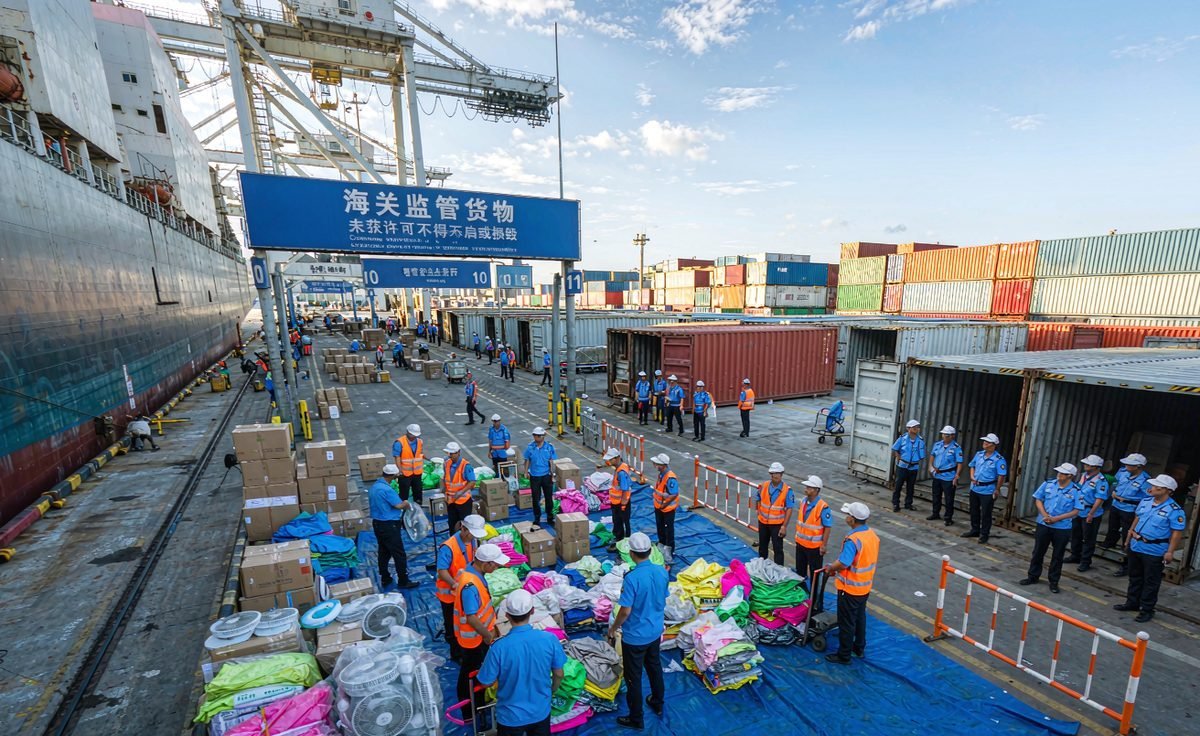
Mini-case: A Toronto office-products wholesaler shipped 18 CBM (4.1 tonnes) of spiral notebooks and gel pens from Ningbo as LCL to Vancouver, then rail to Toronto: USD 68/CBM ocean, CAD 1,240 destination charges, 9% blended duty/GST on CAD 42,000 declared value, landed 26 days after gate-in. Splitting into two LCL shipments (stationery plus a separate declared glue order) avoided carrier re-checks entirely.
Practical tips that save money
- Pack dense and palletize: paper products are heavy per CBM, so stackable cartons on standard 1.1×1.1 m pallets keep you under volumetric penalties.
- Time back-to-school orders for May–July sailing to clear Toronto by August — Q3 retail demand also inflates air rates, so book early.
- Use DDP carefully: if your supplier offers DDP, confirm who posts CARM security; see our guide to DDP shipping from China to Canada for the pitfalls.
- Classify correctly: misdeclaring pens as "paper goods" triggers re-classification and delays — the full China to Canada shipping guide covers HS-code practice in depth.
For CBP-adjacent cross-border questions once goods reach North America, official sources like US Customs and Border Protection matter if you re-export to the US — always check both sides of the border.
Frequently Asked Questions
What documents do I need to import office supplies into Canada?
A commercial invoice, packing list, bill of lading or air waybill, and your Business Number with CARM registration. Glue and marker shipments may also need a safety data sheet. If you import under Release Prior to Payment, CBSA requires a posted financial security.
How long does it take to ship stationery from China to Canada?
Port-to-port, Shanghai to Vancouver runs about 15–20 days and Prince Rupert 13–17 days. Add 5–7 days for rail or truck to Toronto, Calgary or Montreal. Air freight arrives in 5–8 days door to door.
What duties and taxes apply to office supplies in Canada?
Most paper stationery and pens carry 0–6.5% MFN duty, and the 5% GST is levied on the duty-paid value at import. Correct HS classification on the commercial invoice keeps your rate predictable.
Can I ship glue and whiteboard markers by sea from China?
Yes, in most cases. Flammable inks and adhesives are not fully regulated in small consumer quantities, but carriers require honest cargo descriptions. Undeclared liquids are the most common cause of LCL rejection in China, so always disclose them at booking.
- Shipping Toys & Baby Products from China to Canada: Requirements, Costs & Tips
- Shipping Fashion Accessories from China to Canada: Requirements, Costs & Tips
- Shipping Christmas & Holiday Decorations from China to Canada: Requirements, Costs & Tips
- Shipping Stationery & Office Supplies from China to France: Requirements, Costs & Tips
- Shipping Stationery & Office Supplies from China to Italy: Requirements, Costs & Tips
- Shipping Stationery & Office Supplies from China to the Netherlands: Requirements, Costs & Tips
Get Today's Rate & Lock Your Discount
Waymore Shipping offers FCL & LCL ocean freight from every major port in China — Shanghai, Ningbo, Shenzhen, Guangzhou, Qingdao, Xiamen, Tianjin and more. Rates updated weekly with carrier discounts.