How to Calculate CBM & Chargeable Weight (Free Formula)
- CBM = length × width × height (in meters) × number of cartons — measure the outer carton, pallets included.
- Air freight volumetric weight = cm³ ÷ 6,000; express couriers use cm³ ÷ 5,000.
- Chargeable weight = the greater of actual weight and volumetric weight — you always pay for whichever is bigger.
- LCL ocean freight bills the greater of CBM and tonnes, usually with a 1 CBM minimum.
- A 20GP holds roughly 28 CBM, a 40GP about 58 CBM, a 40HC about 68 CBM of packed cargo.
CBM is calculated as length × width × height in meters, per carton, multiplied by carton count — and chargeable weight is whichever is greater: the shipment's actual weight or its volumetric weight. Ocean LCL prices by CBM; air freight prices by chargeable weight using a 6,000 divisor. Get these two numbers right and no freight quote will ever surprise you.
Every week our Guangzhou consolidation team quotes buyers who were stunned by an invoice: the cargo was "small" in cartons but light and bulky, so it billed volumetrically at double the expected weight. This guide gives you the exact formulas, six worked examples with real numbers, and the conversion shortcuts our own quoting desk uses daily.
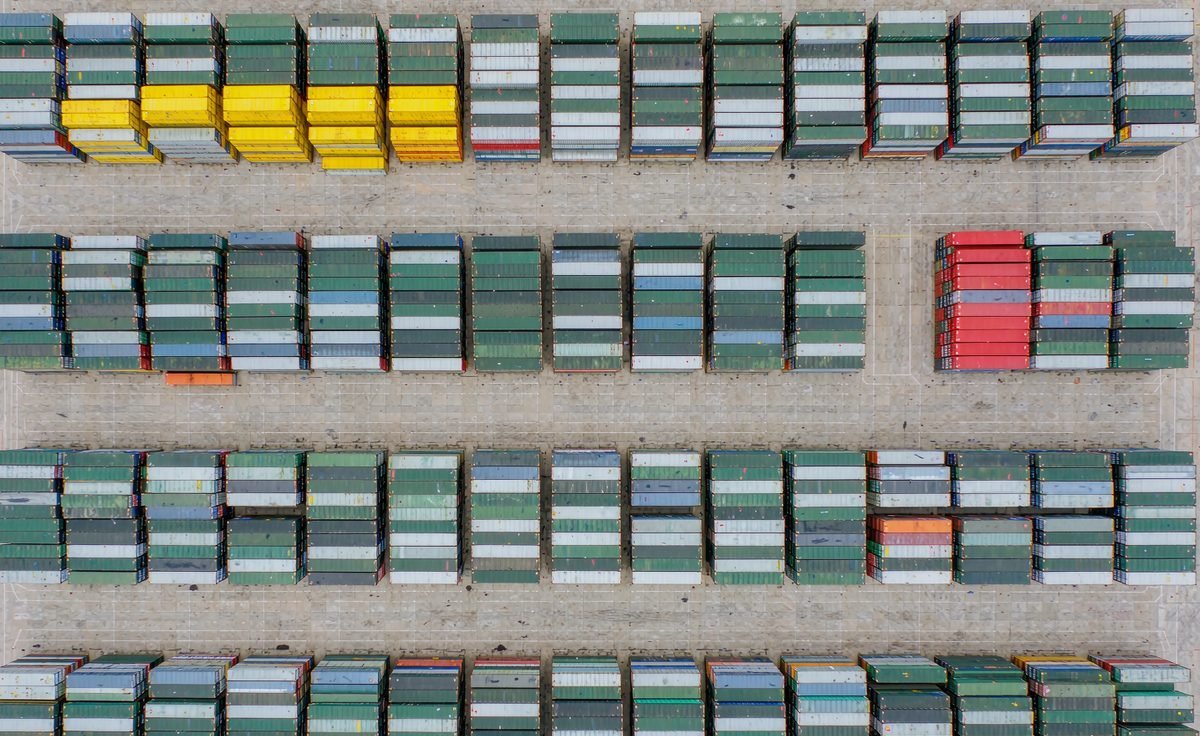
What Is CBM and How Do You Calculate It?
CBM stands for cubic meters, the standard volume unit in ocean freight. The formula is simple:
Total CBM = CBM per carton × number of cartons
Worked example 1 — plain cartons: Your supplier ships 120 cartons, each 60 × 50 × 40 cm. Convert to meters: 0.6 × 0.5 × 0.4 = 0.12 CBM per carton. Total: 0.12 × 120 = 14.4 CBM. At a typical China–LA LCL rate of $45/CBM, the ocean freight alone prices at roughly $648.
Worked example 2 — mixed sizes: 60 cartons at 0.09 CBM plus 40 cartons at 0.21 CBM = (60 × 0.09) + (40 × 0.21) = 5.4 + 8.4 = 13.8 CBM. Always calculate size groups separately — averaging dimensions across different carton sizes produces wrong numbers.
Worked example 3 — palletized cargo: A Euro pallet is 1.2 × 0.8 m; loaded to 1.5 m high including the pallet: 1.2 × 0.8 × 1.5 = 1.44 CBM per pallet. Ten pallets = 14.4 CBM. Note that pallet height includes the ~14.5 cm pallet itself — forgetting this is the most common quoting error we see from new importers.
How Many CBM Fit in a Container?
| Container type | Internal volume (approx.) | Realistic packed cargo | Max payload (approx.) | Best for |
|---|---|---|---|---|
| 20GP | 33 CBM | ~28 CBM | ~28,000 kg | Heavy cargo: tiles, machinery, metal |
| 40GP | 67 CBM | ~58 CBM | ~26,000 kg | General cargo, standard height |
| 40HC | 76 CBM | ~68 CBM | ~26,000 kg | Light bulky cargo, furniture, toys |
| 45HC | 86 CBM | ~77 CBM | ~26,000 kg | Maximum volume on US domestic legs |
The "realistic packed" column is lower than internal volume because cartons cannot fill every corner and loading teams need working space. Rule of thumb from our FCL desk: if your cargo is under 13–14 CBM, LCL usually wins; above 16–18 CBM, a 20GP is often cheaper and safer — our FCL vs LCL comparison shows the full break-even math.
What Is Chargeable Weight? (The Formula Carriers Actually Bill)
Carriers bill on chargeable weight: the greater of actual (gross) weight and volumetric weight. The logic is fair — a 40 kg pallet of ping-pong balls occupies space another heavy shipment could use, so it must pay for that space.
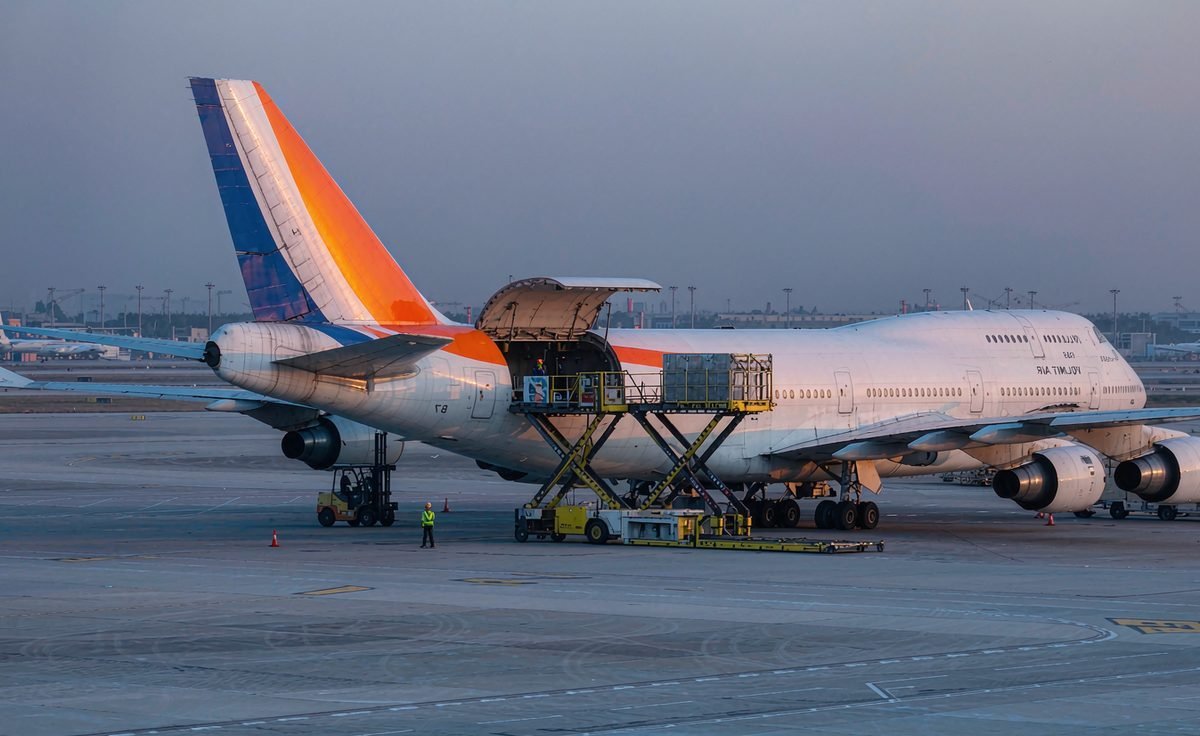
Air Freight: Divide by 6,000
Chargeable weight = MAX(actual kg, volumetric kg)
Worked example 4 — light bulky air cargo: 20 cartons, each 50 × 40 × 30 cm, actual weight 280 kg total. Per carton: 50 × 40 × 30 = 60,000 cm³ ÷ 6,000 = 10 kg volumetric. Twenty cartons = 200 kg volumetric vs 280 kg actual. Chargeable weight = 280 kg — actual weight wins.
Worked example 5 — the trap: Same 20 cartons but of foam products, actual weight only 140 kg. Volumetric = 200 kg, so you are billed on 200 kg, 43% more than the scale reading. At an air rate of $4.20/kg Shanghai–Frankfurt, that difference is $252 — real money discovered only at invoice time by importers who skipped the math.
Express couriers (DHL, FedEx, UPS) divide by 5,000, not 6,000, making bulky parcels about 20% pricier per CBM than general air cargo. The 6,000 divisor reflects IATA's standard of 1 CBM = 166.67 kg; the finer points of air freight volumetric weight deserve their own read if you ship samples regularly.
LCL Ocean Freight: CBM vs Tonnes
Worked example 6 — heavy cargo: 6 CBM of ceramic tiles weighing 9.5 tonnes. Volume says 6 units; weight says 9.5 units. You are billed on 9.5 units. Conversely, 6 CBM of plush toys at 700 kg bills on just 6 units. Most LCL quotations carry a minimum charge of 1 CBM regardless of how small the shipment is.
Quick Conversion Shortcuts
| Situation | Shortcut | Example |
|---|---|---|
| Cartons in cm | L × W × H (cm) ÷ 1,000,000 = CBM | 60 × 50 × 40 ÷ 1,000,000 = 0.12 CBM |
| Air volumetric (kg) | cm³ ÷ 6,000 (≈ 1 CBM = 166.67 kg) | 1,000,000 cm³ ÷ 6,000 = 167 kg |
| Courier volumetric (kg) | cm³ ÷ 5,000 (≈ 1 CBM = 200 kg) | 1,000,000 cm³ ÷ 5,000 = 200 kg |
| 20GP fill estimate | Use ~28 CBM / ~28 t | 26 CBM cargo → fits 20GP |
| 40HC fill estimate | Use ~68 CBM / ~26 t | 62 CBM light cargo → fits 40HC |
Rate levels themselves move with the market — indexes such as the Freightos Baltic Index and Drewry's World Container Index track them weekly — but the volume and weight math never changes. Whether rates are $2,000 or $8,000 per 40HC, your CBM calculation decides which bracket you land in.
How Do You Measure Odd-Shaped Cargo?
Not everything ships in neat rectangles, but the rule is always the same: measure the smallest box the item would fit in.
- Cylinders and rolls (carpets, steel coils, paper rolls): treat the diameter as both length and width, so CBM = π × (diameter ÷ 2)² × length. A roll of 1.2 m diameter and 2 m long is 3.14 × 0.36 × 2 ≈ 2.26 CBM. In practice many warehouses simply bill the square box (1.2 × 1.2 × 2 = 2.88 CBM), so confirm the method before you quote your customer.
- Skids and crates on pallets: measure from pallet edge to pallet edge, and include overhang. A crate overhanging its pallet by 5 cm per side can push a 1.44 CBM unit to 1.75 CBM — a 21% invoice increase.
- Nesting or stackable items (chairs, buckets): ask the factory whether they ship disassembled. Flat-packing a chair can cut its CBM by half or more, which is why furniture importers insist on knock-down packaging.
How Do We Verify Volume at Our Warehouse?
When cargo reaches our Guangzhou or Yiwu consolidation warehouse, it is re-measured piece by piece with a dimensional scanner or tape, and the figures are sent to you with photos. This step protects you in both directions: if the factory's declared 8.2 CBM turns out to be 7.1 CBM, you pay LCL on 7.1; if it turns out to be 9.6 CBM, you know before the ocean booking closes, not when the destination invoice arrives. A mid-size importer moving four to six LCL shipments a month typically saves $300–$900 per month simply by billing on verified rather than declared volume.
Chargeable weight also interacts with customs, not just freight: air manifests and some destination pre-alerts use the chargeable figure, and gross weight must match what appears on your packing list and bill of lading. Keep one source of truth across all your export documents.
Three Costly Mistakes to Avoid
- Quoting from product dimensions, not carton dimensions. Products are packed with void fill, dividers and boxes; outer cartons are commonly 10–25% larger. Measure the shipping carton.
- Ignoring bulge and pallet height. Vacuum-packed textiles can bulge 5 cm per side, and a wooden pallet adds ~0.15 CBM. Our warehouse re-measures every receipt — discrepancies of 8–12% are routine.
- Forgetting which mode's divisor applies. Sea LCL (1 CBM basis), air (÷6,000) and courier (÷5,000) all bill differently for the identical carton. Before choosing a mode, run the math both ways — our air vs sea freight comparison shows when each mode wins on cost.
Frequently Asked Questions
How do I calculate CBM for shipping?
CBM (cubic meters) is calculated as length x width x height in meters, per carton, multiplied by the number of cartons. A carton of 0.6 x 0.5 x 0.4 m equals 0.12 CBM, so 100 such cartons equal 12 CBM. Measure the outer carton including any pallet, and round each dimension up slightly if cartons bulge.
What is chargeable weight?
Chargeable weight is the figure a carrier bills on: the greater of actual (gross) weight and volumetric weight. For air freight, volumetric weight is length x width x height in centimeters divided by 6,000. For LCL ocean freight, it is usually the greater of weight in tonnes and volume in CBM, so 5 CBM and 4 tonnes both price as 5 units.
Why does air freight use a 6,000 divisor?
Aircraft cargo holds fill up by volume long before they reach their weight limit, so IATA carriers charge volumetric weight using 1 CBM = 166.67 kg, which is the same as dividing cubic centimeters by 6,000. Some express couriers use 5,000 instead, making light bulky parcels more expensive by about 20%.
How many CBM fit in a 20ft and 40ft container?
A 20GP container holds about 28 CBM of usable cargo, a 40GP about 58 CBM, and a 40HC about 68 CBM in practice, though internal volumes are slightly larger. Weight limits differ: a 20GP typically maxes out around 28 tonnes payload, so heavy cargo fills weight before volume.
Is LCL charged by CBM or by weight?
LCL ocean freight is normally charged per CBM, with a minimum of 1 CBM, and the chargeable basis is the greater of volume in CBM and weight in metric tonnes. Heavy compact cargo such as tiles may therefore be billed by weight. Terminal handling at destination is often charged per CBM too.
How do I calculate volumetric weight for courier shipments?
For express couriers like DHL, FedEx and UPS, multiply length x width x height in centimeters and divide by 5,000 per piece, then compare against actual weight per piece; the higher figure is the chargeable weight for that piece. A 40 x 30 x 25 cm box of 8 kg is volumetrically 6 kg, so it bills at 8 kg.
- Air Freight Volumetric Weight: Formula Explained
- What Is Free Time? How to Negotiate More Days
- Shipping Ceramics & Tableware from China: The Complete Exporter's Guide
- Shipping from China to India: The Complete 2027 Guide
- Shipping from Shenzhen to Los Angeles: Rates, Transit Times & Booking Guide
- How to Load Cosmetics & Beauty Products into a Container Without Damage
Get Today's Rate & Lock Your Discount
Waymore Shipping offers FCL & LCL ocean freight from every major port in China — Shanghai, Ningbo, Shenzhen, Guangzhou, Qingdao, Xiamen, Tianjin and more. Rates updated weekly with carrier discounts.