China to Malaysia Customs Clearance: Documents, Duties & Process
- Malaysia clearance hinges on the K1 declaration plus invoice, packing list, B/L and — for duty savings — Form E.
- Duty is mostly 0–10%; sales tax adds 10% on CIF + duty. Form E (ACFTA) zeroes duty on most lines.
- Clean shipments clear at Port Klang in 1–2 working days; regulated goods add 3–7 days for permits.
- Most holds we see are value questions, HS misclassification, or missing permits — all preventable before loading.
- Pre-lodging documents before vessel arrival is the single biggest speed lever.
Malaysia import customs clearance requires a K1 customs declaration supported by a commercial invoice, packing list and bill of lading; duty runs 0–10% for most goods and sales tax adds 10%, while a China–ASEAN Form E certificate reduces most duty lines to 0%. Straightforward cargo clears Port Klang in 1–2 working days.
Our Malaysia desk clears hundreds of Chinese-origin shipments a year, and the pattern is consistent: delays almost never come from the customs law itself — they come from documents that were wrong before the container was loaded. Here is exactly what Malaysia's Royal Customs Department (JKDM) expects, what it costs, and where shipments get stuck.
What Documents Does Malaysia Customs Require?
| Document | Issued by | Why it matters |
|---|---|---|
| Commercial invoice | Exporter (China) | Value basis for duty + sales tax; must match payment terms and Incoterms |
| Packing list | Exporter (China) | Piece/carton counts, weights, dimensions — checked against physical inspection |
| Bill of lading / Air waybill | Carrier | Title document; consignee details must match K1 |
| K1 declaration | Malaysian customs agent | The legal import entry; HS codes, values, origin claims |
| Form E certificate of origin | CPCC/CCPIT in China | ACFTA preferential (0%) duty — must be issued at/before loading |
| Import permit / certification | SIRIM, MCMC, MOH, MAQIS etc. | Mandatory for regulated categories (see below) |
| Insurance certificate | Insurer | Optional but recommended; supports claims |
If you're unsure what your Chinese supplier must hand over before the container moves, start with our checklist on China export customs documents — most Malaysia-side problems are actually China-side omissions.
How Much Duty and Tax Will You Pay in Malaysia?
Malaysia applies three layers on most imports: import duty by HS code, sales tax, and — for specific categories — excise. Indicative bands for common Chinese imports:
| Product category (typical HS) | Import duty | Sales tax | Extra permits |
|---|---|---|---|
| Garments & textiles (61/62) | 0–20% | 10% | None typical |
| Home appliances (8516) | 0–10% | 10% | SIRIM (safety) + Energy Commission label |
| Consumer electronics/IT (8471/8517) | 0% | 10% | SIRIM for some; MCMC for wireless/Bluetooth |
| Furniture (9403) | 0–5% | 10% | None typical |
| Toys (9503) | 0–5% | 5–10% | Safety compliance for children's toys |
| Packaged food (19/21) | 0–10% | 10% | MOH food import clearance, halal-related checks if claimed |
| Building materials — ceramics (6907) | 0–10% | 10% | None typical |
| Iron/steel products (72/73) | 0–10% (some safeguard lines) | 10% | Permit for some steel lines (MITI) |
The percentage that matters most, though, is 0% — the ACFTA rate. With a valid Form E, the great majority of Chinese-origin HS codes enter at zero duty. The certificate is issued in China by the customs/CCPIT system before or at loading, lists HS codes that must match the invoice exactly, and cannot be reliably added after arrival. One client shipped kitchenware without Form E in March 2026; the 5% duty bill was small, but they've since had the certificate issued on every shipment and saved roughly USD 1,800 across the year.
Worked example: 18 CBM of LED lamps, Shenzhen → Port Klang
| Item | Value (USD) |
|---|---|
| CIF value of goods | 28,000 |
| Import duty (HS 8539, 0% with Form E / 5% without) | 0 vs 1,400 |
| Sales tax 10% on CIF + duty | 2,800 vs 2,940 |
| Clearance & agency fees | ~180 |
| Total border cost with Form E | ~USD 2,980 |
What Role Does the Freight Forwarder Play in Clearance?
A common misconception is that customs clearance is purely the broker's job. On a China–Malaysia movement, responsibility splits across three parties, and the forwarder is the only one who sees all of them:
- The China-side forwarder ensures the export declaration, B/L data and Form E application are internally consistent — the upstream half of your clearance file.
- The Malaysian clearing agent prepares and lodges the K1, pays taxes through the JKDM system, and handles any lane queries or inspections.
- The importer supplies the commercial truth: real values, correct end-use, product specifications — the things no agent can invent on your behalf.
When one company controls both ends — as we do on this lane — the document chain is checked once, as a single set, before the container even loads. That single discipline is what turns clearance from a lottery into a 48-hour formality, and it's why our Malaysia files clear green-lane at a far higher rate than the market average.
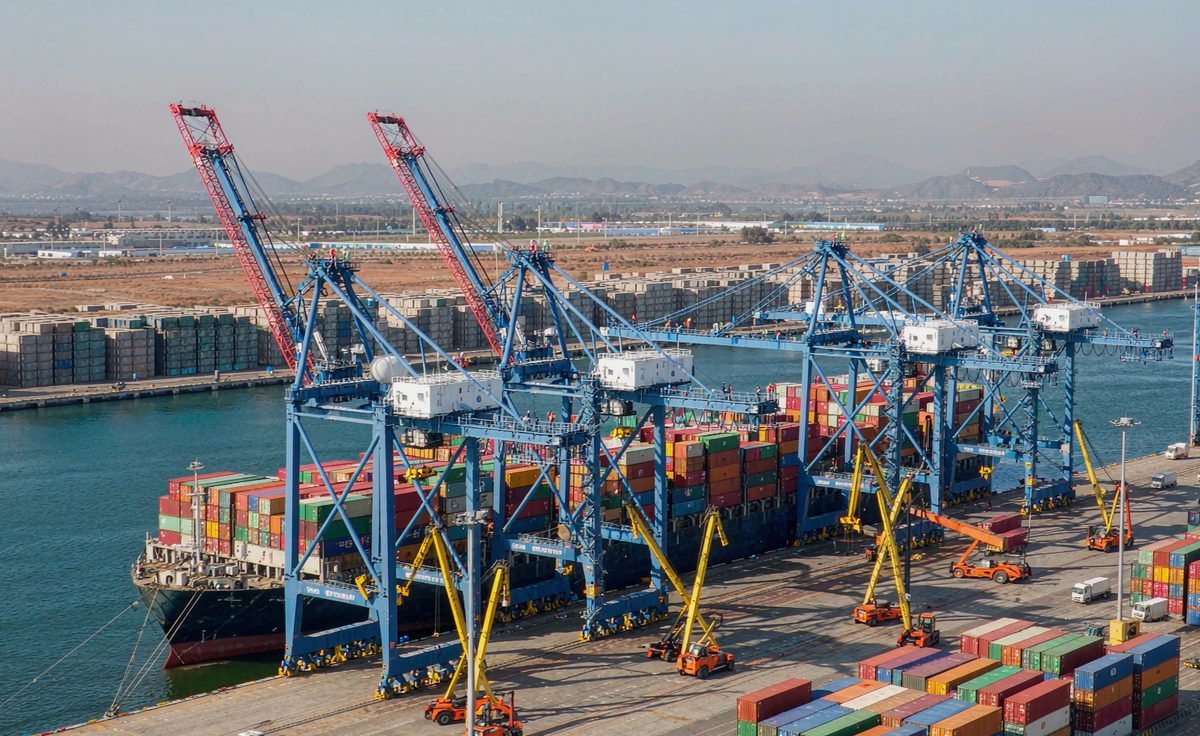
What Is the Clearance Process at Port Klang, Step by Step?
- Pre-arrival lodgement. Your agent files the K1 (with tax payment to JKDM) before the vessel berths — this is what makes 1–2 day clearance possible.
- Lane assignment. JKDM's system routes each declaration: green lane (release), yellow lane (document check), red lane (physical inspection). Clean, consistent declarations overwhelmingly go green.
- Permit verification (if applicable). SIRIM, MCMC, MOH or MAQIS endorsements are checked electronically against the K1.
- Tax payment & release order. Sales tax is paid; the shipping line issues the delivery order after the B/L is surrendered or endorsed.
- Gate-out & delivery. Trucking to KL is 1–2 hours; East Malaysia adds a feeder leg and a second clearance event.
Why Do China–Malaysia Shipments Get Held? (And How to Avoid It)
The four holds we resolve most often:
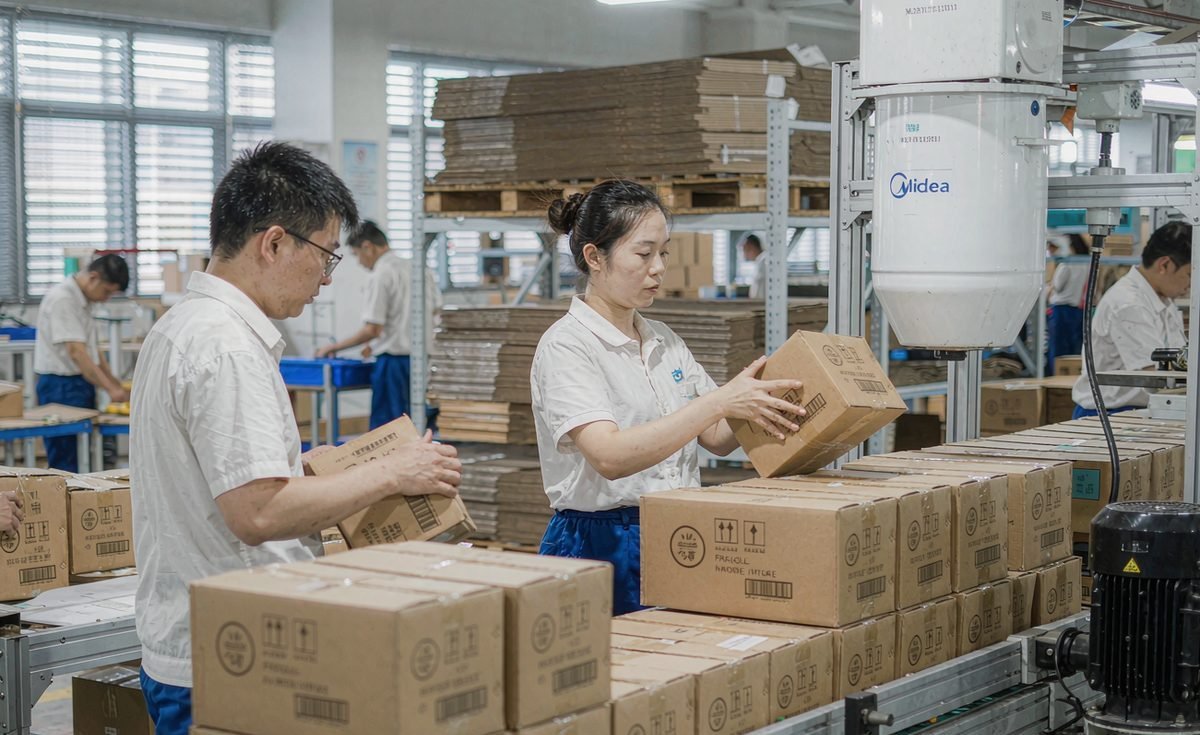
- Undervaluation flags. Invoices far below market trigger value queries. JKDM compares against reference prices; borderline "friendship prices" cost far more in inspection days than they save.
- HS misclassification. Declaring LED fittings as "parts" to chase a 0% line gets the whole consignment examined. Classify by function, not by wish.
- Missing product permits. A Bluetooth speaker is an MCMC item; a rice cooker is a SIRIM item. First-time importers hit this most — we screen every new SKU against the permit list before booking.
- Form E discrepancies. HS codes or quantities on Form E that don't match the invoice void the preferential claim. Treat the certificate as a legal document, not paperwork.
A real case from June 2026: an importer's consignment of 1,200 power banks was flagged because the K1 declared "chargers" without the MCMC permit number. The cargo sat 9 days at Westport accruing USD 45/day storage. We lodged the permit under the registered responsible-company route and negotiated partial storage waiver — recoverable, but 9 days late for their launch. The permit takes about two weeks to arrange when planned ahead.
How Do Incoterms Change Who Pays What at the Border?
Customs charges don't disappear under any Incoterm — they just land on different parties. The practical split on China–Malaysia shipments:
| Term | Pays Thai/Malaysian duty & tax | Files the K1 | Practical note |
|---|---|---|---|
| FOB / CIF | Buyer (importer) | Buyer's agent | Full visibility of the tax stack; required if you want input-tax recovery under your own registration |
| DDU (DAP) | Buyer | Buyer's agent, often forwarder-arranged | Freight delivered duty-unpaid; buyer must have clearance capability ready at arrival |
| DDP | Seller/forwarder | Forwarder's Malaysian agent | One price, but check declared values and who keeps the K1 records |
For most importers with a Malaysian SSM registration and SST status, clearing under their own entity is not just compliance hygiene — it's financially better, because the 10% sales tax becomes a recoverable input rather than a sunk cost buried inside a DDP price.
What Happens During a Physical Inspection (Red Lane)?
If your K1 is routed to physical examination, here's the realistic sequence at Port Klang so you can judge the clock honestly:
- Booking the examination slot (1–3 days). Inspection bays are scheduled; during Raya and year-end peaks, slots stretch out.
- The examination itself (0.5–1 day). Customs officers open a sampled number of cartons against the packing list, verify HS classification and count, and photograph findings.
- Findings & resolution (1–5 days). If contents match the declaration, release follows quickly. If there's a discrepancy — undeclared SKUs, quantity shortfalls, wrong HS — the file moves to assessment, which may include a duty re-computation and, for serious misdeclaration, penalties.
Total realistic timeline: 3–7 working days for a clean outcome, 10+ for a disputed one. Every day accrues storage at the terminal. This is why we treat pre-shipment document review as the real customs service — the inspection itself is just arithmetic at that point.
How Should You Value Goods for Malaysian Customs?
Malaysia applies transaction value as the WTO-consistent valuation basis: the price actually paid or payable, adjusted for assists, royalties and certain transport elements. In practice, three rules keep valuations defensible:
- Invoice the real price. "Reduced" invoices to save tax are the fastest route to a value query, back-assessment at reference prices, and a compliance flag that follows your consignee for future shipments.
- Keep the Incoterm and value consistent. An FOB value declared on a CIF shipment, or freight omitted where it should be dutiable, creates arithmetic mismatches that examiners spot instantly.
- Support related-party prices. If you import from your own factory or affiliate, keep transfer-pricing documentation available — related-party invoicing is a standard yellow-lane trigger when unexplained.
What Does Clearance Cost Beyond Taxes?
| Service | Typical fee (USD) |
|---|---|
| K1 preparation & filing (per declaration) | 50–90 |
| Delivery order processing | 30–50 |
| Terminal handling pass-through | 80–140 per container |
| Trucking Port Klang → KL/Shah Alam | 120–180 per container |
| Permit handling (SIRIM/MCMC lodgement) | 60–150 per item, plus official fees |
| Storage/demurrage if delayed | 30–60 per day after free time |
Agency fees are small relative to taxes — but they vary wildly between providers, so compare a full fee sheet, not just the headline filing charge.
Can You Outsource All of This?
Yes — that's effectively what DDP shipping is: the forwarder takes freight, clearance, taxes and delivery into one price. It works well for e-commerce sellers and companies without a Malaysian import entity, but the responsibility split matters. We compare the models and the pitfalls in our article on DDP shipping from China to Malaysia. And if clearance timings feel opaque relative to ocean time, our piece on why destination clearance is slower than ocean transit explains the mechanics.
Frequently Asked Questions
What documents are required for Malaysia import customs clearance?
The core set is the commercial invoice, packing list, bill of lading or air waybill, and the K1 customs declaration. A China–ASEAN Form E certificate of origin secures preferential duty. Product-specific permits (SIRIM, MCMC, MOH food clearance) apply to regulated goods.
How much is import duty and sales tax in Malaysia?
Import duty for most Chinese goods ranges from 0% to 10% by HS code, and sales tax is typically 10% (5% on certain categories) assessed on CIF value plus duty. With a valid Form E certificate, most duty lines fall to 0% under ACFTA.
How long does customs clearance take at Port Klang?
Straightforward shipments clear in 1–2 working days after the K1 is lodged. Regulated goods needing permits, or cargo flagged for physical inspection, typically take 3–7 working days.
What is Form E and why does it matter for Malaysia imports?
Form E is the China–ASEAN Free Trade Agreement certificate of origin issued in China before shipment. It certifies Chinese origin so qualifying HS codes import at 0% duty instead of standard MFN rates. It must be issued before or at loading and cannot simply be added afterwards.
- Shipping from China to Malaysia: The Complete 2027 Guide
- Air Freight from China to Malaysia: Costs & When to Use It
- How Much Does It Cost to Ship a Container from China to Malaysia?
- China to Greece Customs Clearance: Documents, Duties & Process
- China to Bangladesh Customs Clearance: Documents, Duties & Process
- China to Germany Customs Clearance: Documents, Duties & Process
Get Today's Rate & Lock Your Discount
Waymore Shipping offers FCL & LCL ocean freight from every major port in China — Shanghai, Ningbo, Shenzhen, Guangzhou, Qingdao, Xiamen, Tianjin and more. Rates updated weekly with carrier discounts.