China Export Customs: Documents You Must Prepare
- Every export from China needs at least four core documents: commercial invoice, packing list, export declaration, and sales contract.
- China Customs runs a paperless declaration system — a good forwarder can clear routine exports within one working day.
- Under FOB terms, export clearance is the seller's job; under EXW it falls to the buyer, which is a hidden cost many importers miss.
- Document mismatches — not inspections — cause most clearance delays. Numbers must match exactly across every paper.
- Product-specific papers (licences, inspection certificates, certificates of origin) depend entirely on your HS code.
China export customs requires four core documents: a commercial invoice, a packing list, an export customs declaration, and a sales contract — plus product-specific licences, inspection certificates, or certificates of origin when your HS code demands them. With correct paperwork, routine clearance completes in about one working day; with mismatched documents, shipments can sit at port for weeks.
Export clearance is the one step of the shipping process that overseas buyers almost never see, and it is where a surprising share of delays originate. Container loaded, gate-in done — and then the shipment is held because the invoice value, the declared value, and the packing list do not agree. Our clearance team in Ningbo processes several hundred export declarations every month, and in this guide we will walk you through exactly which documents are required, who is responsible for each one under different Incoterms, and the mistakes that most frequently trap first-time importers.
What Are the Core Documents for China Export Customs?
Think of the document set in two layers: the core four that apply to every shipment, and the conditional layer that depends on what you are shipping. Here is the full picture at a glance:
| Document | Required? | Prepared by | Key contents | Common mistake |
|---|---|---|---|---|
| Commercial invoice | Always | Seller/exporter | Value, currency, Incoterm, buyer/seller details | Undeclared or "gift" values |
| Packing list | Always | Seller/exporter | Cartons, weights, dimensions, marks | Weight not matching VGM |
| Export customs declaration | Always | Forwarder / customs broker | HS codes, declared value, exporter ID | Wrong HS code classification |
| Sales contract / PO | Always | Seller & buyer | Trade terms, payment, goods description | Terms differing from invoice |
| Export licence | Controlled goods only | Seller (licensing agency) | Quota or approval for restricted items | Discovering requirement late |
| Quality / CIQ inspection cert | Regulated categories | Seller via customs inspection | Compliance for food, cosmetics, toys, electronics | Assuming all goods exempt |
| Certificate of origin (CO / Form E / RCEP) | When duty relief applies | CCPIT or customs | Origin eligibility for tariff preference | Not requesting before shipment |
| Dangerous goods declaration | DG cargo only | Shipper via forwarder | UN number, class, packing group | Hiding DG as general cargo |
The declaration itself is filed electronically through China Customs' single-window system. The General Administration of Customs of China (GACC) publishes the regulations, HS tariff schedule, and announcements on its official English site, and licensed forwarders file against it daily. For routine general cargo with clean documents, the electronic release is typically issued the same or next working day.
Who Handles Export Clearance Under Each Incoterm?
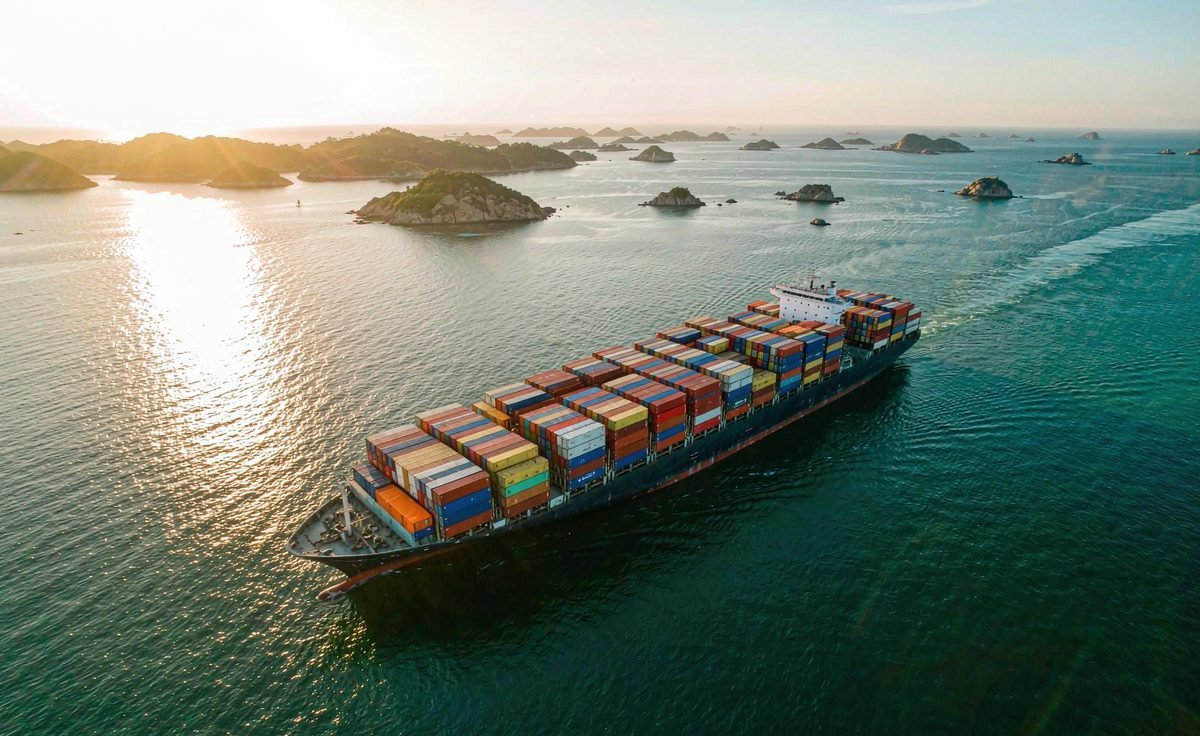
This is the question that decides whether export documents are even your problem. Under FOB, CFR, and CIF, the Chinese seller is responsible for export customs clearance — the declaration, the licences, and any export duties or fees. Your job as the buyer starts at the port of loading. Under EXW, however, export clearance legally becomes the buyer's responsibility, which for a foreign company without a Chinese entity is nearly impossible to execute directly — it must be delegated to your forwarder, and the cost is rarely reflected in the supplier's "cheapest" EXW price.
Our advice, which we explain fully in our plain-English guide to shipping terms, is that overseas buyers should generally buy FOB or above. Under DDP, the reverse applies: the seller or forwarder handles everything on both sides, including import clearance and taxes at destination — the most hands-off option, described in detail in our guide to DDP shipping from China.
Why Do Shipments Get Stuck at China Export Customs?
Having handled thousands of declarations, our team ranks the causes of delay as follows:
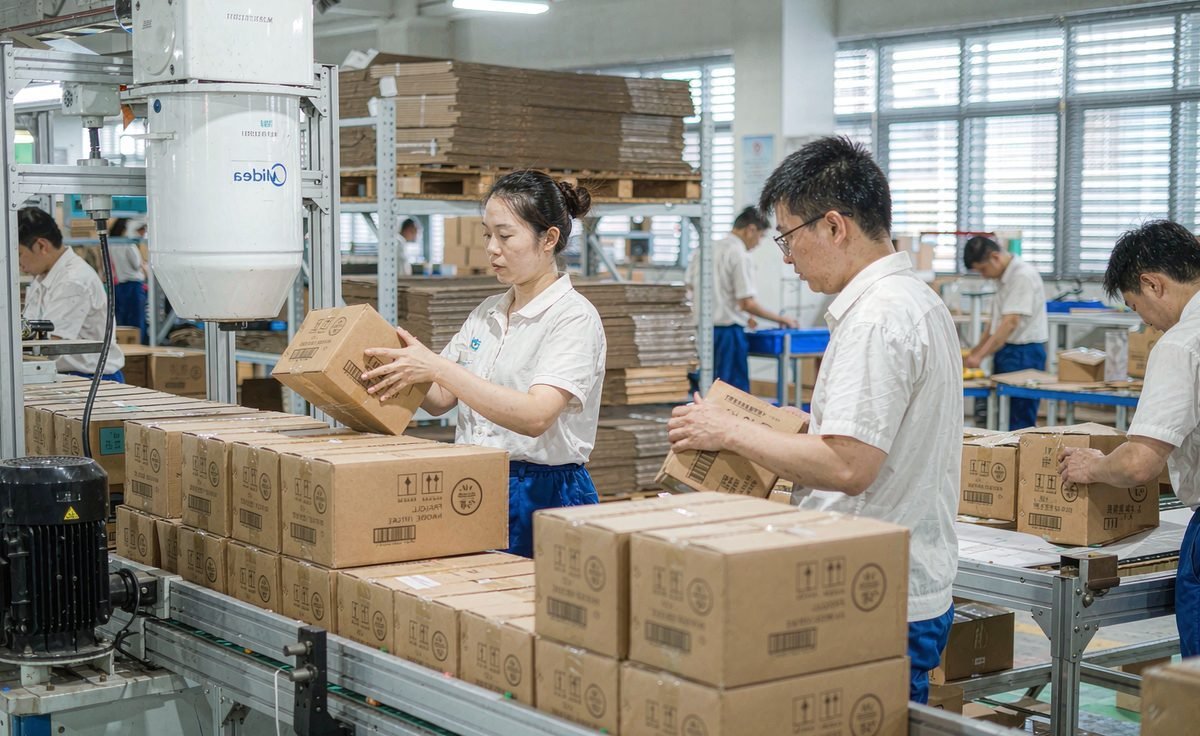
- Document mismatches (most common). The invoice says 1,000 units; the packing list says 986 cartons' worth; the declaration says something else again. Customs reconciliation systems flag the inconsistency automatically and hold the file.
- Wrong HS code. Classification errors trigger either inspection or a compliance query. Since declared value per unit feeds into valuation checks, a suspicious HS-plus-value combination invites scrutiny.
- Undervaluation attempts. Some suppliers propose a low-value invoice to save the buyer import duty. Beyond being illegal in most destination countries, it creates a permanent mismatch between export and import records. If a supplier suggests this, treat it as a red flag about the whole transaction.
- Missing licences or inspection certificates. Certain categories — food products, cosmetics, medical devices, some electronics and chemicals — require pre-shipment quality inspection or export licensing. Discovering this at gate-in means the container is coming back off the terminal.
- Random inspection. China Customs inspects a percentage of shipments at random. This is normal, adds typically 2–5 days, and cannot be avoided — only planned for.
A real example from our files: a UK wholesaler's 6 CBM LCL shipment was held because the supplier's invoice listed a unit price in USD while the contract was denominated in EUR with no exchange note. Three days of correction work for a one-line fix. This is why we verify document consistency before cut-off as a standard part of every booking.
Do You Need a Certificate of Origin from China?
A certificate of origin (CO) certifies that the goods were produced or substantially processed in China. It is issued by CCPIT or, for preferential schemes, by customs itself. Whether you need one depends on your destination and your duty strategy:
- Preferential certificates (RCEP, Form E for ASEAN–China, and similar agreements) unlock reduced or zero import duty. For goods with meaningful duty exposure, the certificate pays for itself many times over.
- Non-preferential COs are sometimes requested by destination customs for anti-dumping monitoring or import licence processing — the EU and some Middle East markets ask for them case by case.
- Timing matters: a CO must generally be applied for around the shipment date. If your broker at destination tells you they need one after the goods have sailed, retroactive issuance is possible but slower and costlier.
On the import side, requirements differ by market: US importers deal with US Customs and Border Protection rules including the ISF filing due before loading, while EU importers work with EU customs authorities on EORI numbers and import VAT. Our team coordinates with your destination broker so the export documents align with what customs at the other end expects to see.
What About Export Licences and Quality Inspection Certificates?
The conditional layer of documents deserves closer attention, because it is where unprepared exporters lose weeks. China maintains an export licensing regime for certain categories of goods — items with strategic, environmental, or safety significance — and for a subset of consumer categories that require pre-shipment inspection by customs quality inspection authorities. The list changes over time as regulations are updated, which is exactly why you should confirm status for your specific HS code every season rather than relying on last year's experience.
In practice the workflow runs like this: your forwarder checks the product description and HS code against the current catalogue. If a licence applies, the Chinese exporter applies for it through the licensing system — this can take several working days, so it must happen during production, not at shipping time. If a quality inspection applies, the goods are presented for inspection before loading, and a certificate is issued on passing. Food products, cosmetics, toys, certain electronics, and some chemical products are the categories where we most frequently see these requirements. A supplier who is experienced in exporting your category will already know the drill; a supplier who shrugs and says "no certificate needed" without checking is a genuine warning sign, because the declaring exporter — and by extension your shipment — bears the consequence of getting it wrong.
How Can You Prevent Export Customs Delays? A Practical Checklist
Run this checklist before every container gate-in. It takes fifteen minutes and prevents the vast majority of holds:
- Confirm the HS code with your forwarder early — not the day before cut-off.
- Check that quantity, weight, and value match exactly across invoice, packing list, and contract.
- Verify the declared Incoterm on the invoice matches your purchase agreement.
- Ask whether your product category needs an export licence or CIQ inspection certificate.
- If duty relief applies, arrange the certificate of origin in advance.
- For batteries, liquids, magnets, or chemicals, confirm DG classification before quoting — see our guide to shipping dangerous goods from China.
- Confirm the exporter's registration status — the supplier must have valid export credentials, or your forwarder may need to act as the exporter of record.
If you are at the very start of your sourcing journey, our step-by-step import from China guide places customs documentation in the context of the full buying cycle, from factory negotiation to final delivery.
Frequently Asked Questions
What documents are required for export customs clearance in China?
Every China export shipment requires a commercial invoice, a packing list, a customs export declaration filed through China Customs single-window system, and a contract or sales confirmation. Depending on the product you may also need an export licence, quality inspection certificate, dangerous goods documentation, or a certificate of origin. Your freight forwarder normally files the declaration on your behalf.
Who is responsible for export clearance in China under FOB terms?
Under FOB terms the seller (the Chinese supplier) is responsible for export customs clearance, including the declaration and any export licences. The buyer arranges and pays for the main carriage and import clearance. If you buy on EXW terms, however, export clearance becomes the buyer's problem — one of several reasons FOB is usually the safer term for overseas buyers.
What happens if the invoice value does not match the customs declaration?
Mismatches between the commercial invoice, the packing list, and the customs declaration are the most common cause of export delays. China Customs may hold the shipment for inspection, request corrected documents, or impose penalties on the declaring party. Always ensure quantities, weights, values, and product descriptions are identical across all documents before the container gate-in deadline.
Do I need a certificate of origin to import from China?
A certificate of origin is not always mandatory, but it is essential for claiming preferential duty rates under free trade agreements such as RCEP or ASEAN–China. Some destination countries also require it for anti-dumping checks. Ask your customs broker at destination whether a CO, Form E, or RCEP certificate applies to your product's HS code.
How long does China export customs clearance take?
With correct documents and no inspection, export clearance in China usually completes within one working day thanks to the paperless customs system. Random or targeted inspections add 2–5 days. Shipments with incomplete paperwork, licence requirements, or undeclared restricted goods can be held for one to three weeks, which is why document accuracy before cut-off matters so much.
Can my freight forwarder handle China export customs for me?
Yes. A licensed Chinese freight forwarder files the export declaration, arranges any required inspection, and coordinates with the terminal on your behalf — this is standard on FOB, CIF, CFR, and DDP shipments. You or your supplier only need to provide the invoice, packing list, and product details; the forwarder converts them into a compliant declaration.
- How to Prepare Your Cargo Before Chinese New Year 2027
- How to Prepare Your Cargo Before Chinese New Year 2028
- How to Prepare Your Cargo Before Chinese New Year
- Ramadan & Eid Shipping Rhythms for Middle East Lanes: What China Shippers Must Plan Around
- Shipping Machinery & Industrial Equipment from China: The Complete Exporter's Guide
- Shipping Samples from China Fast and Cheap: 3 Routes Compared
Get Today's Rate & Lock Your Discount
Waymore Shipping offers FCL & LCL ocean freight from every major port in China — Shanghai, Ningbo, Shenzhen, Guangzhou, Qingdao, Xiamen, Tianjin and more. Rates updated weekly with carrier discounts.