Factory Direct vs Trading Company: Shipping Implications
- The factory-direct vs trading-company choice changes your documents, exporter of record and cargo control — not just unit price.
- Factories without export rights ship via a "buy export" agent ($100–300 per shipment); trading companies export in their own name.
- Trading companies consolidate multi-factory orders smoothly; factory-direct needs a forwarder warehouse and your coordination.
- Compare total landed cost — margin, inland trucking, documentation and delay risk — not ex-works unit price.
- Waymore handles both models weekly from every major Chinese port; free quotes, weekly discounted rates.
Factory-direct sourcing cuts out the middleman's margin, but shifts export paperwork, consolidation and coordination onto you; a trading company adds 3–15% to unit cost but delivers one invoice, one exporter of record and mixed-product containers. For shipping specifically, the difference shows up in who appears on your export declaration and bill of lading, how fast cargo reaches the port, and what happens when two factories' goods must travel together.
Our operations team loads containers for both models every day — from a Yiwu trading house exporting 400 SKUs of housewares in one 40HC, to a Ningbo factory shipping its own injection-moulded planters direct to a US wholesaler. Neither is "better". But each creates predictable logistics consequences that importers should price in before choosing a supplier.
What actually changes in the shipping process?
From the vessel's point of view both shipments look identical — a container at Yantian is a container. The differences sit on paper and in the weeks before loading:
| Dimension | Factory direct | Trading company |
|---|---|---|
| Unit price (ex-works basis) | Lowest — no intermediary margin | +3–15% markup embedded |
| Export licence & exporter of record | Licensed factories export in own name; others need a buy-export agent ($100–300/shipment) | Always licensed; exports in its own name |
| Documents (invoice/PL/BL) | Factory-issued; quality varies, commodity codes often guessed | Professional set; codes and values usually clean |
| Multi-factory consolidation | You arrange via forwarder warehouse; you chase ready dates | Their core skill — one PO, one container, many factories |
| Inland trucking to port | Factory arranges (or you do); rural factories add $150–500 trucking | Usually included in FOB/EXW handling |
| Communication & English | Improving but uneven; sales staff may not know Incoterms deeply | Export-facing staff; faster document turnaround |
| Product development / QC | Direct line to engineers; faster iterations | One layer removed; QC depends on their staffing |
| Price transparency for future negotiation | You know the true production cost | Opaque — margin hidden inside the quote |
How does the export licence issue work?
Every container leaving a Chinese port needs an export declaration naming a registered exporter. Roughly speaking, the market splits three ways:
- Factories with their own export rights — the majority of mid-size and larger manufacturers. They appear on the declaration, can claim the VAT export rebate themselves, and their documents are straightforward.
- Factories without export rights — common among small workshops, especially in Yiwu, Shantou and Dongguan clusters. They ship through a buy-export agent: the agent's company appears on the declaration for a fee, and the goods ship normally. The mechanics are covered in our buy export vs tax rebate export explainer.
- Trading companies — licensed exporters by definition. This is part of what their margin buys.
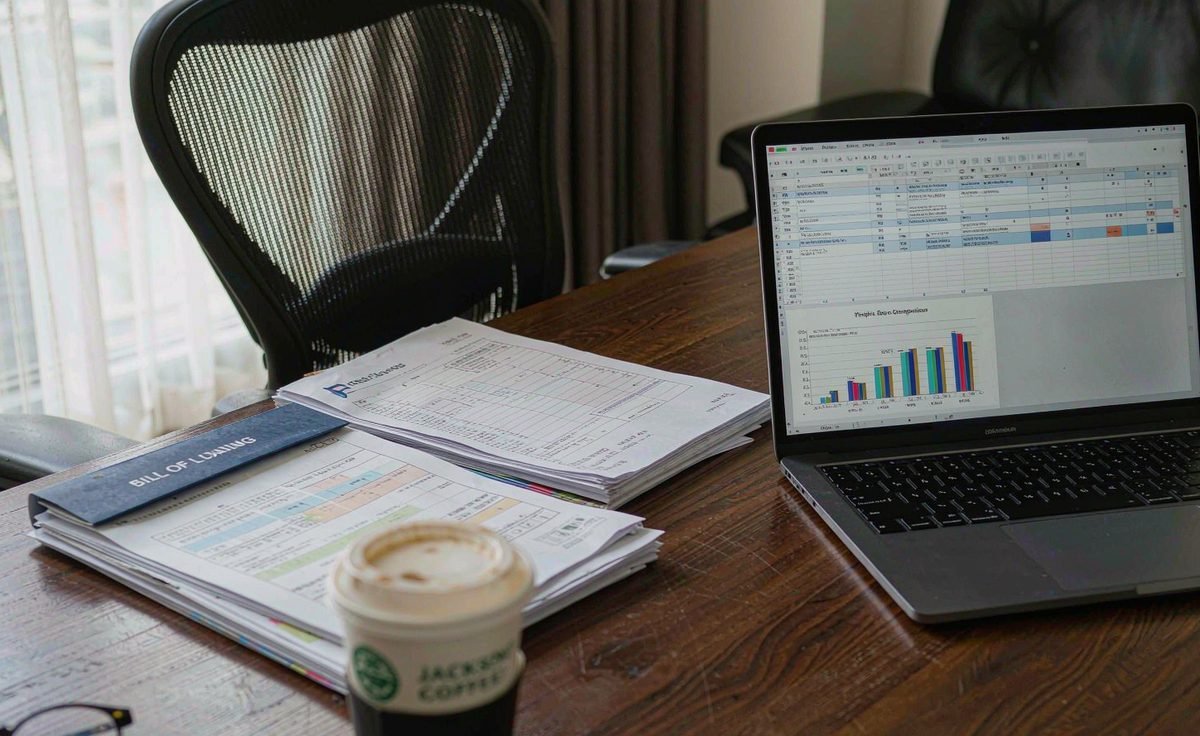
The shipping consequence: whoever is the declared exporter must match the shipper on the bill of lading. A mismatch — factory on the BL, agent on the declaration — is one of the top three causes of export-clearance delays we see at Shenzhen and Ningbo. Sort this before the truck is booked, not on cut-off day. Our guide on who can be the shipper on a bill of lading shows the acceptable combinations.
Which model gives you better control of the container?
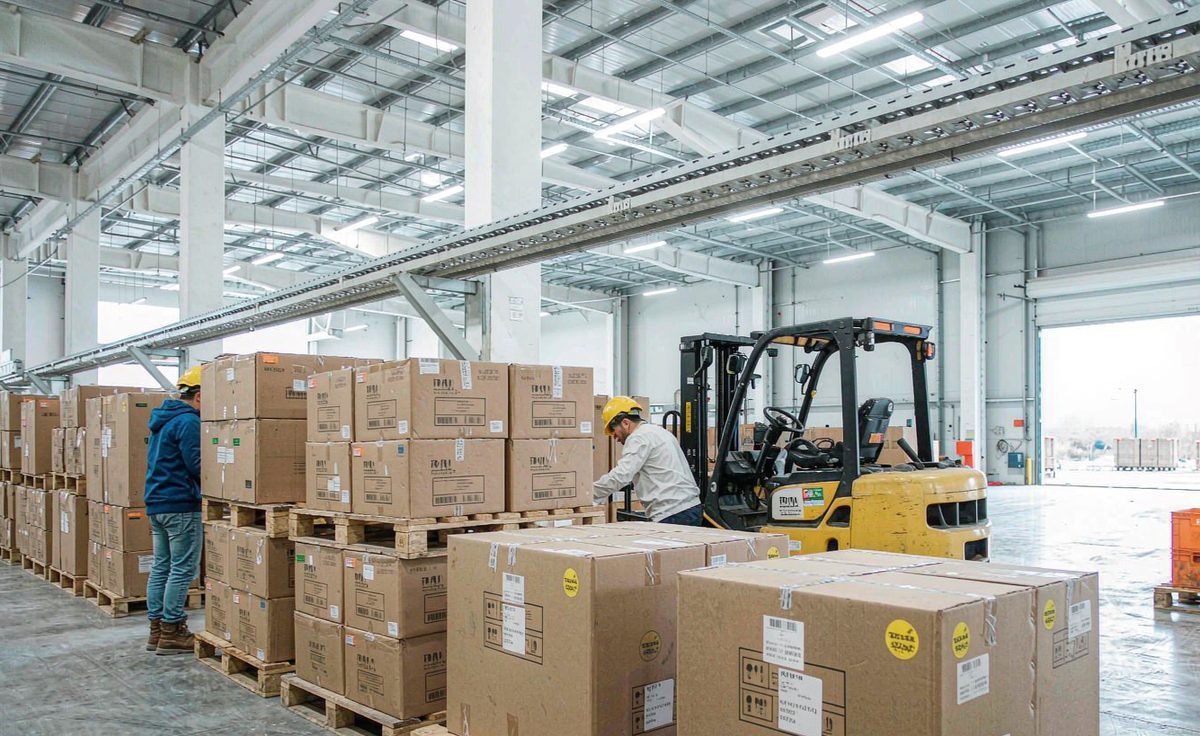
This is where the two paths truly diverge. With factory direct, you own the logistics chain: you nominate the forwarder, the factory delivers ex-works or FOB, and — critically — you see the real cargo before it ships. When you put a forwarder warehouse in the middle (collect from three factories, inspect, palletize, stuff), you gain the control a trading company would normally provide, for a consolidation fee that is a fraction of a 10% trading margin. Our step-by-step multi-supplier consolidation guide and the Incoterms reference at Incoterms 2020 explained cover the mechanics.
With a trading company, control inverts: they want to nominate the forwarder (often their own affiliate), they prefer shipping "their" container with their BL, and you may never know which sub-supplier's goods are in which carton. That is acceptable — sometimes preferable — for large mixed orders, but it means your freight is bundled with their service, and comparing their all-in price against factory-direct-plus-your-own-forwarder is the only honest comparison.
Mini-case: the same 40HC, two sourcing models
A Toronto housewares importer ran both models in parallel during 2026 for a comparable 40HC program. Route A: a trading company in Shantou, all-in CIF Toronto at $61,400 (goods, freight, insurance). Route B: three factories direct, goods ex-works totalling $53,900, plus our consolidation ($1,150 warehouse and stuffing), ocean Ningbo → Montreal ($2,850 for 40HC), trucking and insurance ($610), and a buy-export fee ($150) for one unlicensed workshop. Route B landed at $58,660 — 4.5% cheaper — and gave the buyer photo verification of each factory's goods before loading. The saving was smaller than the raw 12% price gap because consolidation and trucking ate into it; that gap is exactly what most first-time importers fail to model. Note also the freight-market context: tracking indices like the Xeneta contract benchmarks helped them time the ocean booking two weeks early, before a rate uptick.
When should you choose each model?
- Choose factory direct when: volumes justify your own QC and freight management (typically above one container per quarter); the product is the factory's specialty; you want margin transparency and direct engineering access; and you have a trusted forwarder in China to run the paperwork.
- Choose a trading company when: you buy small mixed quantities across many product categories; you need one payment, one invoice and one point of accountability; you lack staff to chase multiple factories; or the trading company adds genuine services (custom packaging, compliance testing, catalogue management).
- Choose a hybrid — the most common real-world answer: factory direct for your hero SKUs, trading-company or buy-export support for the long tail, with a forwarder warehouse merging everything into weekly sailings.
Whichever you pick, the questions in our choosing a forwarder in China checklist apply to the trading company's nominated forwarder too — some affiliates mark up ocean freight 20%+ while showing an attractive goods price.
How does your sourcing model affect destination customs?
Destination customs never asks whether you bought factory direct — but it grades the paperwork each model produces, and the grading differs:
- Invoice realism. Trading companies usually invoice at market-credible prices because they repeat lanes and get audited repeatedly. Small factories sometimes invoice at whatever the buyer dictates, and valuation disputes at destination almost always trace back to these invoices. A value far below your previous imports flags automatically in most customs systems.
- HS code discipline. A trading house exporting the same category weekly knows which codes its brokers expect. Factories shipping a niche product for the first time may pick a code that is "close enough" in China and wrong at destination — a 4% duty can become 9%, retroactively, on every entry you have already made.
- Origin and free-trade-agreement paperwork. If you are claiming a preferential rate (RCEP certificates for ASEAN lanes, GSP schemes for some markets), the certificate must be issued by the entity matching the export declaration. Agents and trading companies issue these routinely; factories often do not know how.
- Consistency across entries. Customs risk systems compare your entries over time. Mixed sourcing models — one entry from a trading company, the next from an agent, the next from a factory — with inconsistent descriptions for similar goods is a classic exam trigger. Standardize product descriptions across all suppliers.
For complex lanes, cross-check requirements with official sources — China Customs (GACC) for export-side rules, and your national customs site for import-side rules — before the first shipment, not after the first exam.
Switching from a trading company to factory direct? Five pitfalls
Many importers "graduate" to factory direct after a few years and stumble on the transition. The recurring failure points:
- The factory quotes FOB, but the FOB port is wrong. A factory in Jiaxing quoting "FOB Shanghai" may deliver via a trucking broker you have never vetted, arriving at the terminal hours before cut-off. Confirm the trucking provider and gate-in window yourself.
- Nobody applies for the export rebate, and the price quietly assumes it. Some factories price as if they claim the rebate; if they lack export rights and route through an agent that skips the rebate, they may compensate by nudging the price. Clarify who claims what before signing.
- Sample quality ≠ production quality. Trading companies run their own QC for a reason. When going direct, contract a third-party inspection or rely on a warehouse check at consolidation — every time.
- Documents arrive late. Factories often issue the invoice and packing list only after the truck departs, leaving your broker one day to prepare the declaration. Contract a 48-hour pre-document deadline.
- Single-point dependency. Direct sourcing with one factory means one machine breakdown can stall your whole program. Keep a second qualified factory warm, even if volume is small — the trading company you left behind used to provide that redundancy.
Frequently Asked Questions
Is it cheaper to ship from a factory directly or through a trading company?
Neither is automatically cheaper. Factories sell closer to production cost but often need buy-export agents and you handle consolidation; trading companies add a 3–15% margin but deliver clean documents and mixed-product containers. Compare total landed cost — margin, inland trucking, documentation and delay risk — not the ex-works unit price.
Can a Chinese factory without an export licence ship goods to me?
Yes, via a buy-export agent: the agent appears on China's export declaration for typically $100–300 per shipment while the factory keeps its margin hidden. The cargo ships normally, but the agent — not the factory — is the declared exporter, and the BL shipper must match.
Who should be the shipper on the bill of lading?
The exporter of record shown on China's export declaration: the licensed factory, the trading company, or the buy-export agent. Mismatches between the declaration and the bill of lading are among the most common causes of export-clearance delays at Chinese ports.
Do trading companies handle consolidated containers better than factories?
Generally yes — mixing products from several factories into one container and issuing one invoice is a trading company's core skill. With factory-direct sourcing you replicate this through a forwarder's warehouse, which works well and keeps unit prices low, but the coordination burden sits with you.
Does sourcing model affect my destination customs clearance?
Indirectly, yes. What destination customs sees is your invoice, packing list and commodity codes. Trading-company documents are usually accurate and consistent, while factory-issued paperwork sometimes uses guessed HS codes or inflated/deflated values — either of which triggers destination queries, valuation reviews or exam holds that add days and fees.
- Direct vs Transshipment: Which Service Should You Book?
- Chinese New Year: How Long Do Port & Factory Delays Last?
- How to Load Medical Supplies into a Container Without Damage
- Shipping from China to Australia: The Complete 2027 Guide
- Shipping Toys & Baby Products from China: The Complete Exporter's Guide
- Winter 2027 Navigation Risks: Northern China Ports in Ice Season
Get Today's Rate & Lock Your Discount
Waymore Shipping offers FCL & LCL ocean freight from every major port in China — Shanghai, Ningbo, Shenzhen, Guangzhou, Qingdao, Xiamen, Tianjin and more. Rates updated weekly with carrier discounts.