
Chinese New Year: How Long Do Port & Factory Delays Last?
- The real CNY shipping delay window is 4–6 weeks door to door — far longer than the official holiday.
- Factories wind down ~2 weeks before CNY and reach full speed again 3–4 weeks after.
- Ports and customs stay open; the actual bottlenecks are blank sailings, trucking and documents.
- The post-CNY backlog clears in roughly 2–3 weeks, with a second rate bump as demand restarts.
- Cargo that misses pre-CNY sailings can take a month longer than normal — plan the booking window, not the holiday date.
Chinese New Year shipping delays last about four to six weeks door to door: factories slow roughly two weeks before the holiday, the official break runs about eight days, and the post-holiday restart — returning workers, cleared backlogs, recovered trucking — takes another two to three weeks. Ports never close, but effective capacity drops sharply.
Every February, importers who planned around the official holiday calendar get surprised by how long the disruption actually runs. The holiday is not a single week of nothing — it is a curve: a steep pre-holiday rush, a shallow dip during the break, and a long, bumpy ramp back to normal. This article lays out the historical pattern week by week, so you can predict exactly when your cargo will move, and what to do if it can't move before the holiday.

Why Does the CNY Shipping Delay Last Longer Than the Holiday Itself?
Chinese New Year is the world's largest annual migration: hundreds of millions of workers travel home, and logistics is a people business. The official public holiday — set each year by the State Council (see gov.cn for the notice; CNY day falls on February 17, 2026) — is only the core of the curve. Around it:
- Pre-holiday (T-3 to T-1 weeks): exporters race to ship before the break. Demand surges just as carriers blank sailings for the holiday, so space tightens and rates climb. Factory output slows as workers begin leaving early.
- Holiday week (CNY ± a few days): production stops almost everywhere; ports and customs run skeleton crews; trucking is scarce; a reduced sailing schedule operates.
- Post-holiday (T+1 to T+3 weeks): workers trickle back, factories restart at partial capacity, and everything that missed the pre-CNY window competes for space on restart sailings. The backlog — not the holiday itself — is what delays most February shipments.
How Long Do Factory Delays Last Around Chinese New Year?
Based on our clients' production schedules over successive CNY periods, the factory pattern is remarkably consistent:
| Phase (relative to CNY day) | Factory status | Impact on your orders |
|---|---|---|
| T-4 to T-3 weeks | Full production; taking final pre-CNY orders | Last realistic window to place orders for pre-holiday completion |
| T-2 weeks | Winding down; some workers already traveling | Rush completions, QC and packing — expect delays at every step |
| T-1 week | Mostly closed; skeleton staff for handovers | Cargo ex-factory only if pre-arranged; trucking scarce |
| CNY week | Closed (official holiday) | No production; minimal dispatch |
| T+1 to T+2 weeks | Reopening at partial staffing | Backlog sequenced first; new orders queue behind it |
| T+3 to T+4 weeks | Full production speed returns | New POs placed at restart can now be quoted reliably |
Two exceptions worth knowing: large automated plants (electronics, big appliances) restart faster, sometimes within days; and small workshops in inland provinces can stay dark a week longer than the average. Always ask your supplier for their specific restart date in writing — in December, not in February.
Do Chinese Ports and Customs Close During Chinese New Year?
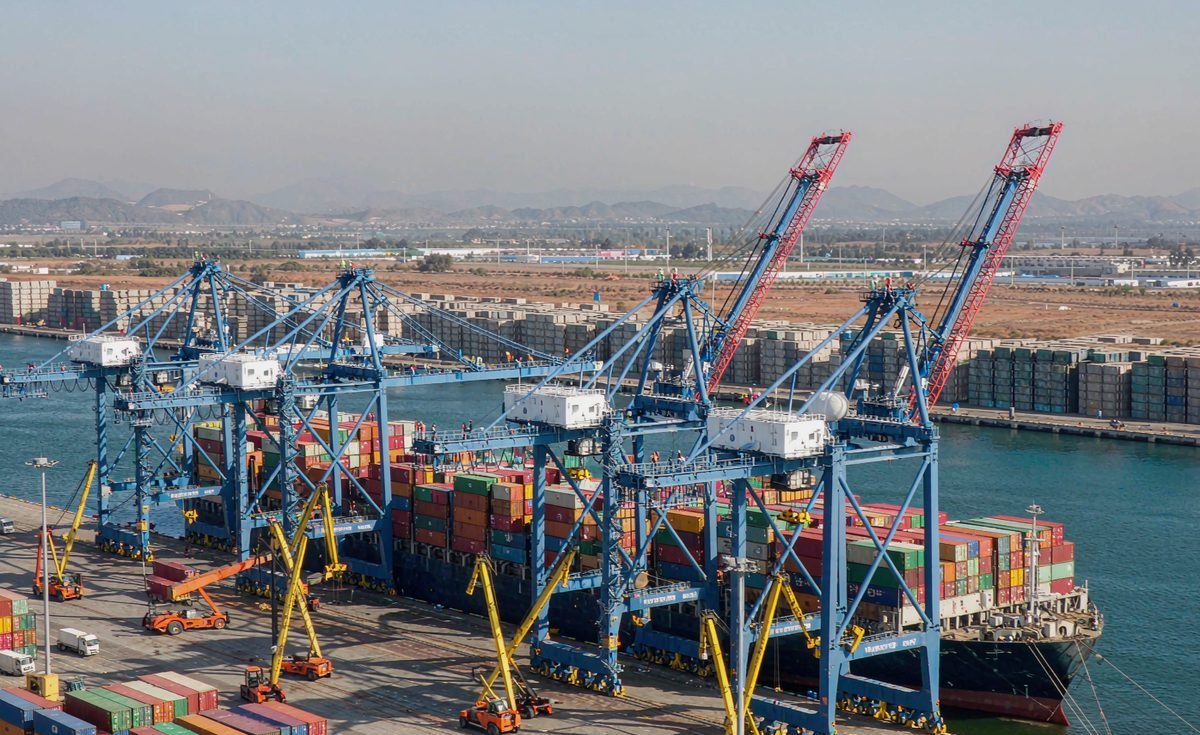
No. Container terminals at Shanghai, Ningbo, Shenzhen and the other majors operate every day of the holiday, and customs declaration systems keep running — data from trackers like IMF PortWatch shows port call activity dips but never stops during CNY. What changes is the environment around the port:
- Blank sailings: carriers publish holiday schedules cutting 20–30% of departures on some lanes, since demand in China pauses while demand elsewhere (post-holiday restocking elsewhere, Lunar New Year in other Asian markets) continues.
- Trucking: a large share of drivers travel home. In the CNY week itself, getting a container from a factory gate to a port can cost double the normal rate — if a truck is available at all.
- Documentation: customs officers, banks, and supplier export clerks work reduced hours, so a correction that takes one day in January can take a week in late February.
- Destination effects: cargo arriving at your port during CNY week still clears normally — the delay hits before the goods ever get on a vessel.
How Long Does the Post-CNY Backlog Take to Clear?
Historically, two to three weeks after the restart. The dynamics are predictable: cargo that missed pre-CNY sailings rolls onto the first post-holiday departures, exactly when factories begin shipping freshly finished goods again. For those two or three weeks, demand for vessel space outstrips the recovering supply, which is why schedule reliability data from analysts like Sea-Intelligence typically shows its worst readings of the first quarter in the weeks right after CNY — and why a second rate bump follows the holiday dip.
For a shipment booked late (one to two weeks before CNY), here is the realistic chain: possible rollover onto a post-holiday sailing, then 20–35 days of ocean transit, then destination handling. Total door-to-door time can stretch to 45–60 days versus 30–40 in a normal month. That month of difference is the true cost of missing the pre-CNY window.
How Far in Advance Should You Book to Avoid the CNY Delay?
Work backwards from the last reliable pre-CNY sailing — in 2026, that is roughly February 6–10 for most services. Your cargo should be at port by early February, ex-factory by late January, with production complete by mid-January. That puts your booking window at 6–8 weeks before the holiday. Our step-by-step guide to preparing cargo before Chinese New Year walks through this timeline in detail, and our companion piece on booking ahead of CNY covers space, rollovers and cut-off dates specifically.
If you are reading this in the final weeks before the holiday with cargo that will not make it: don't panic-buy premium space on sailings that will roll anyway. The two options that actually work are (1) air freight a small, critical portion of the order and sea freight the rest, and (2) reserving space on a specific post-CNY sailing now, before the restart crunch makes that space expensive too. The same logic applies later in the year at Golden Week — see our Golden Week shipping guide for the October version of this problem.
What Happens to Freight Rates During and After CNY?
The rate pattern mirrors the volume curve: a climb of roughly 15–40% on major lanes in the four pre-holiday weeks, a soft dip during the holiday itself, then a second firming as the restart backlog builds. Two practical notes for buyers quoting during this period: first, quotes obtained in the pre-CNY rush often carry surcharge-heavy structures that disappear weeks later — ask what's temporary; second, post-CNY is actually one of the better-value booking windows of the year once the backlog clears (usually late March), as volumes settle into the spring trough. Importers who can wait until mid-March for non-urgent restocking frequently catch that dip.
Do Other Chinese Holidays Cause the Same Kind of Delays?
CNY is the biggest disruption but not the only one. Golden Week in early October (National Day holiday) produces a compressed version of the same pattern: about a week of factory closures, a pre-holiday rush, and a backlog that clears in one to two weeks — roughly half the CNY impact. Shorter holidays — Qingming in April, Dragon Boat Festival in June, the Mid-Autumn Festival in autumn — cause days of slowdown, not weeks, mostly visible in trucking and document processing rather than in factory output. Two smaller-but-real notes: the Canton Fair periods in April and October bring hotel, trucking and warehouse congestion in Guangzhou even though factories keep working; and the summer typhoon season adds weather-driven port delays in South China that stack on top of whatever the calendar is doing. A practical habit: whenever a Chinese public holiday falls within three weeks of your target sail date, ask your forwarder to re-confirm cut-offs — the exceptions are where delays hide.
What Should You Do Right Now If Your Cargo Is Stuck in the CNY Delay?
Three moves, in order. First, confirm in writing which sailing your cargo is actually booked on — "space confirmed" and "cargo loaded" are different milestones, and rollover risk is highest in the two weeks around the holiday. Second, prepare destination-side everything now: customs documents, delivery booking, duty funds — so the container clears the day it arrives instead of feeding the demurrage clock. Third, use the wait: get your next PO into production queue position early, because the factories that restart fastest give the best allocation to buyers whose orders were already confirmed.
Frequently Asked Questions
How long do Chinese New Year shipping delays actually last?
Plan for a four-to-six-week disruption window door to door. Factories slow or stop about two weeks before Chinese New Year, the official holiday runs roughly eight days, and the post-holiday restart — worker returns, backlog clearance, trucking recovery — takes another two to three weeks. Cargo booked just before the holiday can take a month longer than normal to move.
Do ports and customs in China close during Chinese New Year?
No — container terminals and customs operate throughout the holiday, but with reduced staffing. The real constraints are blank sailings (carriers skip 20–30% of departures), thin trucking capacity, and slower document processing. Cargo can technically move during CNY week, but with fewer sailings and higher premiums.
How long after Chinese New Year do factories reopen?
Most factories reopen within one to two weeks after the official holiday ends, but at partial staffing. Full production speed typically returns three to four weeks after CNY, once workers have returned from their hometowns and new orders from the pre-holiday backlog are sequenced.
How long does the post-CNY shipping backlog take to clear?
Based on historical patterns, the backlog clears within two to three weeks after the restart. Cargo that missed pre-CNY sailings competes with freshly finished production for space on the same vessels, so rates firm up and rollovers peak in the second and third weeks after the holiday.
What is the best way to avoid CNY shipping delays?
Book vessel space 6–8 weeks before the holiday, get cargo to port 10–14 days early, and finalize customs documents two weeks before CNY. If you miss the window, split the order: air freight a small critical portion and sea freight the rest on the first reliable post-CNY sailing instead of paying panic premiums for sailings that will roll anyway.
Get Today's Rate & Lock Your Discount
Waymore Shipping offers FCL & LCL ocean freight from every major port in China — Shanghai, Ningbo, Shenzhen, Guangzhou, Qingdao, Xiamen, Tianjin and more. Rates updated weekly with carrier discounts.