How Much Does It Cost to Ship a Container from China to Canada?
- A 40HC Shanghai→Vancouver costs roughly USD 2,400–3,600 in ocean freight (late 2026); a 20GP about 65–75% of that.
- Toronto-bound containers add $1,300–1,900 for the rail leg and inland delivery on top of the ocean rate.
- True landed cost = freight + origin charges (~$300–450) + destination fees (~$400–900) + duty + 5% GST.
- Biggest cost levers: right-size the container, consolidate suppliers, book 2–3 weeks early, watch surcharge line items.
- Freight is only ~40–60% of landed cost for low-value goods — always model duty and GST before comparing quotes.
Shipping a 40-foot container from China to Vancouver costs roughly USD 2,400–3,600 in ocean freight as of late 2026, with a 20GP at about USD 1,700–2,700. Toronto-bound containers add $1,300–1,900 for rail and inland delivery. But ocean freight is only part of your true cost — origin charges, destination fees, duty and 5% GST can add 25–60% on top.
Our quoting desk at Waymore prices this lane every day from Shanghai, Ningbo, Shenzhen, Qingdao and Tianjin. This guide gives you realistic rate bands, every surcharge line item, and a complete landed-cost example you can copy for your own POs. Trans-Pacific spot rates move with the broader market tracked by the Drewry World Container Index, so treat the bands below as a planning baseline, not a fixed price.
What Are Current Container Rates from China to Canada?
Late 2026 indicative ocean freight (port to port, excluding surcharges and local charges):
| Route | 20GP | 40HC | Ocean transit |
|---|---|---|---|
| Shanghai → Vancouver | $1,800–2,700 | $2,400–3,600 | 13–17 days |
| Ningbo → Vancouver | $1,850–2,750 | $2,450–3,650 | 15–19 days |
| Shenzhen (Yantian) → Vancouver | $1,900–2,800 | $2,500–3,700 | 15–20 days |
| Qingdao → Prince Rupert | $1,750–2,600 | $2,350–3,500 | 12–16 days |
| Shanghai → Toronto (incl. rail) | $3,200–4,600 | $3,900–5,600 | 28–35 days door |
| Shenzhen → Montreal | $3,400–4,800 | $4,100–5,900 | 33–40 days |
Why the wide bands? Carrier mix (premium loops vs economy transshipment), booking timing, and seasonal GRI surcharges. A contract rate locked a month ahead can sit at the low end; a last-minute peak-season booking lands at the top or above.
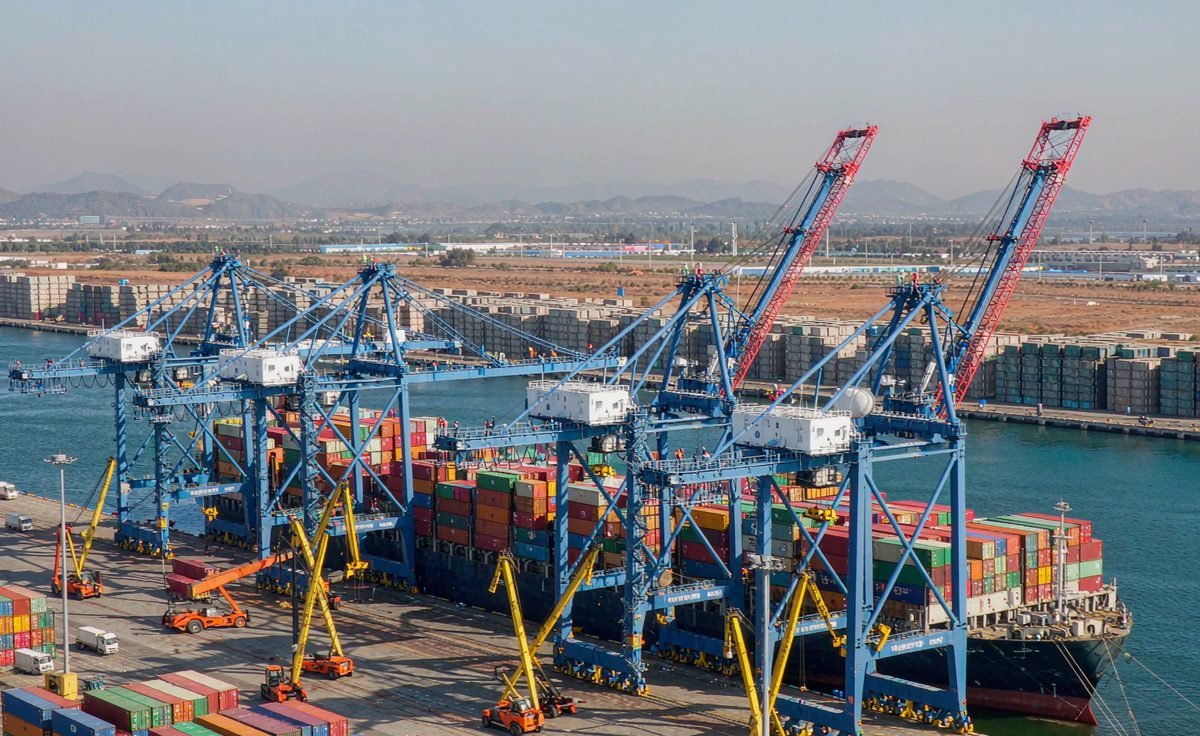
What Extra Fees Apply Beyond Ocean Freight?
Origin charges (China side): ~$300–450 per container
- Trucking to port: $150–350 (distance-dependent; Shenzhen Yantian from Bao'an runs cheaper than Ningbo from inland Zhejiang factories)
- Export customs declaration: $30–60
- Terminal handling (origin THC): $150–250 for a 40HC
- Documentation / B/L fee: $30–50
- Seal + VGM filing: $10–25
Destination charges (Canada side): ~$400–900
- Destination THC and terminal fees: $250–450
- Rail ramp fee (for Toronto/Montreal via Vancouver): $150–300
- Documentation and customs entry (via your customs broker): $85–150
- Final-mile trucking: $200–450 (GTA delivery from a Vancouver-routed container is rail-inclusive in many quotes; local Vancouver delivery is cheaper)
Duty and taxes
- Customs duty: based on HS code; most electronics 0–5%, furniture 0–9.5%, textiles/footwear up to 18%+. Chinese-origin goods get no preferential tariff treatment in Canada.
- GST 5% on the duty-paid value, payable to CBSA at entry (recoverable as an input tax credit if you're GST-registered).
Our article on how to read a freight quote and spot hidden fees goes line-by-line through quotes like these — well worth five minutes before you sign one.
What Happens When Rates Spike Mid-Booking?
A practical note buyers ask about: once you book and the carrier confirms the rate, that rate is yours — GRIs announced afterward don't retroactively raise a confirmed booking. What mid-season spikes do change is availability: every increase triggers a wave of bookings that eats the remaining space on each loop. So the risk isn't that your $2,800 becomes $3,300 after booking; it's that waiting a week to "think about it" leaves you choosing between a $3,300 rate and a rollover to the next vessel. When you see a rate you can live with on a confirmed weekly loop, taking it the same week is usually the right call — and if you're weighing whether to lock longer-term space instead of floating, our fixed vs floating rate guide walks through when each wins.
Full Landed Cost Example: 40HC of Ceramic Tableware, Ningbo → Toronto
A real-world structure from a November 2026 booking (figures anonymized but representative):
| Cost item | Amount (USD) | Notes |
|---|---|---|
| Goods value (ex-works, 24 pallets ceramics) | $58,000 | Commercial invoice value |
| Ocean freight 40HC + rail leg | $4,350 | Ningbo → Toronto via Vancouver, CN rail |
| Origin charges | $410 | Trucking, export clearance, THC, docs |
| Destination charges | $780 | DTHC, rail ramp, docs, GTA delivery |
| Customs duty (~6.5% of CIF ≈ $63,540) | $4,130 | Tableware HS 6912 range, MFN rate |
| GST 5% on duty-paid value ($67,670) | $3,384 | Recoverable if GST-registered |
| Cargo insurance (0.3% of value +10%) | $191 | Institute Cargo Clauses (A) |
| Total landed cost | ≈ $71,245 | Freight+fees = ~$5,531 (7.8% of goods value) |
Notice that duty and GST together ($7,514) exceed the entire freight and handling bill. Any comparison of "cheap freight" quotes is meaningless without modeling taxes — and if you want the seller to handle duty and taxes so goods land as delivered stock, see our guide to DDP shipping from China to Canada.
How to Pay Less: 5 Levers That Actually Move the Number
- Right-size the container. A 20GP takes ~28 CBM / 25 tons; a 40HC ~68 CBM. Paying for a full 40HC at 35 CBM utilization wastes ~$1,000+. Our 20GP vs 40GP vs 40HC guide helps you pick; if you're under ~15 CBM, compare LCL with our FCL vs LCL breakdown.
- Consolidate suppliers into one origin port. Two suppliers at one port = one container and one set of origin charges instead of two.
- Book 2–3 weeks ahead of cut-off. Late peak-season bookings routinely pay 30–60% over forward-booked space.
- Compare direct vs transshipment. Economy loops via Pusan can save 10–20% when your landed date has slack.
- Audit destination charges. Toronto rail-ramp fees and DTHC vary by carrier — a "cheap" ocean rate with high destination fees often nets out worse. Our weekly discounted rates page shows all-in numbers instead of headline rates.
One caution from our operations team: if a quote for this lane lands far below every competitor, something is being cut — usually consolidation quality, rollover protection, or destination handling. Our guide on how to tell if a freight quote is "too cheap" explains the warning signs.
How the China–Canada Rate Market Moves Through the Year
Freight on this lane is seasonal, and timing your bookings can be worth more than any negotiation:
- January–February (pre-CNY + holiday): factories rush cargo before Chinese New Year; space tightens 4–5 weeks out. Rates peak, and blank sailings follow the holiday.
- March–May (trough): the cheapest window of the year. Ideal for non-urgent replenishment — this is when annual contracts are often renewed too.
- June–August (build-up): North American retailers front-load Q4. Rates climb steadily; August bookings can exceed May by 30–50%.
- September–November (peak): highest rates and tightest space, especially for Toronto rail allocations. Book 4+ weeks out.
- December (softening): rates fall after US Thanksgiving, then firm again into the pre-CNY rush.
The indexes behind these moves are public: the trans-Pacific readings of the Drewry WCI and the West Coast components of the Freightos Baltic Index update weekly, and our plain-English guide to reading ocean rate indexes shows you how to track them yourself.
LCL vs FCL: The Break-Even Math on This Lane
Canadian buyers constantly ask where FCL starts to beat LCL. On current levels the crossover sits around 13–15 CBM for Toronto-bound cargo and 15–18 CBM for Vancouver-bound (destination handling is cheaper in Vancouver, so LCL stays competitive longer):
- 10 CBM to Toronto by LCL: ~$52–70/CBM ocean + per-CBM destination charges ≈ $900–1,300 all-in freight.
- 10 CBM in a 20GP (shared with another PO): ~$3,200–4,600 all-in — LCL wins clearly.
- 25 CBM by LCL: ~$2,300–3,300, plus a week of consolidation/deconsolidation time — now comparable to a 20GP with better cash flow.
- 28+ CBM: a 20GP almost always wins on price, speed and cargo safety (fewer touches).
One warning from our deconsolidation teams: LCL destination charges in Canada are billed per CBM, so a "cheap" ocean rate with heavy destination fees can flip the math at arrival. Always compare door-to-door all-in figures — the FCL vs LCL guide and our THC explainer both walk through real quotes.
Mini-Case: Cutting 18% on a Quarterly Canada Program
A Calgary-based tools importer came to us in early 2026 running two 40HCs per quarter, booked ad hoc at 7–10 days before cut-off, from two suppliers — one in Foshan (via Yantian) and one near Shanghai. Their average all-in freight was running ~$5,300 per container to Vancouver with onward rail to Calgary.
Three changes, no negotiation tricks: (1) consolidated both suppliers' orders into single origin-port loadings at Yantian, eliminating one origin charge set per quarter; (2) booked 21 days ahead into a fixed weekly loop, out of the spot market; (3) shifted the Q2 container from April into late May, out of the rate build-up. Result: average all-in fell to roughly $4,350 per container — about 18% — with identical transit reliability. The lesson isn't "we're clever"; it's that on this lane, calendar discipline is worth more than rate shopping. If your program looks like theirs, start with the booking window — our guide to fixed vs floating freight rates explains when locking a price beats riding the market.
Frequently Asked Questions
How much does a 40ft container from China to Vancouver cost?
In late 2026, a 40HC from Shanghai or Ningbo to Vancouver costs roughly USD 2,400 to 3,600 in ocean freight, plus origin charges of 300 to 450 dollars and destination fees. A 20GP typically runs about 65 to 75 percent of the 40HC price. Toronto-bound containers add 1,300 to 1,900 dollars for the rail leg and inland delivery.
What is the cheapest way to ship a container from China to Canada?
The cheapest options are: booking a 20GP instead of a half-full 40HC when cargo is under 28 CBM, using transshipment services instead of direct loops (10 to 20 percent cheaper), consolidating multiple suppliers into one container at a single origin port, and booking 2 to 3 weeks ahead instead of last minute during peak season.
What extra fees apply beyond ocean freight to Canada?
Budget for origin charges in China (trucking, export customs, documentation: roughly 300 to 450 dollars per container), destination charges at Vancouver or Toronto (terminal handling, docs, rail ramp fees: roughly 400 to 900 dollars), plus Canadian duty and 5 percent GST calculated on the CIF value. Insurance at 0.2 to 0.4 percent of cargo value is optional but recommended.
Do I pay duty and GST on goods imported from China to Canada?
Yes. Canada levies customs duty based on the HS code and tariff treatment (most Chinese goods have no preferential rate), plus a 5 percent GST on the duty-paid value. Some goods, like many consumer electronics, carry low or zero duty, while textiles and footwear can carry 18 percent or more.
How far in advance should I book container shipping to Canada?
Book 2 to 3 weeks before your target vessel cut-off in normal seasons, and 4 to 6 weeks ahead of Golden Week (October) and Chinese New Year (February). Late bookings in peak season can add 30 to 60 percent to the rate and risk rollovers that delay delivery by a week or more.
- Shipping Building Materials from China to Canada: Requirements, Costs & Tips
- Shipping Consumer Electronics from China to Canada: Requirements, Costs & Tips
- Shipping Phone Accessories from China to Canada: Requirements, Costs & Tips
- How Much Does It Cost to Ship a Container from China to Japan?
- How Much Does It Cost to Ship a Container from China to South Africa?
- How Much Does It Cost to Ship a Container from China to Turkey?
Get Today's Rate & Lock Your Discount
Waymore Shipping offers FCL & LCL ocean freight from every major port in China — Shanghai, Ningbo, Shenzhen, Guangzhou, Qingdao, Xiamen, Tianjin and more. Rates updated weekly with carrier discounts.