Shipping from China to Singapore: The Complete 2027 Guide
- Singapore is one of China's easiest lanes: 4–7 days direct from South China ports, 8–12 days from Shanghai/Ningbo, with daily departures.
- Late-2026 FCL levels: 20GP ≈ $380–$650, 40HC ≈ $680–$1,100 ocean freight from South China; LCL ≈ $15–$30 per CBM.
- Singapore levies duty only on liquor, tobacco, motor vehicles and petroleum — but 9% GST applies to almost everything on CIF value.
- Clearance via TradeNet is typically same-day when documents are clean; controlled goods (SFA, HSA, NEA) need advance permits.
- Total door-to-door lead time: 9–16 days including consolidation, sailing, clearance, and local delivery.
Shipping from China to Singapore is one of the fastest and most predictable ocean lanes in Asia: expect 4–12 days at sea, 20GP ocean freight around $380–$650 and a 40HC around $680–$1,100 from South China ports, with duty-free entry for most goods subject only to 9% GST. This guide walks through ports, rates, the full shipping process, and the mistakes that delay cargo on this route.
Our Singapore desk handles weekly FCL and three consolidated LCL sailings per week from Shanghai, Ningbo, Shenzhen, and Guangzhou — the benchmarks here come from actual bookings, not brochure averages.
Which Ports and Services Serve the China–Singapore Lane?
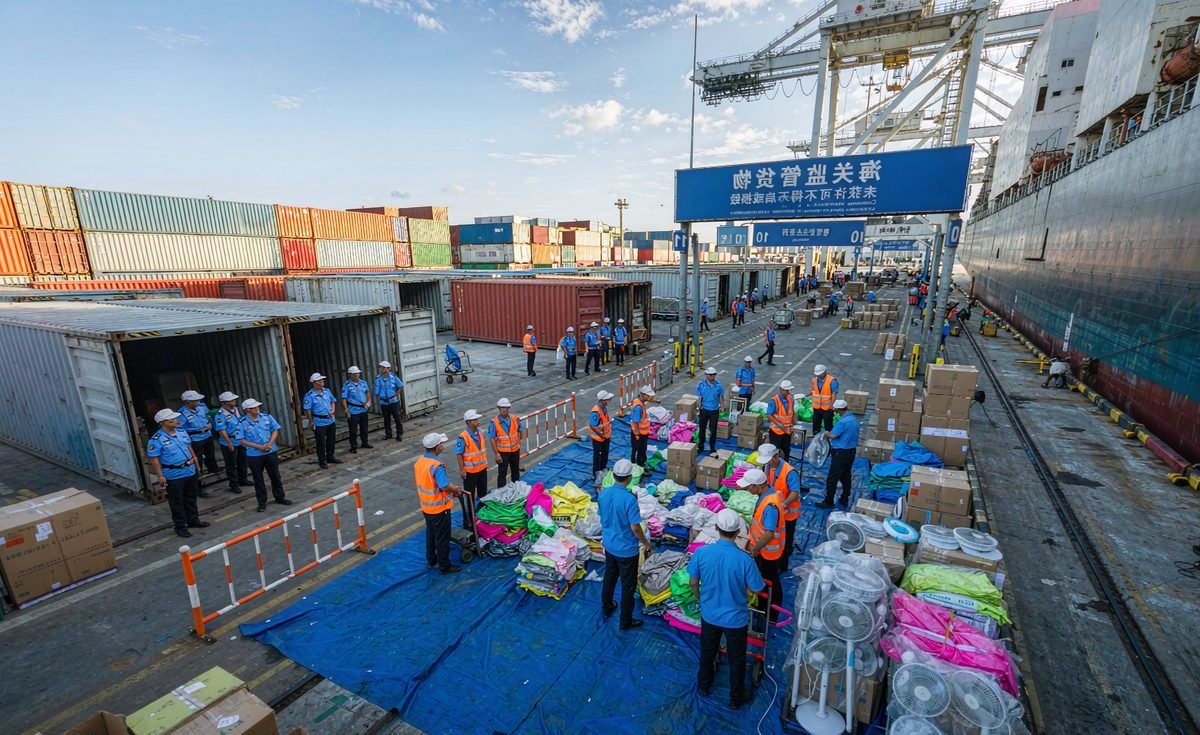
Singapore's PSA network — Tanjong Pagar, Brani, Pasir Panjang, and the newer Tuas mega-port — is the world's largest transshipment hub, so China services call here daily. The busiest origin gateways:
| Origin Port | Sailings to Singapore | Direct Transit | Best For |
|---|---|---|---|
| Shenzhen (Shekou / Yantian) | Daily / 3+ weekly strings | 4–7 days | Pearl River Delta suppliers, electronics |
| Guangzhou (Nansha) | 2–3 weekly | 5–8 days | PRD west-bank factories, furniture |
| Xiamen | 2–3 weekly | 5–8 days | Fujian stone, footwear, packaging |
| Shanghai | Almost daily | 8–12 days | Yangtze Delta machinery, textiles |
| Ningbo | Almost daily | 8–12 days | Zhejiang hardware, small appliances |
| Qingdao / Tianjin | 2 weekly | 11–15 days | North China chemicals, steel, machinery |
Carriers active on the lane include COSCO, OOCL, Evergreen, ONE, PIL, and regional operator SITC. Because Singapore is also a transshipment stop for India, Middle East, and Africa services, some "Singapore" bookings ride bigger loops — always confirm whether your box discharges directly at PSA or is worked further. Our explainer on direct versus transshipment services covers how to read this on a schedule.
How Much Does It Cost to Ship from China to Singapore?
As a short-haul lane with strong competition, pricing here is far below the US or Europe trades. Typical November 2026 port-to-port levels we quote:
| Mode / Route | Typical Rate (Nov 2026) | Notes |
|---|---|---|
| 20GP, Shenzhen → Singapore | $380–$600 | Plus $200–$300 origin charges |
| 40HC, Shenzhen → Singapore | $680–$1,000 | Plus $250–$350 origin charges |
| 40HC, Shanghai → Singapore | $800–$1,100 | Longer haul, plus drayage north |
| LCL, South China → Singapore | $15–$25 per CBM | Min 1 CBM; dest. handling $20–$40/CBM |
| LCL, East China → Singapore | $20–$30 per CBM | Min 2 CBM typical |
| Air freight, PVG/SZX → SIN | $2.2–$4.5 per kg (300 kg+) | 1–3 days airport-to-airport |
Rate drivers on this lane: fuel-linked surcharges (BAF/FAK adjustments), Chinese holiday cycles — space tightens sharply before Chinese New Year and after Golden Week — and equipment repositioning after Southeast Asia export surges. For a lane-specific cost breakdown with a worked landed-cost example, see our article on container shipping costs from China to Singapore.
What Does the Shipping Process Look Like, Step by Step?
Step 1: Booking and cargo readiness (Day 0–3)
We book space 5–10 days before the target cut-off, confirm the supplier's ready date, and arrange factory pickup or supplier-to-CFS delivery. Volumetric details matter early: Singapore buyers routinely mix several suppliers, so we pre-plan the load plan — our consolidation guide shows how consolidation from multiple suppliers cuts cost.
Step 2: Export customs and cut-off (Day 3–5)
The supplier (or our export agent) files the China export declaration with GACC, and we submit VGM and the shipping instruction before the carrier's cut-off — typically 48–72 hours before sailing. Missing cut-off means rolling to the next vessel, so we build a one-day buffer into every schedule.
Step 3: Ocean transit (Day 5–12)
Direct services from Shekou discharge at PSA within the week; East and North China boxes take up to ten days at sea. Milestone tracking updates run through our system from gate-in to discharge.
Step 4: Singapore clearance and delivery (Day 6–16)
Arrival notice triggers the import permit declaration on TradeNet, Singapore's electronic permit system. With clean documents, permits issue within hours and containers are released the same day — Singapore's clearance speed is the reason lead times here are among the shortest of any destination we serve. Delivery to a Singapore warehouse or Jurong/Tuas industrial address adds 1–2 days.
What Timeline Should You Plan Around? A Real Shipment Example
A Singapore industrial-parts distributor ordered 18 CBM of pneumatic fittings from Ningbo plus 6 CBM from a Shenzhen supplier. We consolidated both into one 40HC at Yantian:
| Milestone | Day |
|---|---|
| Booking confirmed, pickup at Ningbo supplier | Day 0 |
| Shenzhen cargo received at CFS, consolidated & stuffed | Day 2–3 |
| Export declaration lodged; VGM cut-off | Day 4 |
| Vessel departs Yantian | Day 5 |
| Arrival & discharge at PSA (direct service) | Day 10 |
| TradeNet permit issued, container released | Day 10–11 |
| Delivered to Tuas warehouse | Day 12 |
What Rules and Costs Apply on the Singapore Side?
Singapore customs is administered under Singapore Customs with GST registration through IRAS. The essentials:
- Duty: zero for most goods — duties apply only to intoxicating liquors, tobacco, motor vehicles, and petroleum products.
- GST: 9% on CIF value plus any duty, payable when the import permit is accounted for.
- Controlled goods: food needs an SFA import licence and advance permit; health products and cosmetics fall under HSA; certain chemicals under NEA/SPS. These permits must be lodged before the cargo arrives.
- Preference: ACFTA Form E from China Customs cuts duty on eligible dutiable items and, while most goods are already duty-free, many buyers keep Form E on file for GST valuation audits and future dutiable lines.
For the full paperwork checklist, see our dedicated guide on China to Singapore customs clearance, documents, duties and process.
What Are the Most Common Pitfalls on This Lane?
- Under-declared values on LCL. Singapore cross-checks declared values against market data; lowball invoices on electronics and cosmetics attract value assessment and GST adjustments.
- Late SFA/HSA permits. Food or supplement cargo arriving before its permit is approved sits in a bonded warehouse at $30–$60 per day.
- Holiday compression. Before Chinese New Year, factory output and port space both spike; book 2–3 weeks early and lock rates.
- Ignoring volumetric weight on air freight. Volumetric divisor 6000 makes bulky-but-light cargo expensive by air — run the numbers before switching modes. Our CBM and chargeable weight guide includes the formulas.
FCL, LCL or Air — Which Mode Should You Choose for Singapore?
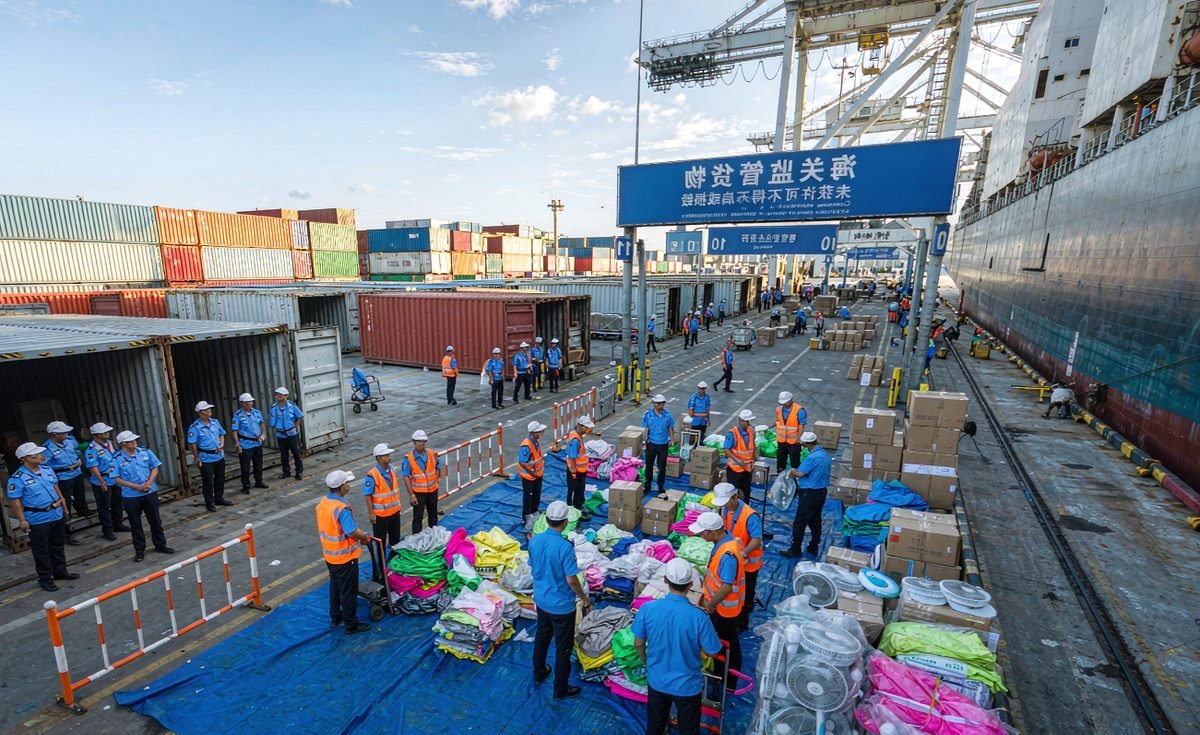
Mode choice on this lane is a three-way decision. FCL wins above roughly 13–15 CBM, for fragile or high-value cargo, and whenever you want full control of the loading — one shipper, one consignee, no deconsolidation. LCL wins below that threshold: sailings run three times weekly from South China and weekly-plus from East China, and a 5 CBM shipment costs a fraction of a 20GP. Air wins when the clock does — stockouts, launches, samples — with 3–5 day door-to-door service into Changi. A useful hybrid we arrange often: split the order, fly 10–15% of units to cover the first sales weeks, and sea-freight the balance. For Singapore specifically, remember the destination leg is genuinely fast — clearance is same-day and trucking distances are short — so the mode decision compresses almost entirely into the China-side pickup, consolidation, and ocean transit. That also means choosing a forwarder with strong CFS capacity in the right origin region matters more here than on long-haul lanes: a supplier in Dongguan consolidated at our Shekou CFS saves two to three days over a program that trucks cargo north first. If your volumes swing month to month, ask us to quote both structures and compare on true all-in terms, including Singapore delivery.
How Do Chinese Holidays Affect Shipping to Singapore?
Three windows demand planning. Chinese New Year (late January–February): factories close for two to three weeks, but the real bottleneck is the ten days before closure — production rushes to ship, trucking capacity doubles in price, and Yantian and Shekou run at capacity; book two to three weeks early. Golden Week (early October): factories pause about a week while ports keep working, but sailing schedules blank out for the low-demand days immediately after; cargo ready during the holiday can sit until mid-October services normalize. Canton Fair seasons (April and October–November): hotel rooms and container space both tighten as buyers sweep the fair for orders that ship within weeks. Singapore-bound e-commerce sellers also feel Singles' Day (November 11) and 12.12 surges on the air side, where Changi-bound capacity from South China firms up for a fortnight. The general rule that has held across every cycle we've worked: on this lane, the cost of booking early is a few days of storage at most, while the cost of booking late is measured in rolled boxes and expedited air freight. Our operations team publishes cut-off calendars before each holiday window — ask for the next one when you request a quote.
How Should You Budget Total Landed Cost on This Lane?
A workable budget rule for Singapore-bound cargo: all-in freight, clearance, and delivery typically equals 8–13% of cargo value for FCL consumer goods — before GST. Take a $40,000 40HC from Shenzhen: ocean freight around $850, origin charges $280, insurance $100, Singapore permit and terminal release $230, and delivery $110 — roughly $1,570, or 3.9% of value. Add GST of $3,600 on the CIF value and the full logistics-plus-tax bill reaches about 13%. LCL buyers should budget on the same principle but expect a higher percentage at small volumes, because per-shipment fees (minimum charges, permit fees, delivery minimums) amortize over fewer CBM. The line most often forgotten in buyer spreadsheets is insurance — under 0.3% of value, it is the cheapest line on the invoice and the one that saves a shipment when a monsoon downpour finds a gasket. Build your landed-cost model with these five lines — freight, origin charges, insurance, destination charges, GST — and Singapore will hold no pricing surprises.
Frequently Asked Questions
How long does sea freight from China to Singapore take?
Direct FCL services from Shenzhen (Shekou/Yantian) reach Singapore's PSA terminals in 4–7 days; from Shanghai and Ningbo expect 8–12 days. LCL adds 2–4 days for CFS consolidation and deconsolidation, so door-to-door lead times typically land between 9 and 16 days depending on origin.
How much does it cost to ship a container to Singapore?
In late 2026 a 20GP from South China to Singapore runs roughly $380–$650 and a 40HC $680–$1,100 in ocean freight, plus $200–$350 in origin surcharges. Rates vary by carrier service, fuel adjustments, and peak-season demand around major Chinese holidays.
Do I have to pay duty on goods imported from China into Singapore?
Singapore charges customs duty only on four categories: intoxicating liquors, tobacco products, motor vehicles, and petroleum products. Most consumer and industrial goods are duty-free, but a 9% GST applies to the CIF value plus any duty, payable at clearance via the TradeNet permit.
Is LCL or FCL better for shipping to Singapore?
Below about 13–15 CBM, LCL consolidation from Shanghai, Ningbo, Shenzhen, or Guangzhou is usually cheaper, with weekly sailings and $15–$30 per CBM levels. Above that threshold a dedicated 20GP or 40HC avoids per-CBM handling charges, reduces damage risk, and clears faster at destination.
What documents are needed to import from China into Singapore?
The core set is a commercial invoice, packing list, bill of lading, and a customs import permit declared through Singapore's TradeNet system by a declaring agent. Food products need an SFA permit, health products HSA clearance, and goods claiming ACFTA preference need Form E.
- China to Singapore Customs Clearance: Documents, Duties & Process
- How Much Does It Cost to Ship a Container from China to Singapore?
- DDP Shipping from China to Singapore: Costs, Rules & Pitfalls
- Freight Collect vs Prepaid: Which Should You Use?
- What Does It Cost to Ship Christmas & Holiday Decorations from China? Cost Factors Explained
- Shipping from China to Tanzania: The Complete 2027 Guide
Get Today's Rate & Lock Your Discount
Waymore Shipping offers FCL & LCL ocean freight from every major port in China — Shanghai, Ningbo, Shenzhen, Guangzhou, Qingdao, Xiamen, Tianjin and more. Rates updated weekly with carrier discounts.