Shipping from Multiple Chinese Suppliers in One Container
- Consolidating 3–8 suppliers into one container typically saves 20–40% versus separate shipments — one freight charge, one clearance.
- The workflow: suppliers deliver to a forwarder warehouse → count/photo/inspect → palletize → stuff by a loading plan → one BL.
- Each supplier still needs its own Chinese export declaration (or a buy-export agent); destination clears as one consolidated entry.
- The #1 schedule risk is the last supplier missing the window — use staged bookings and written ready dates.
- Waymore consolidates weekly from Shenzhen, Ningbo, Shanghai and Guangzhou warehouses; free quotes, rates updated weekly.
Yes — you can ship goods from different Chinese suppliers in one container. Suppliers deliver to a consolidation warehouse, the cargo is counted, inspected, palletized and stuffed together, and you receive one bill of lading and one destination clearance. Done well, consolidation cuts your landed freight cost by 20–40% versus shipping each supplier separately.
In a typical week our Shenzhen and Ningbo warehouses stuff 15–25 such containers for overseas importers — hardware buyers mixing six factories' orders, e-commerce sellers merging eight suppliers' cartons, wholesalers topping a main order with samples from new vendors. This article explains exactly how the process runs, what it costs, and where the risks hide.
How does multi-supplier consolidation actually work?
The container never travels between factories. Instead, everything moves through one warehouse. The sequence, as we run it:
- Issue a delivery notice to every supplier — a bilingual document showing the warehouse address, your reference code, carton markings, and the deadline. Suppliers truck their goods to us (or we collect).
- Receive and verify. Each delivery is counted against the packing list, photographed, weighed and measured. You get a per-supplier receipt: 132 cartons expected, 128 arrived, 4 damaged on a broken pallet — caught now, not in Cleveland.
- Hold and stage. Cargo sits in marked floor areas per supplier until all deliveries (or your cut-off) arrive.
- Palletize and prepare. Cartons are palletized, shrink-wrapped and labelled by supplier and PO. Fragiles get corner boards; heavy items go on their own pallets.
- Stuff by loading plan. The container is loaded to a written plan — heavy pallets on the floor, light and crushables on top, damage-prone cargo at the door end. A stuffing report with photos closes the container.
- One BL, one sailing, one clearance.
What does consolidation cost — and save?
Using a real structure from a November 2026 booking (Shenzhen → Long Beach, four suppliers, 24.8 CBM / 8,150 kg):
| Cost item | Consolidated (1×20GP + shared space approach*) | Separate LCL per supplier |
|---|---|---|
| Ocean freight | $1,850 (20GP, Shenzhen→LA) | ~$2,300 total (4 × LCL minimums + per-CBM) |
| Origin charges (receiving, handling, stuffing, export docs) | $480 | ~$150 × 4 = $600 |
| Destination charges + clearance | $420 (one entry) | ~$280 × 4 = $1,120 (four entries) |
| Trucking to suppliers' nearest port | Included in supplier FOB terms | Each supplier trucks to its nearest port |
| Total | ~$2,750 | ~$4,020 (+46%) |
*Exact container choice matters: 24.8 CBM fits a 20GP (33 CBM theoretical) only if weight allows — see our guide on choosing between 20GP, 40GP and 40HC. To estimate whether your cargo fits, use the CBM and chargeable weight formula before you book.
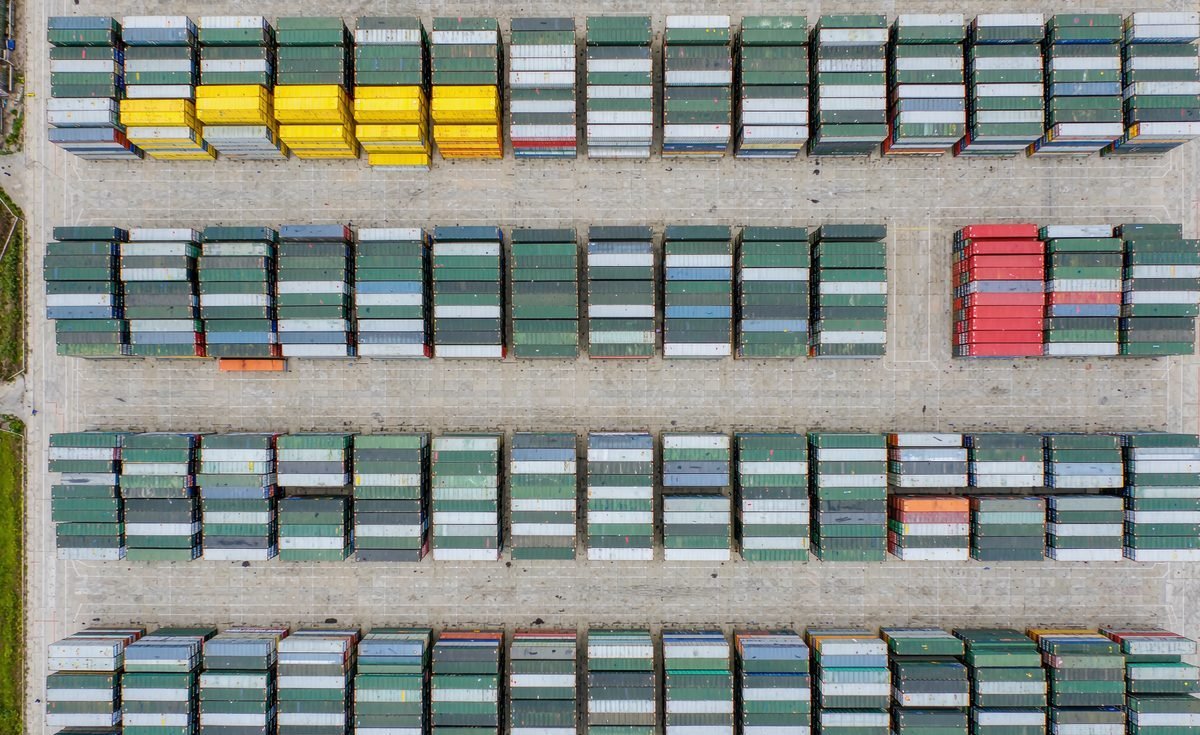
The destination-side saving is the part importers underestimate: four separate LCL shipments mean four customs entries, four delivery appointments, four chances for ISF/AMS mistakes and four ISF bonds fees. One consolidated entry collapses all of that.
How do export customs and documents work with several exporters?
One container, but China's export side still sees each commercial entity separately:
- Each supplier needs its own export declaration. Licensed factories declare in their own name; workshops without export rights route through a buy-export agent. We collect each supplier's invoice, packing list and declaration data at receiving.
- The bill of lading shows the agreed structure. Common setups: a single shipper (usually the largest supplier or your forwarder acting as NVOCC principal) or the forwarder as carrier-side shipper with your company as consignee. Fix this in the booking, not on cut-off day.
- Destination clears as one entry. We merge the suppliers' invoices into one consolidated commercial invoice and packing list matching the actual load — same values as the originals, one total, correct HS codes per line. Your broker files under your importer number; you pay one brokerage fee.
- Product compliance travels with the goods. Each supplier's certificates (CE, CPC, RoHS, food-contact reports) must be available per product line — consolidation does not merge compliance obligations.
Industry bodies such as FIATA publish model rules for consolidated-shipment liability worth knowing: with an NVOCC house bill of lading, the forwarder is responsible to you as a carrier, not just as an agent — a meaningful difference when a claim arises.
What can go wrong — and how to prevent it
- The slow supplier. Three factories deliver on time; one ships late and your booked container rolls. Prevention: written ready dates with the order, delivery to warehouse 3–4 days before cut-off, and a policy of stuffing on schedule — the late supplier's cargo joins the next sailing, the rest of your order does not wait.
- Carton-level surprises. Factory-quoted dimensions are optimistic 10–20% of the time. Re-measuring at the warehouse converts "that will fit" into real CBM before you commit to a container size.
- Mixed-up cartons at destination. Without carton markings and per-PO labelling, your warehouse team spends days untangling four suppliers' goods. We label by supplier, PO and carton sequence before palletizing.
- VGM surprises. The verified gross mass declaration must reflect the true stuffed weight — heavy tiles plus light textiles can hit a 20GP's payload limit (typically ~28 tonnes, container-dependent) long before its volume limit. Check how VGM works before finalizing the loading plan.
- Insurance gaps. Consolidated cargo declared at one flat value shortchanges the suppliers whose goods are worth more; declare per-supplier values so any claim pays out correctly.
- Uninsured mixed cargo. When four suppliers' goods share a box, a single container-top water leak can damage the cartons stacked above — and unless every line item is declared, insurers apply proportionate-average reductions. Declare full values per supplier on the consolidated insurance certificate; the premium on a $60,000 container load runs roughly $180–300 under Institute Cargo Clauses (A).
Mini-case: 9 suppliers, 1 container, 0 rolls
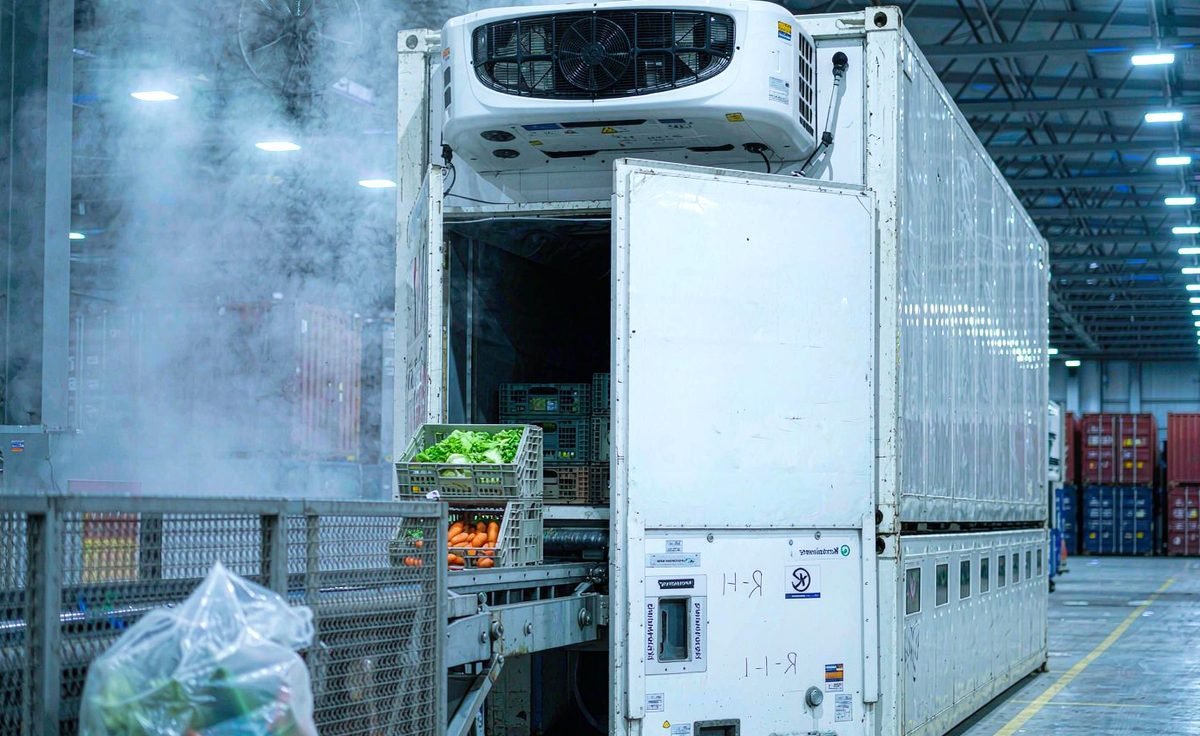
A Chicago-based e-commerce seller ran a Q4 restock in October 2026: nine suppliers across Zhejiang and Guangdong, 61 CBM into one 40HC from Ningbo to Chicago via rail ramp. The largest supplier (aumbly furniture, 31 CBM) delivered four days early; the riskiest (a Yiwu accessories workshop, 2.1 CBM) missed its first truck. Rather than roll the container, we stuffed on schedule and airfreighted the missing 2.1 CBM separately for $410 — protecting a $3,900 container that was holding Halloween-critical stock. The full consolidation saved the client roughly $2,300 against nine separate LCL shipments, per the comparison we logged in the quarterly rate review.
How should you choose the warehouse and the gateway port?
Consolidation quality is really warehouse quality. Three questions separate a real consolidation warehouse from a trucking depot with a forklift:
- Do they verify, or just receive? Count-per-carton, photo evidence, dimension capture and weight checks should be standard for every delivery — ask for a sample receiving report before you commit.
- How long will they hold cargo free? Multi-supplier programs need staging time while stragglers arrive. Typical free storage is 7–14 days per shipment; beyond that expect $0.50–$1.50 per CBM per day. Negotiate a monthly-fee structure if you consolidate continuously.
- Which ports can they truck to, and how fast? A Shenzhen warehouse should reach Yantian or Shekou same-day and Nansha with a morning pickup. For Guangdong suppliers, a Shenzhen gateway usually wins; for a Zhejiang/Jiangsu supplier base, Ningbo or Shanghai.
Gateway choice also shapes the sailing schedule. Yantian offers dense direct US West Coast services; Ningbo feeds both direct Europe strings and US East Coast all-water services; Shanghai adds the largest weekly departure count of all. When suppliers sit in different clusters, price the inland trucking per supplier before fixing the gateway — the cheapest ocean port is sometimes the most expensive total route.
LCL consolidation vs booking your own container
Multi-supplier cargo can travel two ways, and the decision changes weekly with rates:
- Your own FCL container (20GP/40GP/40HC) — best above roughly 15–18 CBM of compatible cargo. You control the stuffing, cargo stays untouched after the warehouse, and destination charges are per container, not per CBM.
- Shared LCL consolidation — best below that threshold. Your pallets ride inside the forwarder's consolidated container with other clients' cargo; you pay per CBM and share the box's ocean cost. Transit is comparable, but destination deconsolidation adds 2–4 days and per-CBM destination fees.
- Hybrid — many importers fill a 40HC with their main order and push overflow (samples, replacement parts, trial SKUs) into weekly LCL, accepting the small premium for flexibility.
One caution on LCL: watch the destination-charge column of the quote, not just the ocean rate. A $30/CBM ocean rate with $60/CBM destination charges is worse than a $45/CBM all-in. Our guide to hidden fees in freight quotes lists every line you should expect.
Frequently Asked Questions
Can I ship goods from different Chinese suppliers in one container?
Yes. Suppliers deliver to the forwarder's consolidation warehouse, where cargo is counted, inspected, palletized and stuffed into a single container. You get one bill of lading and one destination clearance — for both FCL containers you book and LCL consolidated boxes.
How much can I save by consolidating suppliers into one container?
Savings of 20–40% are typical versus shipping each supplier separately, because you pay one ocean freight charge, one set of origin charges and one destination clearance instead of several LCL minimums, multiple brokerage fees and repeated delivery costs.
How does customs work when multiple suppliers share one container?
Each supplier (or its buy-export agent) appears on China's export declaration with its own goods and values. The bill of lading follows the structure agreed at booking. At destination you clear one consolidated invoice and packing list under your own importer number — a single customs entry.
What is the biggest risk in multi-supplier consolidation?
Waiting on the last supplier. A container booked against a vessel cut-off rolls — often a full week — if one delivery is late. Use written ready dates, deliver cargo to the warehouse 3–4 days before cut-off, and adopt a stuff-on-schedule policy so one laggard does not hold your whole order hostage.
Can I consolidate suppliers from different cities, like Ningbo and Guangzhou?
Yes. Choose one gateway and truck the far supplier's cargo there — Guangzhou cargo into a Shenzhen or Ningbo stuffing adds $150–400 in inland trucking, which still usually beats running two separate shipments. We route based on total cost, not just geography.
- Save 30% with Cargo Consolidation from Multiple Suppliers
- How to Ship from 1688 & Taobao with One Consolidation
- Does Ocean Freight Include THC? One Article to Clarify
- Do Feeder Vessels Affect Your Transit Time?
- Shipping from Qingdao to Santos: Rates, Transit Times & Booking Guide
- Shipping from Tianjin to Los Angeles: Rates, Transit Times & Booking Guide
Get Today's Rate & Lock Your Discount
Waymore Shipping offers FCL & LCL ocean freight from every major port in China — Shanghai, Ningbo, Shenzhen, Guangzhou, Qingdao, Xiamen, Tianjin and more. Rates updated weekly with carrier discounts.