Case Study: How a Furniture Wholesaler Cut Freight Costs 22% via LCL Consolidation
A US furniture wholesaler sourcing from five suppliers in Foshan and Yiwu cut its total freight spend by 22% in six months — not by switching carriers or ports, but by replacing five separate small LCL bookings per cycle with a single consolidated LCL shipment through one origin warehouse. Total annual freight savings: roughly $46,000, with damage claims falling at the same time.
- Five separate LCL bookings meant paying the LCL minimum charge five times per cycle — consolidation removed four of them.
- One origin warehouse in Guangdong received, inspected, and palletized all supplier cargo before a single weekly consolidation.
- Freight cost per cycle fell from about $11,900 to $9,300 on identical volume — a 22% reduction.
- Damage claims dropped from 3.1% to under 1% of shipments after mandatory palletization and corner protection.
- The trade-off: 3–7 extra days at origin for the consolidation window, absorbed by ordering one week earlier.
The Client and the Baseline: Five Suppliers, Five Bills
The client — anonymized here at their request — is a mid-size furniture wholesaler based in Texas, importing dining sets, office chairs, and flat-pack cabinets for independent furniture retailers across the southern US. They source from five factories: four in Foshan, Guangdong (China's furniture manufacturing heartland), and one in Yiwu, Zhejiang, supplying accessories and hardware kits.
Before working with us, each factory shipped on its own. Each cycle, the client placed POs that produced five shipments of 6–14 CBM each, booked separately as LCL freight out of Yantian (Shenzhen) and Ningbo. Every individual booking hit LCL minimum charges — most carriers apply a 1–2 CBM minimum or a fixed minimum fee regardless of actual volume — and each booking carried its own documentation fee, customs entry, ISF filing, and destination delivery order charge in Houston.
The baseline numbers from their last full quarter before the change:
| Baseline Metric (per quarterly cycle) | Value |
|---|---|
| Number of separate LCL bookings | 5 |
| Average volume per booking | 9.6 CBM (range 6–14) |
| Total volume per cycle | 48 CBM |
| Average origin rate paid | $86–110 per CBM (small volumes at the top of the band) |
| Origin charges per booking (docs, handling, minimums) | $180–320 each, ×5 |
| Destination fees in Houston per booking | $260–410 each, ×5 |
| Total freight & fees per cycle | ≈ $11,900 |
| Damage claims as share of shipments | 3.1% of value |
Beyond the cost, the operational friction was constant: five sets of shipping documents, five customs entries, five delivery appointments at their Houston 3PL, and no single party accountable when a chair leg arrived cracked or a carton was crushed under other cargo.
What Did We Change? The Consolidation Model Step by Step
Step 1: One origin warehouse, one receiving window
We directed all five factories to deliver cargo to our consolidation warehouse in Foshan within a 7-day window aligned to a fixed weekly LCL consolidation sailing from Yantian. Each factory shipped against its own commercial invoice — ownership, payment, and export documentation per supplier stayed unchanged — but physically the cargo arrived under one roof.
Step 2: Inspection and mandatory palletization
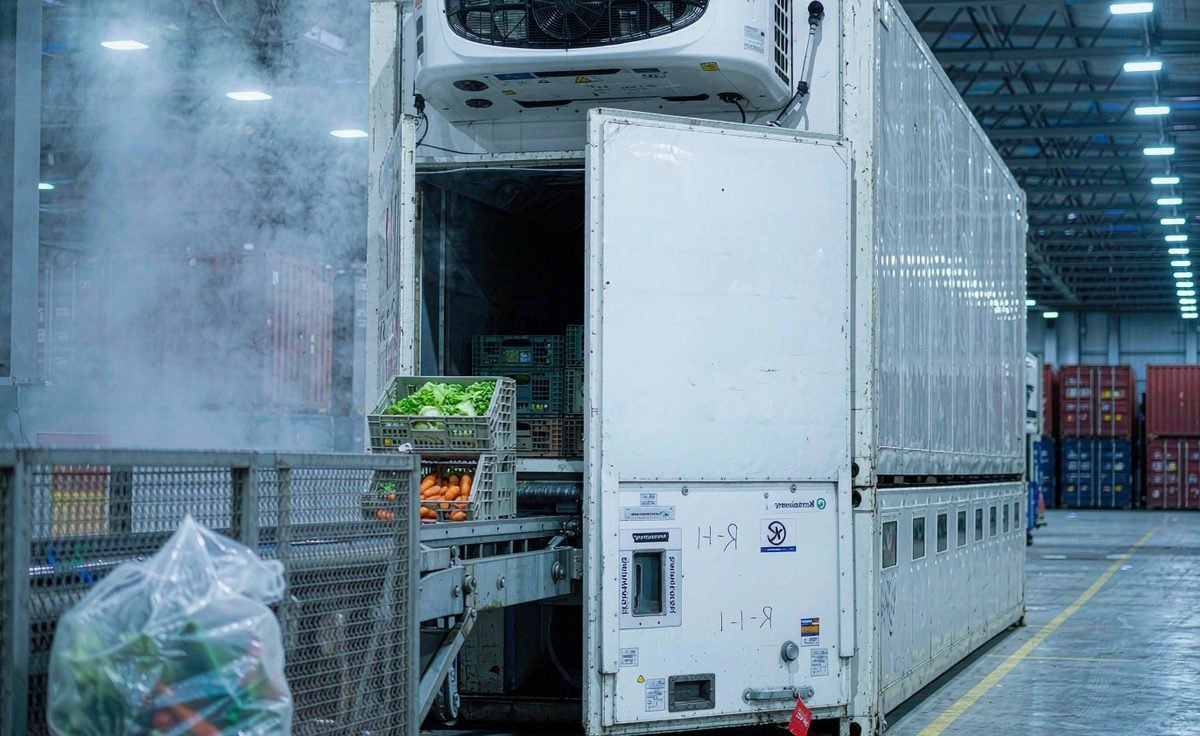
At receipt, our warehouse team checked each carton against the packing list, photographed visible damage while the supplier was still liable, and palletized everything: uniform pallets, corner protectors on every stack, shrink-wrap, and strapping. Flat-pack cabinets were stacked flat-side down; chair cartons were never loaded beneath heavy ones. This single change was what later drove the damage-claim improvement.
Step 3: One consolidated booking, one document set
All 48 CBM moved as one LCL shipment with one master document set, one ISF filing, one US customs entry, and one delivery to the Houston 3PL. We also renegotiated the rate band: consolidated volume of 40–60 CBM per cycle qualified our client for a better per-CBM tier than any individual small booking could — consistent with how LCL pricing generally steps down as consolidated volume rises, a structure visible across published market benchmarks like the Freightos Baltic Index (FBX).
Step 4: A fixed weekly cadence
Instead of booking reactively whenever a factory finished production, the client moved to a fixed weekly consolidation with a published cut-off. Factories knew the gate-in deadline each week, which also ended the chronic last-minute trucking scrambles that had occasionally caused missed cut-off times and rolled cargo.
The Results: Before and After in Real Numbers
Six months after switching (two full quarterly cycles plus a ramp-up), the comparison looked like this:
| Metric (per quarterly cycle) | Before | After | Change |
|---|---|---|---|
| Bookings per cycle | 5 | 1 | −80% |
| Origin LCL rate paid | $86–110 / CBM | $74–82 / CBM | ≈ −15% |
| Origin fees (5× vs 1×) | ≈ $1,250 | ≈ $240 | −81% |
| Destination fees in Houston | ≈ $1,680 | ≈ $340 | −80% |
| Total freight & fees per cycle | ≈ $11,900 | ≈ $9,300 | −22% |
| Damage claims (% of shipment value) | 3.1% | 0.9% | −71% |
| Customs entries per cycle | 5 | 1 | −80% |
| Origin consolidation window | — | +3–7 days | added lead time |
Annualized, the freight saving came to roughly $46,000 on this lane alone. The client redirected part of it into better packaging from their Yiwu hardware supplier — which pushed damage claims down further. For context on why rate tiers move the way they do, we often point importers to market data from Xeneta, which tracks how contracted LCL and FCL rates step down with volume commitment.

How Long Does a Consolidated Furniture Shipment Take Door to Door?
The most common question importers ask before consolidating is what consolidation does to the calendar. Ocean transit is unchanged — the same vessel, the same Yantian-to-Houston schedule. The only added time is the origin consolidation window, and in this client's case the fixed weekly cadence actually made total lead times more predictable than before, when random booking dates produced random arrival dates. Here is the door-to-door timeline the client now plans against:
| Stage | Duration | Notes |
|---|---|---|
| PO issued → factory ex-works | 15–25 days | Unchanged by consolidation |
| Factory trucking to Foshan warehouse | 1–2 days | Foshan suppliers 1 day; Yiwu supplier 3–4 days by road |
| Consolidation window (receive, inspect, palletize) | 3–7 days | The only added stage vs separate shipping |
| Drayage to Yantian & cut-off | 1–2 days | Fixed weekly gate-in |
| Ocean transit Yantian → Houston | 32–38 days | Via Panama Canal, direct or one transshipment |
| US customs & terminal release | 2–5 days | Single entry instead of five |
| Drayage to Houston 3PL | 1 day | One delivery appointment instead of five |
End to end, the client plans 55–65 days from purchase order to shelf — roughly a week longer than their best-case before consolidation, but with far less variance. In practice they shifted PO issuance one week earlier in the calendar and the sales team never noticed the difference. What they did notice was that every cycle now arrives in a single predictable window, which simplified their Houston 3PL's receiving schedule and cut their in-transit financing gap slightly.
What Did the Change Cost to Implement?
Honest case studies should show the costs, not just the savings. The client's one-time and ongoing costs were modest: palletization and corner-protection materials run about $6–9 per CBM at our Foshan warehouse, adding roughly $340 per cycle across 48 CBM; warehouse storage during the consolidation window added about $180 per cycle for the first two cycles until factories tightened their delivery timing. One-time costs — updating PO templates with the new delivery instructions and re-briefing five supplier shipping departments — took the client's procurement lead about two weeks of coordination, mostly chasing the Yiwu supplier's freight contact.
Net of the ~$520 per cycle in added handling and storage, the true saving was closer to $2,080 per cycle — still the 22% headline, just measured honestly. Any consolidator who promises consolidation savings without mentioning palletization and window storage costs is selling the highlight reel.
What Lessons Should Other Furniture Importers Take from This?
Lesson 1: The LCL minimum charge is the hidden tax on multi-supplier sourcing
If you buy from 3+ factories on the same lane and each ships under ~15 CBM, count how many minimum charges and duplicate fee sets you pay per cycle. For most multi-supplier furniture importers this is 15–25% of total freight spend — the exact pool this client's 22% saving came from. Our guide to cargo consolidation from multiple Chinese suppliers explains the mechanics in detail.
Lesson 2: Consolidation needs an anchor schedule, not ad-hoc booking
The savings only materialized once the client committed to a fixed weekly cadence with published cut-offs. Ad-hoc consolidation — waiting until "enough" cargo accumulates — produces unpredictable lead times and kills the model. Calculate whether one weekly or biweekly consolidation matches your sales rate using CBM and chargeable weight math before committing.
Lesson 3: Palletization pays for itself twice
The client expected a cost trade-off between savings and handling quality and got neither: better handling reduced claims by 71% while total cost fell. Loose-loaded furniture cartons crushed under other cargo are one of the most common claim categories in the LCL trade — proper palletizing is cheap insurance.
Lesson 4: Know when FCL beats consolidation
Consolidation is not a permanent answer. When a single cycle's volume reliably exceeds 25–30 CBM, a dedicated 40HC usually undercuts LCL per CBM and removes the consolidation window entirely. We flag this crossover to clients proactively — this client now ships two consolidated LCLs per quarter but is close to the FCL threshold on their best-selling line, and when they cross it, the model changes again. Our FCL vs LCL cost comparison shows where that crossover typically sits.
Lesson 5: Supplier buy-in is a project, not an email
Four of the five factories adopted the new delivery instructions within one production cycle. The fifth — the Yiwu hardware supplier — kept missing the gate-in window for the first two consolidations, which put the whole shipment at risk twice. What fixed it was simple: the client added the consolidation cut-off date to the PO itself and made on-time delivery a payment milestone. If your forwarder offers consolidation but leaves supplier coordination entirely to you, budget real management time for the first two months. A forwarder with an origin warehouse team that calls factories directly, as ours does, shortens that ramp considerably.
Frequently Asked Questions
How does LCL consolidation save money for furniture importers?
Instead of paying separate LCL minimum charges for each supplier's small shipment, consolidation groups several suppliers' cargo into one booking at the origin warehouse. The importer pays one combined LCL rate on total volume instead of 4–6 minimums, avoids duplicate documentation and destination fees, and typically saves 15–25% on total freight spend.
How many suppliers does it take to make LCL consolidation worthwhile?
Economic benefits usually appear with 3 or more suppliers shipping under roughly 15 CBM each on the same lane and destination. Below that, coordination effort may outweigh savings. The sweet spot is when each supplier's volume individually triggers an LCL minimum charge but combined volume fills 30–60% of a container.
Is consolidated LCL shipping riskier for fragile furniture?
Not if the consolidator palletizes and shrink-wraps properly. In the case in this article, damage claims actually fell after consolidation because every shipment moved on uniform, strapped, corner-protected pallets instead of loose pieces. The key is choosing a consolidator that inspects and palletizes cargo at its own origin warehouse.
Does consolidating multiple suppliers complicate customs clearance?
The opposite, usually. Each supplier still issues its own commercial invoice and packing list, so duty classification per product stays exactly the same — but the forwarder files one ISF, one export declaration, and you clear one consolidated entry at destination instead of five. In this case, US customs entry fees fell by roughly $700 per cycle and the single entry also meant a single point of contact if CBP raised an exam.
How much longer does consolidated shipping take versus shipping each supplier separately?
Allow 3–7 extra days at origin for the consolidation window — the time needed for all suppliers' cargo to arrive at the warehouse before the container or consolidation closes. Ocean transit time is identical. Most importers absorb this by ordering 1 week earlier across all suppliers.
- Case Study: How a Textile Buyer Succeeded by Splitting FCL vs LCL Across Seasons
- Case Study: How a Sports Equipment Wholesaler Succeeded by Transshipment vs Direct Service Trade-offs
- Freight Case Study: How a Beauty Startup Cut Costs 38% by Blending Air and Sea Freight
- Case Study: How a Toy Importer Succeeded by Passing Destination Customs Inspection
- Case Study: How an Auto Parts Distributor Cut Damage Claims 85% with Proper Packaging
- Case Study: How a Pet Supply E-tailer Succeeded by Consolidating 12 Suppliers Weekly
Get Today's Rate & Lock Your Discount
Waymore Shipping offers FCL & LCL ocean freight from every major port in China — Shanghai, Ningbo, Shenzhen, Guangzhou, Qingdao, Xiamen, Tianjin and more. Rates updated weekly with carrier discounts.