Restocking Shopify Inventory from China: A Timing Framework
- Total China pipeline = 40–95 days: production 15–40, consolidation/export 5–10, ocean 16–40, clearance/delivery 3–7.
- Reorder point = daily sales × lead time + safety stock. Most Shopify sellers trigger 1–2 weeks too late because they forget the production half.
- Hold 2–4 weeks of safety stock on ocean-replenished SKUs — one rolled sailing adds 7–10 days.
- Calendar beats guesswork: book Q4 space in July–August, and get CNY-bound goods on the water before mid-January.
- Waymore Shipping tracks your container milestones and offers free quotes plus weekly discounted rates from every Chinese port.
Restock Shopify inventory from China when stock on hand falls to (daily sales × total lead time) + safety stock — where total lead time runs 40–95 days including production, not just the ocean leg. The most common stockout pattern we see is a seller who reorders when the 3PL runs low, forgetting that the factory needs three more weeks before a container even reaches the port.
This framework decomposes the pipeline into stages you can measure, gives the reorder math, and maps the freight calendar so your restock lands before demand peaks — not after.
What Does the Full Restock Pipeline Actually Take?
Measure each stage once and you'll never plan on "4–6 weeks" again:
| Stage | Typical duration | What moves the needle |
|---|---|---|
| PO issued → production complete | 15–40 days | Factory queue; 30% deposit timing; raw material stock |
| Pickup, consolidation, export customs | 5–10 days | Number of suppliers; inspection; vessel cutoffs |
| Ocean transit | 16–20 days USWC; 28–35 USEC; 32–40 North Europe | Direct vs transshipment; port pair |
| Import clearance + delivery to 3PL | 3–7 days | Document quality; exam probability; 3PL receiving slots |
| Total pipeline | 40–95 days | — |
Transit times drift week to week with schedule changes — carriers publish revised rotations constantly, and reliability data from analysts like Sea-Intelligence shows on-time performance swinging by double digits between quarters. Track your own shipments against the milestones in our container tracking guide so your lead-time assumptions come from your data, not averages.
What's the Reorder Point Formula for China-Sourced Stock?
Reorder point (ROP) = (average daily sales × total pipeline days) + safety stock.
Worked example — a Shopify SKU selling 20 units/day average, replenished by a 55-day pipeline (30 production + 25 freight/delivery), with 300 units safety stock:
- Lead-time demand: 20 × 55 = 1,100 units
- ROP: 1,100 + 300 = 1,400 units. When on-hand + on-order inventory falls to 1,400, place the PO.
Safety stock formula (simple version): daily sales × cover days, where cover is 14–28 days for ocean lanes. For that 20/day SKU, 20 × 21 = 420 units of cover — our 300 was slightly lean. If a SKU's demand is volatile (coefficient of variation above ~0.5), extend cover rather than trusting the average.
Two adjustments sellers routinely miss: first, seasonality — compute daily sales from the *next* 55 days' expected rate, not the trailing average; a Q4 restock planned off Q3 data reorders late by design. Second, MOQ vs need — if the factory MOQ forces you to buy more than two ROPs' worth, you're not "reordering," you're pre-buying; plan the cash and storage accordingly.
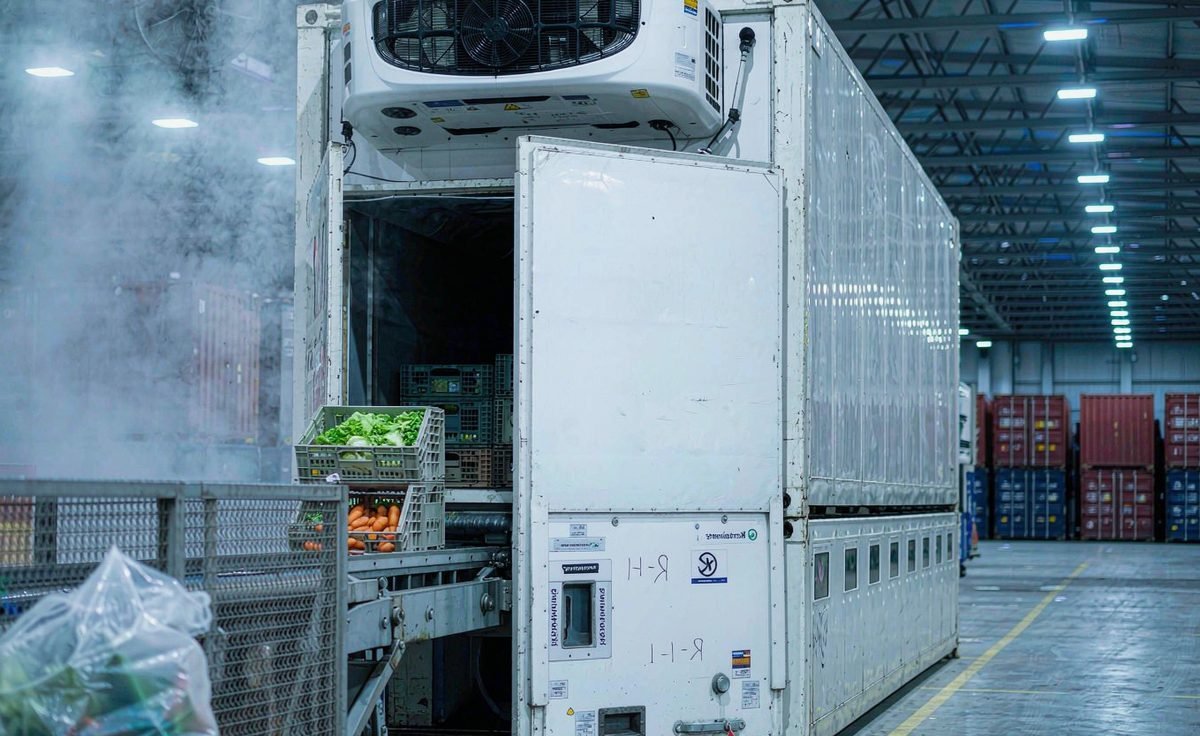
When Should You Order Ahead of Peak Events? The China Freight Calendar
Freight pricing and space follow a seasonal cycle — the same one every year:
| Period | Market condition | Restock action |
|---|---|---|
| Jan–Feb (CNY) | Factories close 2–3 weeks; pre-CNY space crunch | Goods produced by mid-December, on the water by early January |
| Mar–Jun | Low season — best rates of the year | Build Q3/Q4 buffer cheaply; stock up on evergreen SKUs |
| Jul–Oct | Peak season; premium space and rolled cargo risk | Book Q4 sailings in July–August; see our peak season playbook |
| Nov–Dec | Post-Black Friday; rates soften but CNY crunch builds | Final Q4 top-ups early November; start CNY production planning |
For a Black Friday (late November) stock arrival, work backward: delivery to the 3PL by November 10 → vessel departs by October 1 → production starts September 1 at the latest → PO placed mid-August. Sellers who place the PO in October are not restocking for Black Friday; they're restocking for Christmas gift cards. The month-by-month rate cycle is mapped in our freight season calendar, and the Q4 deadline specifics in the Black Friday shipping deadlines calendar.
Which Mode Should Each Restock Use?
Match mode to urgency, not habit:
- Planned replenishment (per the ROP trigger): LCL for 1–13 CBM, FCL above. This is the default and should cover ~80% of restocks.
- Buffer build in low season: FCL while rates are favorable — lock space early; the Drewry World Container Index shows the seasonal direction.
- Stockout rescue: air freight at US$3.5–7/kg for the top 2–3 SKUs only. A 250 kg air shipment costs maybe US$1,400 but preserves a month of US$150/day ad spend and rank.
Mini-case: a 63-day pipeline, rebuilt in one quarter
A UK Shopify seller of LED lighting came to us in August 2026 after two stockouts; they had been planning on a 35-day pipeline (production only + a hopeful fast boat). We reconstructed the real numbers: 28 days production, 6 days consolidation at Ningbo, 33 days to Felixstowe, 4 days clearance/delivery — 71 days. New ROPs went live in their inventory app in September, their Q4 order sailed September 28 (booked August 12 at a pre-peak rate), and Black Friday stock was racked in November with nine days to spare. Stockouts since: zero.
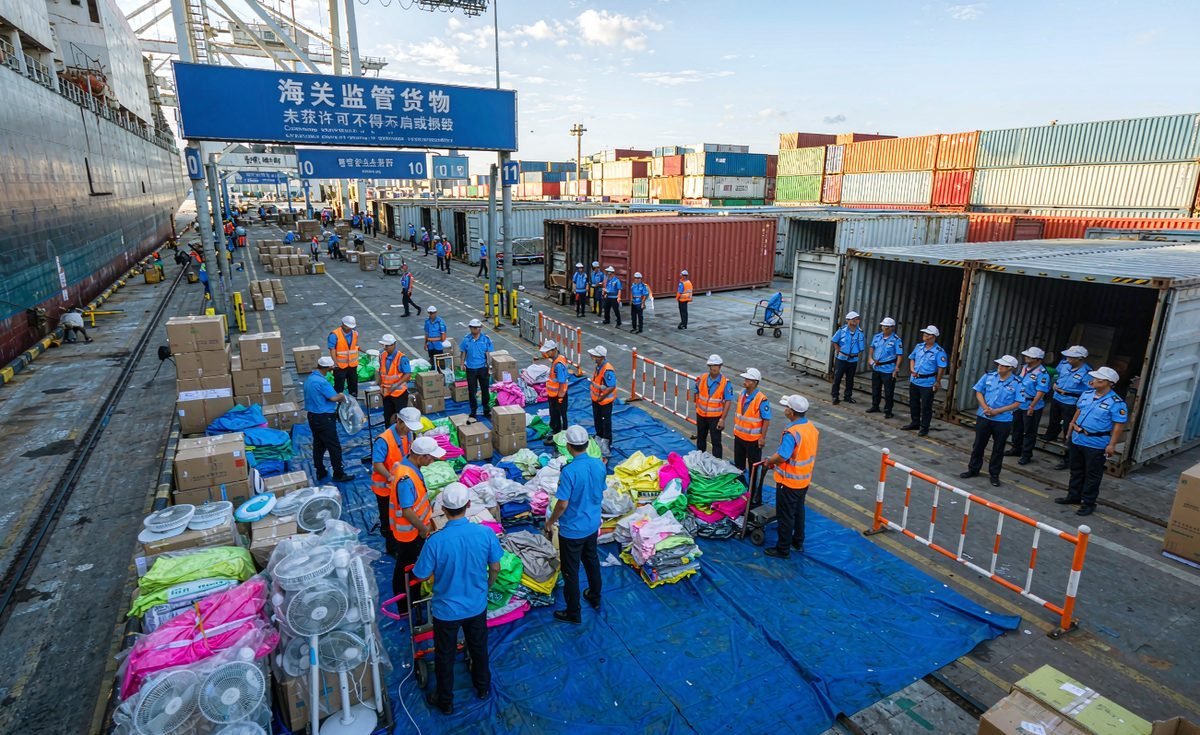
Frequently Asked Questions
How far in advance should I restock Shopify inventory from China?
Count the full pipeline: 15–40 days production, 5–10 days consolidation and export, 16–40 days ocean transit, 3–7 days clearance and delivery. That's 40–95 days total, so place a replenishment order when you hold 45–60 days of expected sales plus safety stock — and 90+ days ahead of peak events like Black Friday.
What is a reorder point for China-sourced Shopify inventory?
Reorder point = (average daily sales × total lead time in days) + safety stock. For a SKU selling 20 units a day with a 55-day pipeline and 300 units of safety stock, the trigger is 1,400 units on hand.
How much safety stock should I hold on China imports?
For ocean-replenished SKUs, hold 2–4 weeks of extra cover. Schedule reliability on Asia–Europe and transpacific lanes fluctuates month to month, and one rolled sailing adds 7–10 days; safety stock absorbs that plus demand spikes.
When is the most expensive time to restock from China?
August to October (peak season) and January pre-Chinese New Year, when space tightens and premium rates appear. For Q4 sales, book Q3 sailing space by July–August; before CNY, have goods produced by mid-December and on the water before factory closures start.
- Just-in-Time Restocking from China: Risks & Buffers
- Back-to-School Rush: Shipping Timelines for Retail Sellers
- Dropshipping from China: Inventory, Freight & Fulfillment Options
- Double 11 & Holiday Stock: Why October Bookings Matter
- Back-to-School 2027: A Restocking Timeline for Retailers Importing from China
- Shipping Machinery & Industrial Equipment from China: The Complete Exporter's Guide
Get Today's Rate & Lock Your Discount
Waymore Shipping offers FCL & LCL ocean freight from every major port in China — Shanghai, Ningbo, Shenzhen, Guangzhou, Qingdao, Xiamen, Tianjin and more. Rates updated weekly with carrier discounts.