Shipping from China to Argentina: The Complete 2027 Guide
- Ocean transit Shanghai to Buenos Aires runs 38-45 days direct, 45-60 days via transshipment hubs like Singapore, Colombo or Santos.
- Most China-Argentina cargo moves as FCL to Buenos Aires; LCL consolidation makes sense below ~12 CBM.
- Argentina's import system (SEM filing, despachante requirements, statistical fee) is stricter than most of Latin America — plan documents 2 weeks before vessel departure.
- River draught limits mean deep-draft vessels call at Buenos Aires with tide windows; delays of 2-4 days at port are normal.
- DDP shipping into Argentina is possible but requires an experienced destination partner — Waymore offers fixed all-in pricing to BA doors.
Shipping from China to Argentina means ocean freight of roughly 38-45 days from Shanghai, Ningbo or Shenzhen to Buenos Aires, with FCL rates that swing seasonally and a customs regime (SEM filings, mandatory customs brokers, ANMAT/IRAM certifications) that is far stricter than neighboring Chile or Peru. Air freight via Ezeiza (EZE) takes 5-12 days for urgent cargo. This guide covers every step, cost and pitfall for 2027 imports.
We run consolidated LCL boxes and full containers to Buenos Aires and Zárate every week from Shanghai, Ningbo, Shenzhen and Qingdao. What follows is drawn from our own booking data and the lessons our Buenos Aires agent team has learned clearing thousands of shipments.
Why Argentina Is a Different Kind of Latin America Lane
Buyers often compare Argentina with Brazil or Chile and expect the same rhythm. It doesn't work that way. Three structural realities shape the lane:
- Distance and routing: Buenos Aires sits 11,000+ nautical miles from Shanghai, up the shallow Río de la Plata. Only a handful of carriers — historically Maersk/Hamburg Süd, MSC, CMA CGM and COSCO — offer direct loops, and many services transship via Singapore, Colombo, Kingston or Santos. According to Drewry's World Container Index, South America East Coast rates have historically been among the most volatile non-transpacific lanes.
- Import controls: Argentina's customs authority (AFIP, reorganized as ARCA) runs an import monitoring system. The old SIMI licensing regime was replaced in December 2023 by the SEM (Sistema Estadístico de Importaciones), which removed most non-automatic approvals — but sensitive goods still carry prior licensing (LPA) and antidumping duties remain common on textiles, footwear, steel and cookware.
- Currency and payment friction: Importers face FX rules that affect how they pay suppliers. As a forwarder we stay out of payment structures — our job is freight and customs — but your booking timing should match your funds planning.
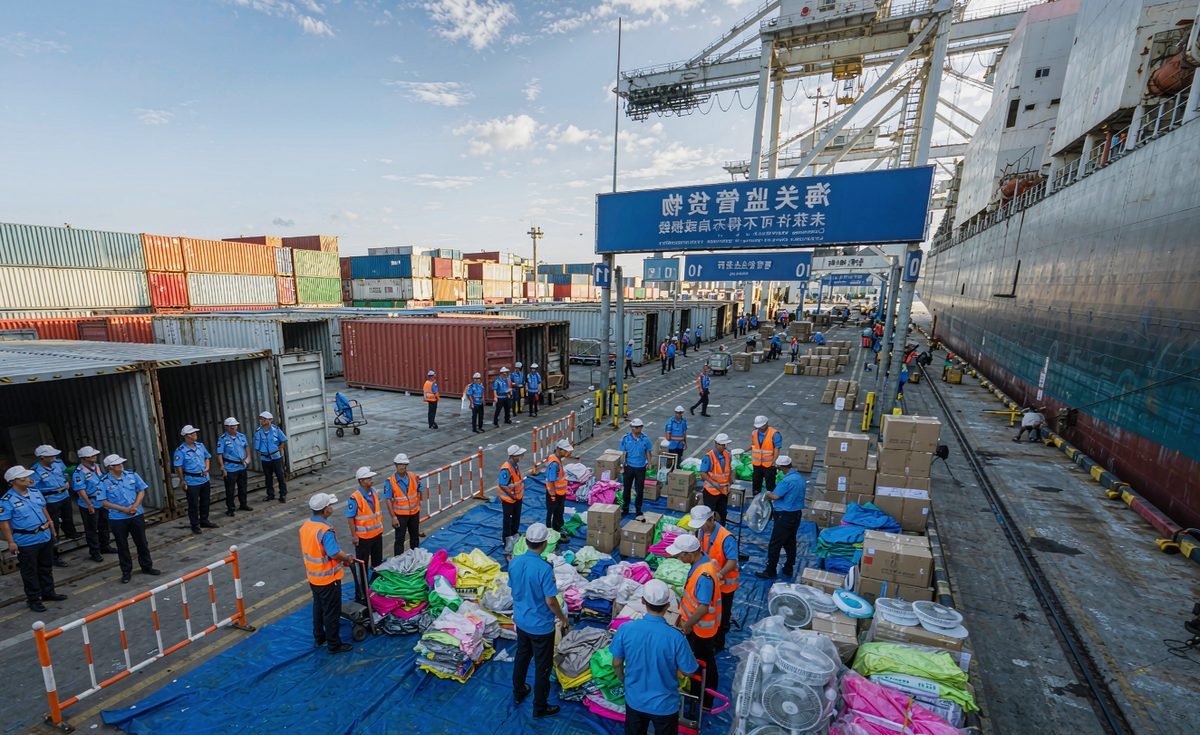
Which Chinese Ports Serve Argentina Best?
You can ship from every major Chinese port, but the economics differ:
| Origin port | Typical routing | Ocean transit (FCL) | Best for |
|---|---|---|---|
| Shanghai | Direct or via Singapore/Colombo | 38-45 days | Yangtze Delta suppliers; widest direct service choice |
| Ningbo | Direct or via Singapore | 40-47 days | Hardware, textiles, small machinery; often $100-200 cheaper than Shanghai |
| Shenzhen (Yantian/Shekou) | Via Singapore or Colombo | 42-52 days | Electronics, e-commerce cargo from Guangdong |
| Guangzhou (Nansha) | Via Colombo/Singapore | 44-54 days | Pearl Delta cargo avoiding Shenzhen congestion |
| Qingdao / Tianjin | Direct or via Busan/Singapore | 45-55 days | North China steel, machinery, chemicals |
| Xiamen | Via Singapore | 45-55 days | Stone, footwear, packaging |
Destination side, Buenos Aires handles about 85% of our China-origin volume. Zárate and Campana serve the Paraná industrial corridor (automotive, paper, agro); Mar del Plata is negligible for imports. If your buyer's warehouse is in Córdoba, Rosario or Mendoza, ask us for door delivery pricing — trucking from BA adds 1-4 days and $150-600 depending on distance and load.
How Much Does It Cost? FCL and LCL Rate Ranges
Indicative November 2026 ranges from our weekly rate sheet (market rates move — the SCFI published by the Shanghai Shipping Exchange and the FBX by Freightos are good live references):
| Service | Typical rate to Buenos Aires | Notes |
|---|---|---|
| 20GP FCL | $2,400-3,600 | Bulk metals, machinery, dense cargo |
| 40GP FCL | $3,200-4,800 | General merchandise |
| 40HC FCL | $3,300-5,000 | Most popular for volume importers |
| LCL | $85-140 per CBM | Minimum ~2 CBM; weekly consolidation |
| Air freight to EZE | $4.50-7.50 per kg (chargeable) | Via MAD/AMS/GRU/DXB; 5-12 days |
Beyond ocean freight, budget for THC at origin (~$50-90 per container), documentation fees, export customs declaration in China, cargo insurance (we recommend all-risk Institute Cargo Clauses coverage at roughly 0.15-0.3% of value), and destination charges in Argentina, which are significant — terminal handling at Terminal 4/Expoár plus agent and clearance fees commonly add $400-700 on an FCL. Our article on how to read a freight quote breaks down each line so you can spot inflated destination fees before they hit your invoice. One number worth internalizing: on this lane, ocean freight is typically only 5-12% of your total landed cost — the rest is goods value, duties, taxes, and local handling, which is why we always quote door-side costs, not just the water leg.
The End-to-End Process, Step by Step
Step 1: File the SEM import declaration (importer side)
Before you even book, your Argentine importer of record (or our destination partner under DDP) registers the purchase in the SEM system and obtains the authorization number, which must appear on the commercial invoice. For LPA-licensed goods — autos parts, pharmaceuticals, textiles in some categories — allow extra weeks. This is the single most common cause of cargo waiting at port: no valid SEM reference, no clearance.
Step 2: Book and lock the space
Send us the supplier list, cargo specs and ready date. For FCL we quote 3-5 carrier options with different transshipments; for LCL we slot you into the weekly Shenzhen or Shanghai box. Space to Buenos Aires tightens around the Canton Fair cycle and before Chinese New Year — the February 2027 CNY falls on February 6, so December-January sailings will be crowded as factories rush final exports.
Step 3: Export customs in China
Your supplier exports under their declaration (or under a buy-export arrangement — see our guide to buy export vs tax rebate export). We arrange the container, VGM submission and customs release at origin.
Step 4: Ocean leg and tracking
Once sailed you get milestone tracking — gate-in, loaded, transshipment, arrival. Argentina-bound services via Santos occasionally slip when Brazilian feeder connections are missed; when that happens our ops team re-books connecting boxes before you notice.
Step 5: Clearance and delivery in Argentina
Our Buenos Aires agent's despachante files the Destinación de Importación para Consumo (DJI) in the MALVINA system, pays duties, the statistical fee, IVA and income-tax perception, then releases the container. Delivery to a BA warehouse typically 3-7 days after vessel berthing. We published a dedicated walkthrough of Argentina import customs clearance, documents and duties if you need the deep dive.
FCL or LCL for Argentina — Which Should You Choose?
A quick decision framework we use with buyers:
| Your volume | Recommendation | Why |
|---|---|---|
| Under 12 CBM or under 5 tons | LCL | Paying for an empty 20GP costs more than shared box space |
| 12-25 CBM | LCL vs 20GP comparison | At $85-140/CBM LCL, a 20GP (28 CBM usable) wins around 20+ CBM |
| 26-50 CBM | 20GP x2 or one 40HC | 40HC (67 CBM usable) beats two 20GP on ocean cost |
| 50+ CBM | 40HC or 2x40HC | Cheapest per-CBM; consider consolidation of multiple suppliers |
Mini-case: a Buenos Aires kitchenware importer was buying from four suppliers across Ningbo and Yiwu and shipping LCL monthly. We consolidated everything into one 40HC every six weeks — landed logistics cost per CBM dropped 18%, and destination fees fell because one container means one clearance file instead of four.
When Should You Use Air Freight to Argentina?
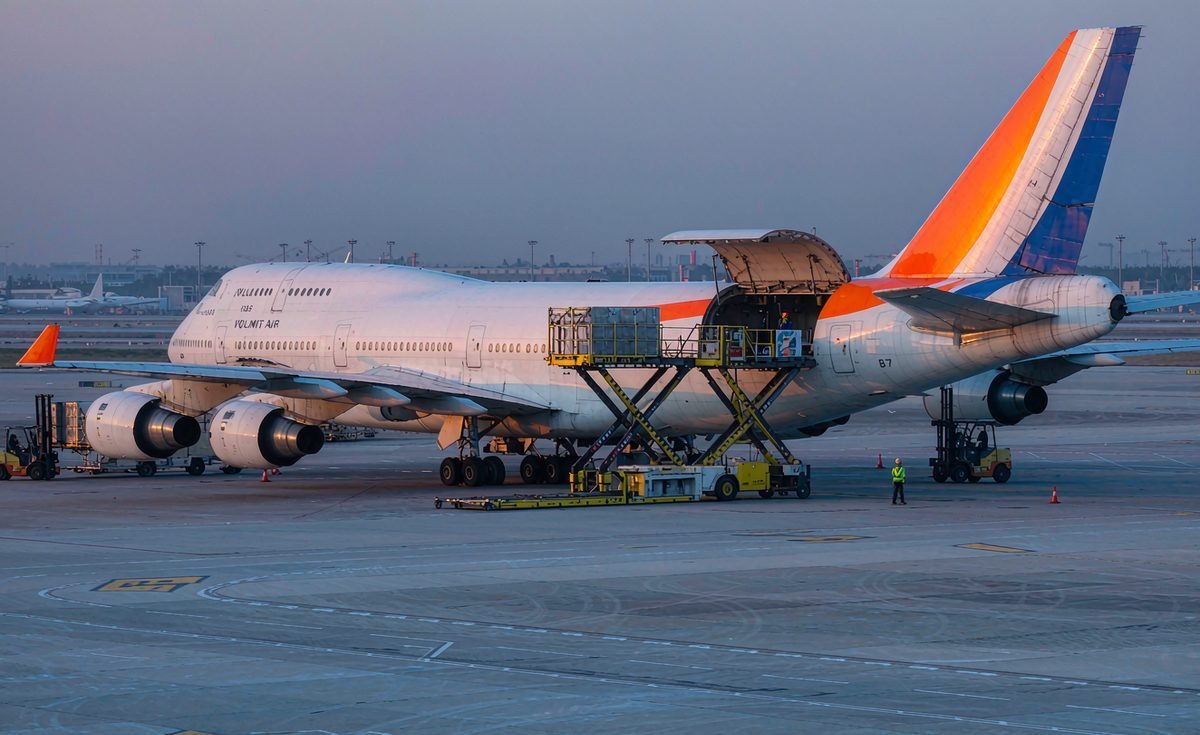
Air via Ezeiza through Madrid, Amsterdam, Doha or São Paulo takes 5-12 days at $4.50-7.50/kg. It earns its cost for launch stock, samples, replacement parts and pharma-adjacent goods. One rule of thumb: if your cargo value exceeds roughly $35-40 per kg, air is usually worth it. Note Argentina's courier regime has a simplified import channel with value caps — above those, formal clearance applies even for parcels. For weight math, see our CBM and chargeable weight guide.
Top Mistakes We See on This Lane (and How to Avoid Them)
- Booking before SEM approval. Vessels won't wait; SEM processing hiccups leave cargo rolling. Always file SEM first.
- Ignoring antidumping exposure. If your HS code carries an AD duty (common on footwear, textiles, steel fasteners, kitchen utensils), your landed cost can jump 20-100%. We run a free HS screening on request.
- Underestimating destination charges. BA terminal and agent fees are high by regional standards; compare all-in door pricing, not just ocean.
- Shipping without insurance. A 45-day ocean leg with two transshipments doubles handling events. Cargo claims rules impose strict deadlines — cover the risk instead.
- Forgetting CNY timing. For 2027: suppliers close roughly Feb 1-15; book January sailings by early December.
Getting Cargo Ready: Supplier Coordination Checklist
The ocean leg is fixed; most Argentina-lane delays are actually born at the factory. Before your container or LCL lot books, confirm every item on this list with each supplier:
- Exact ready date, not "about two weeks." On a 45-60 day lane, a slipped ready date pushes you across a weekly sailing — and sometimes across a rate window.
- HS codes and materials for every SKU. Needed for duty screening (antidumping), SEM filing and the invoice. Materials matter: "aluminum" and "aluminum alloy" classify differently.
- Packaging spec and palletization willingness. Loose cartons on a 50-day ocean leg invite crushing; ask for export cartons stacked to spec and, for FCL, desiccant bags in the container.
- Marking requirements. Argentine receivers want legible gross/net weights and origin marks; sloppy carton marking slows destination handling and inspections.
- Export documentation capability. Confirm the supplier can issue the invoice values you'll declare, and that their export declaration will match. Mismatches here are the seed of canal problems in Buenos Aires.
We run this checklist on every new Argentina client file — send us your supplier list and product photos and we'll flag issues before they cost you a sailing.
Frequently Asked Questions
How long does shipping from China to Argentina take?
Ocean freight from Shanghai or Ningbo to Buenos Aires typically takes 38-45 days on direct services and 45-60 days when transshipping via Singapore, Colombo or Santos. Add 5-10 days for customs clearance and delivery in Argentina.
What is the cheapest way to ship from China to Argentina?
LCL consolidation from Shanghai or Ningbo is cheapest for shipments under 12 CBM, while a 40HC container is cheapest per CBM above roughly 45-50 CBM. Booking through a forwarder with discounted carrier space typically saves 10-20% against published rates.
What documents do I need to import from China into Argentina?
You need a commercial invoice, bill of lading, packing list, the SEM import declaration filed before shipment, and a licensed despachante de aduana (customs broker). Regulated products also need ANMAT, SENASA or IRAM certificates.
Can I ship DDP from China to Argentina?
Yes. Waymore Shipping offers DDP to Buenos Aires and major inland cities, where our partner clears the cargo under our local importer arrangements and pays duties, IVA and the statistical fee, delivering to your door at a fixed price.
- How Much Does It Cost to Ship a Container from China to Argentina?
- China to Argentina Transit Times: Ports, Schedules & Delays
- DDP Shipping from China to Argentina: Costs, Rules & Pitfalls
- Shipping from Xiamen to Dubai: Rates, Transit Times & Booking Guide
- Shipping Consumer Electronics from China: The Complete Exporter's Guide
- Shipping Toys & Baby Products from China: The Complete Exporter's Guide
Get Today's Rate & Lock Your Discount
Waymore Shipping offers FCL & LCL ocean freight from every major port in China — Shanghai, Ningbo, Shenzhen, Guangzhou, Qingdao, Xiamen, Tianjin and more. Rates updated weekly with carrier discounts.