Shipping from Shenzhen to London: Rates, Transit Times & Booking Guide (2026)
Shipping a container from Shenzhen to London takes 28–33 days by sea on a direct service, with indicative 40HC rates of roughly $2,050–$2,850 as of November 2026 and LCL cargo at about $60–$90 per CBM. The two decisions that most affect your landed cost are which UK port you book — London Gateway or Felixstowe — and how cleanly your post-Brexit paperwork, especially the S&S GB declaration and customs value, is prepared before the vessel loads at Yantian or Shekou. This guide walks through both, with the rate bands, cut-off timings and compliance checkpoints we manage every week on this lane.
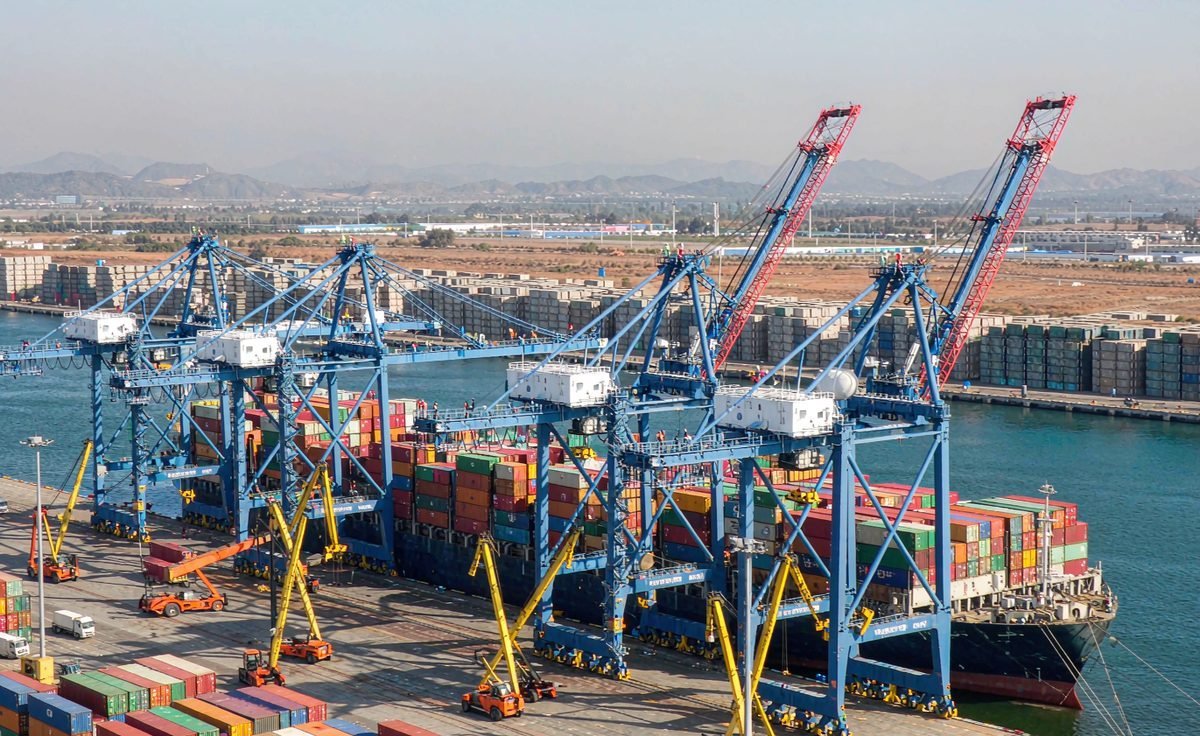
- Direct transit from Yantian/Shekou to London Gateway or Felixstowe: 28–33 days; add 7–9 days for door delivery across the UK.
- Indicative November 2026 rates: 40HC $2,050–$2,850, 20GP $1,150–$1,600, LCL $60–$90/CBM.
- Post-Brexit paperwork is UK-specific: S&S GB entry summary, CDS import entries, and the EORI (GB) number — EU rules no longer apply.
- VAT-registered importers should register for postponed VAT accounting to avoid paying 20% VAT at the border.
- Book 2–3 weeks before the Chinese New Year 2027 build-up begins (mid-December) or expect roll risk and +15–25% rate drift.
Transit Times: Shenzhen to London Port by Port
From Shenzhen's two main load ports — Yantian for most direct UK loops and Shekou for a handful of services plus transhipment options — there are weekly direct calls to both London Gateway and Felixstowe. A few carriers route UK cargo via Rotterdam or Hamburg first; that adds 3–5 days and a short-sea or feeder leg, which we generally avoid for time-sensitive freight.
| Route option | Typical port-to-port time | Best for |
|---|---|---|
| Yantian → London Gateway (direct) | 28–31 days | London, South East, e-commerce fulfilment centres |
| Yantian → Felixstowe (direct) | 29–33 days | Midlands, North England, Scotland |
| Shekou → Rotterdam → short-sea/feeder to UK | 33–40 days | Cost-driven cargo; consolidations that also serve EU customers |
| Air freight Shenzhen → LHR/LGW | 3–6 days door to door | Sample runs, urgent replenishment under ~500 kg |
Door-to-door, we tell importers to plan 35–42 days from factory pickup in Guangdong to delivery in Greater London, and about 2–3 days more for Midlands or northern destinations. Terminal congestion at Felixstowe has eased from its worst levels, but it remains the more congestion-sensitive of the two ports, so for delivery-date-critical cargo we usually quote London Gateway first. For a deeper dive on schedule variability, our guide to China–UK transit times and schedule reliability covers the historical on-time record of each service string.
Indicative Rates: November 2026
Rates on the Asia–North Europe trade have been volatile for two straight years, and the UK loops mostly price off the same base index movement as the continental ports. The bands below are what we are actually quoting this month for a standard dry cargo booking with normal cut-off compliance — they are indicative, not fixed offers, and move with the weekly index readings such as the Drewry World Container Index.
| Cargo type | Indicative rate (Nov 2026) | Notes |
|---|---|---|
| 20GP, Yantian → London Gateway | $1,150–$1,600 | All-in ocean + surcharges, port to port |
| 40HC, Yantian → London Gateway | $2,050–$2,850 | Bulk of UK volume; best per-CBM economics |
| 40HC, Yantian → Felixstowe | $2,100–$2,900 | Slight premium; watch Felixstowe congestion surcharges |
| LCL, Yantian → London (CFS) | $60–$90 per CBM | Minimum ~2 CBM; 5–7 days extra for deconsolidation |
| Air freight, SZX → LHR | $4.20–$5.80 per kg | General cargo, +3–5 days airport handling |
Three cost drivers matter more than the headline number. First, cut-off discipline: missing the VGM or documentation cut-off at Yantian typically means a roll to next week's vessel, which in a tight market can carry a $300–$800 rebooking gap. Second, destination charges: UK terminals and hauliers price locally, and a container sitting past free time accrues £60–£120 per day. Third, peak-season timing: expect 15–25% rate drift in the December–January CNY build-up and a smaller bump before UK autumn replenishment. Our desk tracks carrier-level spreads weekly — the difference between booking with the cheapest string versus the most reliable one on this lane is often only $100–$150 per box, which is cheap insurance.

Choosing Your UK Port and Inland Leg
The UK is compact but not uniform, and port choice is the single biggest inland-cost lever.
- London Gateway (DP World) sits on the Thames Estuary with on-dock rail and fast access to London, Essex and the M25 e-commerce belt. For importers running fulfilment centres in the South East, it usually saves 1–2 days versus Felixstowe.
- Port of Felixstowe is the UK's largest container port with the densest direct-call offering from Asia. It is the natural choice for the Midlands (Birmingham, Leicester, Nottingham), Manchester and Scotland, especially with on-dock rail links to Daventry and Trafford Park.
- Southampton occasionally appears as an option on some loops, useful for cargo destined to the South and Wales, but direct Shenzhen calls are less frequent.
- Short-sea alternatives: for true deep-Midlands cargo, some shippers land at Rotterdam and truck or barge via ferry/Hook of Holland. It rarely beats a direct UK call on cost unless the same container also serves EU customers.
Drayage from London Gateway to a Greater London warehouse typically runs £250–£450 per box; from Felixstowe to the Midlands, £350–£550. Those numbers swing with driver availability, so when a customer's delivery window is soft we book whichever port has the better haulage rate that week.
UK Customs and Compliance After Brexit
The UK is no longer under the EU customs regime, and the paperwork differences catch importers who also ship to the continent. Here is the checklist we run for every Shenzhen–London booking:
| Requirement | What it is | When / who |
|---|---|---|
| S&S GB declaration | UK entry summary declaration (post-Brexit ENS equivalent), lodged with HMRC via a carrier or community system provider | Before loading at the Chinese port; filed by the carrier from your booking data |
| EORI number (GB) | Importer's GB EORI starting with "GB"; an EU EORI is not valid | Must be active before the vessel arrives |
| CDS import entry | The Customs Declaration Service replaced CHIEF; entries filed by your UK broker or under DDP by us | Pre-lodged, typically 2–5 days before arrival |
| Commercial invoice & packing list | Must match the declaration: HS codes, values, Incoterms, weights per carton | At booking; discrepancies cause exam holds |
| UKCA / CE marking | Most goods formerly under CE now require UKCA marking for the GB market | Verified at factory stage — labelling changes take production time |
| ISPM-15 wood packaging | Heat-treated, stamped pallets and crating (the UK continues to enforce this for EU and non-EU origins) | At stuffing |
Two UK-specific points deserve emphasis. First, VAT treatment: the standard rate is 20%, charged on the customs value plus any duty. But UK VAT-registered importers can use postponed VAT accounting — the VAT is declared and reclaimed on the same VAT return rather than paid at the frontier, which removes a large cash-flow drag. If your finance team has not enabled this on the HMRC account, it is a five-minute fix worth doing before your first container. Second, duty and rules of origin: the UK Global Tariff differs from the EU's in places, and a handful of Chinese-origin goods face UK trade-remedy measures (certain steel and aluminium products among them). A tariff-classification ruling obtained before shipping beats an expensive reclassification after arrival. Our full walkthrough in China–UK customs clearance: documents, duties and process covers each document line by line.

LCL from Shenzhen to London: When It Beats an FCL
If your shipment is under about 13–14 CBM, LCL via our weekly Shenzhen–London consolidation is usually cheaper than a 20GP. From our Yantian-adjacent CFS, we consolidate on fixed weekly sailings with London Gateway and Felixstowe destination options. The trade-offs to plan for: deconsolidation at the UK CFS adds 4–7 days, and destination charges are levied per CBM, which we quote up front so there are no surprises at collection. For cargo above ~14 CBM or above ~6 tonnes, an FCL almost always wins on total cost and on cargo safety, since shared-container freight with mixed commodities is more exposed to inspection delays triggered by another shipper's goods.
Mini-Case: Leicester Fashion Wholesaler, 3×40HC
In September 2026, a Leicester-based apparel wholesaler asked us to move three 40HCs of autumn stock from two factories in Dongguan, with a hard delivery deadline for their retail customers' mid-November floors. The risk wasn't the ocean leg — it was a January-in-advance VAT position and a classification question on knitwear HS headings that their previous forwarder had been filing loosely. We moved the import under postponed VAT accounting, tightened the HS classification with a pre-filing check on one borderline heading, and booked all three boxes on the same Yantian → London Gateway string with a 10-day cut-off buffer. All three containers gated in on the first attempt, discharged on schedule, and were delivered to the Midlands warehouse at day 37, 38 and 39 — three days inside the customer's contractual window. The classification correction alone avoided a potential duty underpayment assessment that would have dwarfed the freight spend.
Booking Checklist: Shenzhen to London
- T-28 days: confirm Incoterms, HS codes and UK duty/VAT treatment; verify the importer's GB EORI and postponed VAT registration.
- T-21 days: lock the booking on a direct Yantian or Shekou string; agree the port (Gateway vs Felixstowe) based on final delivery point.
- T-10 to T-7 days: factory pickup and container stuffing; VGM and shipping instruction submitted; S&S GB data set ready for the carrier.
- T-5 days: documentation cut-off at Yantian (typically 3–4 days before ETD); verify invoice–declaration consistency.
- T-1 day: container gated in and loaded; B/L draft checked.
- Arrival −5 days: CDS entry pre-lodged; haulage slot booked; free time confirmed at the terminal.
If you are comparing this lane with DDP terms, read our guide on DDP shipping from China to the UK: costs, rules and pitfalls — DDP into Great Britain is workable but hinges on getting the VAT mechanism right.
- Shipping from Shenzhen to Dubai: Rates, Transit Times & Booking Guide (2026)
- Shipping from Shenzhen to Sydney: Rates, Transit Times & Booking Guide (2026)
- Shipping from Shenzhen to New York: Rates, Transit Times & Booking Guide
- Shipping from Shenzhen to Lagos: Rates, Transit Times & Booking Guide
- Shipping from Shenzhen to Mumbai: Rates, Transit Times & Booking Guide
- Shipping from Qingdao to London: Rates, Transit Times & Booking Guide
FAQ: Shipping from Shenzhen to London
How long does sea freight from Shenzhen to London take?
A direct service from Yantian or Shekou to London Gateway or Felixstowe takes about 28–33 days port to port. Including customs clearance and inland delivery, plan for 35–42 days door to door.
How much does a 40ft container from Shenzhen to London cost?
As of November 2026, indicative all-in rates for a 40HC from Yantian to London Gateway or Felixstowe run roughly $2,050–$2,850, depending on the carrier, cut-off discipline and peak-season surcharges. LCL cargo costs about $60–$90 per CBM.
Which UK port should I choose for cargo from Shenzhen?
London Gateway is best for London and South East England distribution; Felixstowe suits the Midlands and North plus Scotland. Both receive direct calls from South China. Choosing the wrong port adds 1–3 days and £150–£400 in drayage.
What is the S&S GB declaration for UK imports?
Safety and Security GB is the UK's entry summary declaration, the post-Brexit equivalent of the EU's ENS. It must be lodged with HMRC before loading at the Chinese port, so your forwarder needs the data well before the container is gated in.
Do I pay UK VAT at the border on Chinese imports?
VAT at 20% is due on the customs value plus duty, but VAT-registered UK importers can use postponed VAT accounting and declare it on their VAT return instead of paying at the border — a major cash-flow advantage over the old system.
Rates and transit times in this article are indicative market observations as of the last-updated date and do not constitute a binding offer. Request a live quote for firm pricing.
Get Your China Shipping Quote Today
Waymore Shipping moves FCL and LCL cargo from every major Chinese port — Shanghai, Ningbo, Shenzhen, Qingdao, Xiamen and more — to doorsteps worldwide. Compare today’s discounted rates or request a free, no-obligation quote tailored to your lane.