Shipping from Yiwu to Dubai: Rates, Transit Times & Booking Guide
- Yiwu to Dubai is 18–24 days port to port from Ningbo-Zhoushan to Jebel Ali, mostly via Singapore/Port Klang or Colombo.
- All-in 40HC rates run US$1,900–$3,400; 20GP US$1,300–$2,300 as of November 2026 — one of the best value long-haul lanes.
- UAE duty is a flat 5% CIF for most goods plus 5% VAT; free-zone cargo defers duty until mainland entry.
- Ramadan and Eid reshape Dubai's demand calendar — ship 6–8 weeks before Ramadan for retail-ready goods.
- Dubai is also the re-export hub for the Gulf, Africa and CIS — many "Dubai" shipments continue onward by feeder.
Shipping from Yiwu to Dubai takes 18–24 days port to port from Ningbo-Zhoushan to Jebel Ali, and costs roughly US$1,300–$2,300 for a 20GP or US$1,900–$3,400 for a 40HC all-in. UAE import duty is a straightforward 5% CIF for most goods plus 5% VAT — one of the simplest clearance regimes in long-haul trade. This guide covers the routing, rates, the Dubai paperwork, and the Ramadan timing that shapes the Gulf's buying year.
Dubai is Yiwu's most natural big-market partner: the city's wholesale trade runs on exactly the mixed, mid-volume commodity flows Yiwu produces, and Jebel Ali doubles as the re-export gateway to Saudi Arabia, Africa and Central Asia. Our Yiwu desks load Gulf-bound boxes every week — lighting, kitchenware, cosmetics packaging, phone accessories, fabrics and festive goods.
How Does Yiwu Cargo Reach a Dubai-Bound Vessel?
The standard start: 180 km to Ningbo-Zhoushan by truck (2–3 hours, RMB 2,200–3,200 per 40HC) or the Yiwu–Ningbo sea-rail train with export declaration completed in Yiwu. Middle East services sail from Ningbo several times weekly, mostly transshipping at Singapore, Port Klang or Colombo before the Arabian Sea leg into Jebel Ali. Transit splits into:
| Service type | Port-to-port transit | Notes |
|---|---|---|
| Via Colombo | 18–22 days | Fastest connections; Colombo sits directly on the Gulf trade |
| Via Singapore / Port Klang | 20–24 days | Best space availability; the default product |
| Direct / semi-direct strings | 17–20 days | Limited weekly; space books out early, small premium |
Add 1–2 days pickup and stuffing in Yiwu, 3–4 days export declaration and embedding at Ningbo, and 2–5 days at Jebel Ali for discharge and clearance — Jebel Ali's clearance is fast when documents are right. Door to door: 28–36 days.

What Are the Typical Rates from Yiwu to Dubai?
The Middle East lane is comparatively stable — the Gulf import base is broad and year-round, without the single-season surges that whipsaw Europe and US rates. The main volatility comes from transshipment connection quality at Colombo and Singapore. Track the market via the Freightos Baltic Index and the Shanghai Shipping Exchange; budget with this build-up:
| Cost component | 20GP | 40GP / 40HC |
|---|---|---|
| Yiwu warehouse → Ningbo drayage | 210 – 300 | 310 – 450 |
| Ocean freight (via Colombo/Singapore) | 850 – 1,500 | 1,350 – 2,600 |
| Origin THC (Ningbo) | 130 | 210 |
| Export declaration + docs | 75 – 100 | 75 – 100 |
| Destination THC + fees, Jebel Ali (approx., at destination) | 200 – 350 | 320 – 520 |
| Indicative all-in (excl. duties, VAT & delivery) | 1,300 – 2,300 | 1,900 – 3,400 |
Two structural notes. First, if your "Dubai" cargo actually continues to Saudi Arabia, Oman, East Africa or CIS markets, it likely re-exports from Jebel Ali by feeder — ask us to quote the onward leg as one through-BL movement, which is cleaner and usually cheaper than landing and re-booking. Second, duty at 5% of CIF means the freight rate directly inflates the duty base; a marginally cheaper but slower service sometimes costs more in duty than it saves in freight — worth checking on high-value goods.
What Does UAE Customs Require?
Compared with Brazil, Nigeria, the EU or the US, Dubai's clearance is refreshingly simple — but it has its own specifics:
- Importer registration: the consignee needs a Dubai Customs importer code (linked to their trade licence). Confirm it's active before shipping — a lapsed licence stops clearance instantly.
- Declaration: filed through Dubai Trade / Mirsal 2 by the broker or importer against the manifest; duty assessed at 5% CIF for most goods, with higher rates for tobacco and alcohol.
- VAT (5%): registered importers account for it through the Federal Tax Authority; non-GCC importers' local agents usually handle it.
- Conformity: regulated goods — electronics, cosmetics, food-contact items, toys — may need ESMA/MOIAT conformity or EmiratesAuthority approval; cosmetics and personal care face ingredient scrutiny. Check the product list before ordering, not at the port.
- Certificate of Origin: a legalised or chamber-stamped CO is standard practice on this lane and speeds clearance; some categories require Arabic labelling on retail packaging.
- Free zone option: goods consigned to Jebel Ali Free Zone (JAFZA) or Dubai South defer duty and VAT until mainland entry — useful for traders and e-commerce hubs.
Our UAE customs clearance guide lists the full document set, and the complete lane overview — including DDP structures — is in our China–UAE shipping guide.
How Does the Ramadan Calendar Affect Shipping to Dubai?
The Gulf's retail year bends around Ramadan and Eid. In 2027, Ramadan begins around early February — meaning the buying surge for Ramadan/Eid retail (food packaging, home goods, decorations, gifting) ships from China in November–December. Working backward: retail stock must land by mid-January, so vessels must sail from Ningbo by mid-December at the latest, and bookings should be made 4–6 weeks before ETD. After Eid, the market quietens for weeks — a good window for negotiating rates. Our Eid & Ramadan shipping guide maps the full annual rhythm for Middle East lanes.
A real example from our files
In November 2025, a Deira trading company ordered a 40HC from five Yiwu suppliers — festive tableware, LED string lights and gift bags for the Ramadan season. We merged the five loads, with per-supplier invoices and one house BL, and sailed from Ningbo on December 2. The box transshipped at Colombo with a clean 4-day connection and discharged Jebel Ali on day 21. The consignee's Dubai Customs code and CO were ready, so clearance took two days and duty came to 5% of CIF as planned. Delivery to Deira happened on day 25 — six weeks before Ramadan started, with the goods on shelves well before the pre-Eid rush. The trader's competitor, who booked the same class of goods in mid-December, paid noticeably higher peak rates and still landed after the first week of Ramadan. On Gulf lanes, the calendar is the discount.
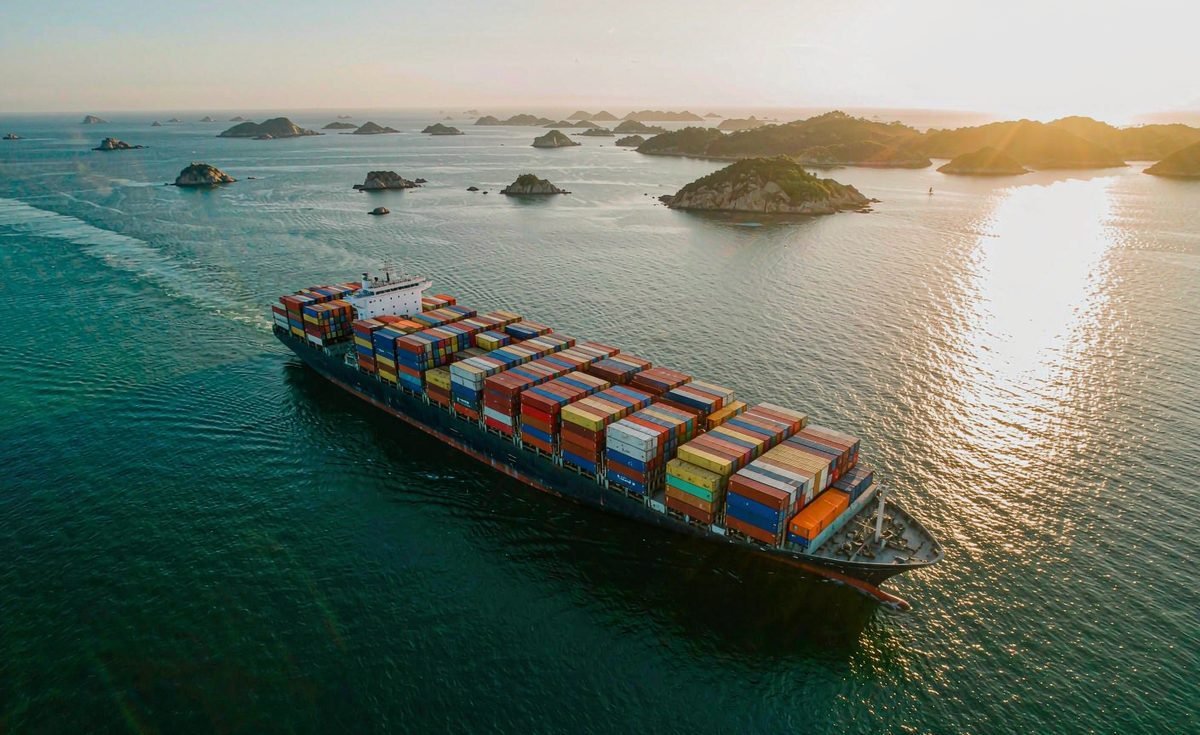
What Does the Jebel Ali End of the Journey Look Like?
Jebel Ali's clearance is fast — usually 2–4 days from discharge to gate-out when the importer code, CO and declarations are ready — and delivery into Dubai's trading districts follows predictable patterns. Deira and Bur Dubai wholesale deliveries are typically trucked the same day as release (US$250–450 per 40HC, port-side to old Dubai); Dubai South and Al Quoz warehouses are closer to the port side of the city; Sharjah and Abu Dhabi deliveries add 1–2 hours of trucking each way. Free time at Jebel Ali is reasonable — typically 5–7 days combined before storage charges — but the real calendar pressure is commercial, not operational: Deira traders turn goods fast, and a box that arrives after the buying season sits unsold in a bonded warehouse at rent.
For traders re-exporting onward, the free-zone structure matters: a container consigned to JAFZA can sit duty-free, be split across multiple feeder bookings to Mombasa, Karachi or Bandar Abbas, and only the mainland-entered portion attracts UAE duty. We handle a steady flow of these split re-export moves for Yiwu traders, and the planning detail that matters most is the onward booking made before the main vessel berths — feeder space out of Jebel Ali to East Africa in particular runs tight in the months before major trading seasons.
FCL or LCL from Yiwu to Dubai?
Gulf LCL from Yiwu runs weekly at roughly US$35–65 per CBM all-in origin-side — among the lowest per-CBM rates out of China — though Jebel Ali destination charges and duty treatment matter for small lots. Crossover guidance: under 14 CBM, LCL; 14–16 CBM, compare both; above 16 CBM, FCL. For re-export traders, a dedicated FCL consigned to a free zone often beats LCL on handling risk, even below the volume crossover. For the full framework, see our FCL vs LCL guide.
The Gulf LCL model deserves a note: because Deira and Sharjah traders buy in small, frequent lots, our Gulf consolidations turn over quickly and the destination handling at Jebel Ali's CFS facilities is practiced and quick — usually 1–2 days from vessel discharge to CFS availability. Dense cargo (hardware, ceramics, tools) prices better per CBM than light cargo (plush toys, packaging), since LCL bills on the higher of measurement or weight rules. Two final caveats for small lots: destination CFS fees in the Gulf are moderate, but cumulative per-CBM destination charges still add 20–35% on top of the ocean leg for sub-5-CBM shipments, so always budget landed cost, not freight cost; and if a trader's volumes grow past roughly 14 CBM monthly, a dedicated 20GP usually beats continuing LCL on both price and damage risk.
When Should You Book?
Two crunches define the lane: the pre-Ramadan surge (book November–December for February 2027 arrivals) and the pre-Chinese New Year rush (book 4+ weeks ahead of late-January 2027 factory shutdowns). November 2026 sits at the sweet spot for both: pre-Ramadan space is open now at normal rates, and pre-CNY slots can be secured before the December squeeze. Summer (June–August) is the quiet season — good for negotiating, less good for urgent restocks since some Gulf logistics partners shorten hours in the heat.
Frequently Asked Questions
How long does shipping from Yiwu to Dubai take?
Ocean transit from Ningbo-Zhoushan (Yiwu's load port) to Jebel Ali runs 18–24 days port to port on Middle East services via Singapore/Port Klang or Colombo. Add Yiwu trucking, export clearance and UAE clearance, and plan 28–36 days door to door.
How much does a 40HC from Yiwu to Dubai cost?
Typical all-in 40HC pricing is US$1,900–$3,400 including Ningbo origin charges and ocean freight; 20GP runs US$1,300–$2,300. Middle East rates are among the most stable long-haul lanes, but surge before Ramadan and Chinese New Year.
What duty and taxes apply when importing into Dubai (UAE)?
Standard customs duty is 5% CIF for most goods, plus 5% VAT registered through the Federal Tax Authority. Tobacco, alcohol and some categories carry higher rates. Goods entering free zones like Jebel Ali Free Zone defer duty until they enter mainland UAE.
Which Dubai port or airport should cargo arrive at?
Jebel Ali handles nearly all containerized sea cargo for Dubai — the deep-water Mina Jebel Ali terminals serve the main China services. Port Rashid handles limited volumes and cruise/ro-ro traffic. For urgent high-value cargo, Dubai (DWC/DXB) air freight completes in 1–2 days transit.
Can my Dubai shipment continue onward to Saudi Arabia or East Africa?
Yes — Jebel Ali is the Gulf's re-export hub. Ask for a through booking to the final destination with a single bill of lading, so the feeder leg from Jebel Ali is arranged as part of one movement rather than a separate re-booking after arrival.
- Shipping from Yiwu to Hamburg: Rates, Transit Times & Booking Guide
- Shipping from Yiwu to New York: Rates, Transit Times & Booking Guide
- Shipping from Yiwu to Sydney: Rates & Transit Times Guide
- Shipping from Yiwu to Lagos: Rates & Transit Times Guide
- Shipping from Yiwu to Santos: Rates & Transit Times Guide
- Shipping from Yiwu to Mumbai: Rates & Transit Times Guide
Get Today's Rate & Lock Your Discount
Waymore Shipping offers FCL & LCL ocean freight from every major port in China — Shanghai, Ningbo, Shenzhen, Guangzhou, Qingdao, Xiamen, Tianjin and more. Rates updated weekly with carrier discounts.