Winter Shipping from China: Weather Delays & Seasonal Tips
- Winter shipping delays from China are real but regional: northern ports (Tianjin, Qingdao, Dalian) lose hours to days in wind, fog and ice; southern ports barely slow down.
- Plan a 3–7 day buffer on northern and transpacific routes from December through March.
- Container condensation ("container rain") damages more winter cargo than rough seas — use desiccants and moisture-resistant packing.
- Winter overlaps with Chinese New Year (February 2027): the two disruptions compound in January.
- Direct services beat transshipments in winter — every extra connection is another weather exposure point.
Winter adds 3–7 days of schedule risk to shipping from China — mostly at northern ports like Tianjin, Qingdao and Dalian, where winds, fog and occasional ice slow berthing from December through March, and at destination ports in Northern Europe and North America facing their own winter backlogs. The port does not close; your timeline just gets thinner margins. The fix is planning: earlier bookings, direct services, and condensation protection.
Most buyers plan for Chinese New Year and peak season but treat winter as uneventful. Our Qingdao and Tianjin desks know better: every January, vessels skip berths in gale warnings, Rotterdam and Hamburg queues lengthen in storm season, and air freight from northern hubs slips on fog days. None of this is catastrophic — but unbuffered winter timelines are how a "28-day" shipment becomes 36 days, and how a February deadline quietly dies in a January fog bank. Here is what actually happens to winter shipping delays, route by route, and how to plan around them.

Which Chinese Ports Slow Down Most in Winter?
Winter disruption in China is a latitude story. The Bohai Sea and northern Yellow Sea ports sit far enough north to get real winter weather; the south barely notices the season. The table below summarizes what our northern-China operations team logs each December–March:
| Port | Main Winter Risk | Typical Impact (Dec–Mar) | Planning Advice |
|---|---|---|---|
| Tianjin / Xingang | Gale winds, dense fog, light ice in severe years | Channel closures of hours; 1–3 days per weather event | Add 3–7 days buffer; avoid last sailings before fixed deadlines |
| Dalian & Yingkou (Panjin) | Ice on approaches in cold winters; wind | Icebreaker-assisted operations; occasional 1–2 day delays | Prefer direct services; confirm berthing windows in January |
| Qingdao | Fog and wind, fewer closures than Bohai ports | 0.5–2 days per fog/wind event | Reasonably reliable; still buffer January sailings for CNY |
| Shanghai & Ningbo | Winter fog episodes, strong winds | Hours to ~1 day per event; rare closures | Standard planning plus small buffer; watch destination ports instead |
| Shenzhen, Guangzhou, Xiamen | Minimal winter weather | Negligible weather delays | Plan as normal — winter risk here is CNY, not climate |
| Destination: Rotterdam/Hamburg, US Northeast | Storm season at destination | Berthing backlogs of 2–5 days in storm clusters | Track vessels; don't book trucking to the hour of arrival |
The pattern is simple: the further north your origin or destination port, the wider your winter buffer should be. Live visibility helps too — free tools like MarineTraffic let you watch your vessel slow-steam or hold outside a fogged-in port in real time, and carrier schedule portals from operators such as COSCO Shipping publish weather-related service notices on the northern routes.
How Do Winter Delays Compound with Chinese New Year?
This is the part importers underestimate. Winter weather season (December–March) overlaps almost exactly with the Chinese New Year freight cycle — CNY 2027 falls in February, which means January is the great pre-holiday shipping crush. The two disruptions stack:
- January: factories race to complete orders before shutdowns; every sailing from every Chinese port is oversold, and a single fog day at Qingdao can roll a container into a post-CNY vessel. Miss one boat in late January and your cargo may sit three weeks.
- February: factories close for two-plus weeks; cargo availability — not weather — becomes the binding constraint. Weather delays hurt mainly at destination ports.
- March: restart backlog plus lingering weather events; schedule reliability slowly recovers.
Practical implication: if your cargo must leave northern China in January, book at least two sailings earlier than the calendar says you need, and prefer direct services. Every transshipment — via Busan, Singapore, or a Middle East hub — adds a connection that can be missed in fog or a storm cluster. Our guide to the length of Chinese New Year delays explains the holiday side in detail, and the general playbook in our port congestion survival guide applies directly to winter bottlenecks.
What About Cargo Damage — Is Winter Harder on Goods?
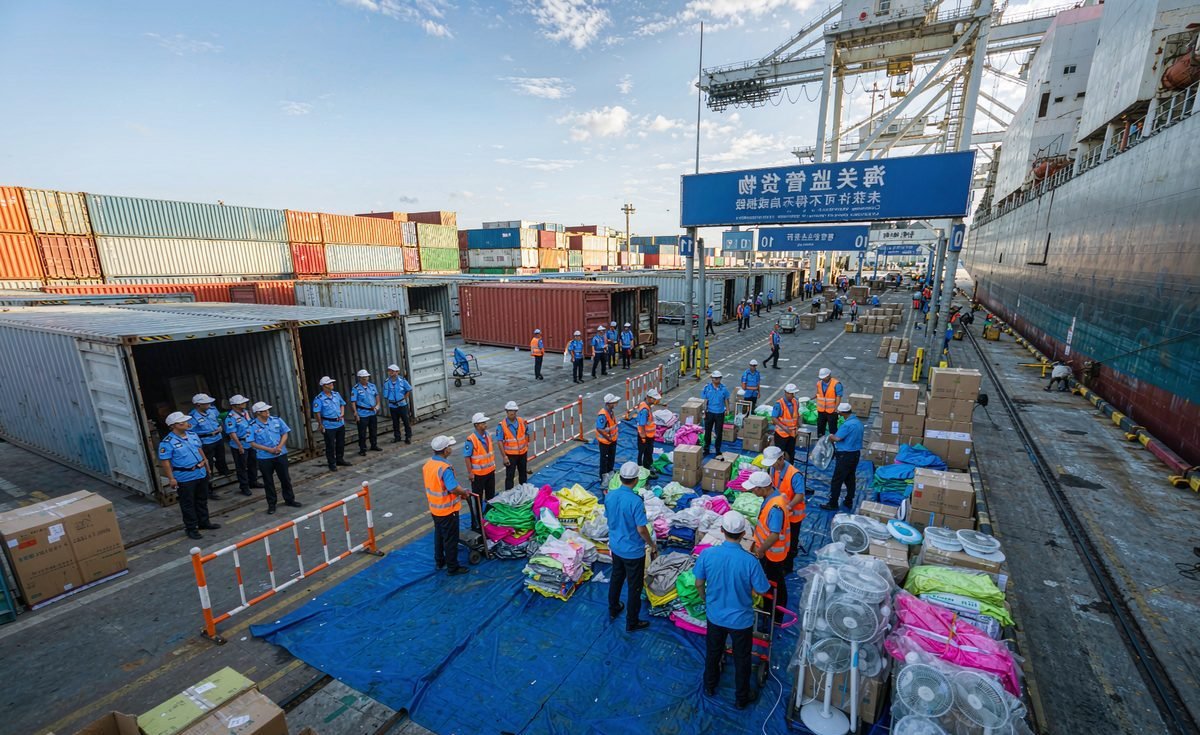
Rough seas damage surprisingly little containerized cargo. The real winter enemy is condensation. A container loaded in a cold northern port and sailed to a warm climate goes through repeated dew cycles: moisture in the air and packaging condenses on the steel ceiling and rains down onto your cartons — shippers call it "container rain." Cardboard softens, labels peel, electronics corrode, textiles stain. Our claims experience says moisture damage spikes every winter, particularly for goods shipped from Bohai ports in January–February.
The countermeasures are cheap and boring, which is why they work:
- Container desiccant bags (dry poles or hanging bags) — a few dozen dollars per container, placed before the doors close.
- Moisture-resistant packaging: poly-lined cartons or pallet wraps for paper, textile and electronics cargo.
- Avoid loading wet cargo: timber pallets and cartons stored in cold, damp warehouses carry moisture into the box.
- All-risk cargo insurance: carrier liability excludes many moisture-related losses. Institute Cargo Clauses "A" cover — the standard all-risk benchmark described by Lloyd's market resources — treats container rain as an insurable peril. Our cargo insurance explainer covers what is and is not covered.
How Does Winter Hit Air Freight and Destination Ports?
Air freight's winter problem is northern China's fog. Beijing Capital, Tianjin, Qingdao and Shijiazhuang all record dense-fog days from December through February, and low visibility slows approach rates to a handful of landings per hour. Cargo booked on a passenger belly from a fogged-in hub can slip 24–48 hours with no rebooking fee and no apology; freighter services out of Shanghai Pudong, Guangzhou and Hong Kong are largely immune, which is why our winter air bookings route south by default when the deadline is fixed. Eastern and Central China add a second fog belt — Shanghai and Nanjing haze days compound in December and January — so "one more day" buffers matter on any northern-origin air consignment.
At the destination end, winter is storm season in exactly the ports that receive the most China traffic. Rotterdam, Hamburg, Antwerp and Bremerhaven handle North Sea gales every winter: berths close for hours, pilot movements pause, and yard cranes stop in high wind, so a vessel that arrives on time can still wait 2–4 days for a window. On the US side, New York–New Jersey and the Pacific Northwest see similar storm-driven berthing backlogs, while Los Angeles and Long Beach mostly trade rain for wind. The cumulative effect on a door-to-door promise is real: a China–North Europe service with no weather events runs ~32–35 days port to port, but January–February sailings that hit two storm clusters on arrival routinely add a week.
A short case from last winter: a UK importer with a fixed retail promotion date had a Qingdao-loaded 40GP departing January 9. Gale warnings at Qingdao pushed loading to January 11 — absorbed by the buffer we had built — and the vessel then waited 3 days outside Rotterdam for a storm window. The door-to-door result was 41 days instead of the quoted 35, but the promotion date survived because the buffer was inside the plan, not invented on arrival day. That is winter shipping done right: every risk absorbed in advance, and the client never had to hear about the gales.
Five Winter Shipping Tips from Our Northern-China Desk
- Book the earlier sailing, always. Winter schedule reliability drops industry-wide — analysts such as Sea-Intelligence and Alphaliner publish the seasonal dip every year. The earlier departure absorbs both weather and rollover risk.
- Choose direct services over transshipments in winter, even at a small premium. One connection fewer is one less missed-connection risk in fog or storms. The trade-offs are detailed in our direct vs transshipment comparison.
- Build the buffer into your promise dates, not just your hopes. Add 3–7 days for northern-origin cargo December–March, and tell your customer the buffered date.
- Order desiccants with the container, not after the damage claim. For moisture-sensitive goods, make them a standard line item.
- Watch the CNY overlap. If CNY falls in February, treat all of January as pre-holiday peak: confirm production completion dates in December and lock sailings before the year turns.
Winter shipping from China is not something to avoid — it is something to plan for. The northern ports stay open, the sailings run weekly, and the risks are the kind you can buy down: earlier bookings, direct routes, desiccant bags, and insurance. What you cannot buy back is a missed deadline caused by a fog day you never buffered for. If your winter cargo is in production now, send us the route and the deadline — we will map the realistic schedule, flag the weather-exposed legs, and quote the direct service that protects your dates.
Frequently Asked Questions
Does winter weather really delay shipping from China?
Yes, mainly on northern routes and air freight. Ports like Tianjin, Qingdao and Dalian face strong winds, fog and occasional ice that close channels or slow berthing for hours to days each winter. Air hubs including Beijing, Tianjin and Qingdao see fog-related flight delays, and destination ports in Northern Europe and North America add their own winter berthing backlogs. Southern ports like Shenzhen and Ningbo are far less affected.
Which Chinese ports have the most winter delays?
Tianjin, Dalian, Qingdao and Yingkou on the Bohai Sea and northern Yellow Sea coast experience the most winter disruption: seasonal winds, dense fog from December through March, and light ice in severe years. Shanghai and Ningbo see mostly fog and wind events, while Shenzhen, Guangzhou and Xiamen in the south have the mildest winters and the fewest weather-related port closures.
How much extra transit time should I plan for in winter?
Build a 3–7 day buffer into winter shipments on northern and transpacific routes, and 2–5 days on Asia–Europe services that transit weather-affected destination ports. Individual weather events are unpredictable, but industry schedule-reliability data from analysts like Sea-Intelligence consistently shows on-time performance dipping in winter months. Cargo with fixed deadlines should book earlier sailings, not later ones.
Is cargo safe from cold-weather damage in containers?
Mostly yes, but condensation is the real winter risk. As vessels move from cold northern latitudes to warmer climates, moisture condenses inside containers — "container rain" — which can damage cardboard, textiles and electronics. Mitigate with desiccants (container dry bags), moisture-resistant packaging, proper ventilation choices, and all-risk cargo insurance for high-value goods.
Should I avoid shipping from northern China in winter?
No, but plan smarter. Northern ports stay open all winter; disruptions are measured in days, not weeks. Ship from Tianjin or Qingdao as normal, but add schedule buffer, prefer direct services over transshipments that add connections in bad-weather ports, and confirm cut-off dates with your forwarder before the busiest pre-Chinese New Year sailings in January.
- Winter 2027 Navigation Risks: Northern China Ports in Ice Season
- Chinese New Year: How Long Do Port & Factory Delays Last?
- What Does It Cost to Ship Stationery & Office Supplies from China? Cost Factors Explained
- How Much Cargo Fits in a 40ft Container? Quick Estimation
- What Does It Cost to Ship Steel & Metal Products from China? Cost Factors Explained
- How to Load Agricultural Machinery into a Container Without Damage
Get Today's Rate & Lock Your Discount
Waymore Shipping offers FCL & LCL ocean freight from every major port in China — Shanghai, Ningbo, Shenzhen, Guangzhou, Qingdao, Xiamen, Tianjin and more. Rates updated weekly with carrier discounts.