Air Freight from China to Morocco: Costs & When to Use It
- Late-2026 rates: USD 3.5–6.0/kg Shanghai/Guangzhou → Casablanca (CMN), all-in adds USD 120–220 of fixed fees.
- Transit: 3–6 days airport-to-airport, 5–9 days door-to-door via Dubai, Doha, Istanbul or Paris hubs.
- Chargeable weight = greater of actual kg and volume ÷ 6000 — bulky light cargo is priced on volume.
- Air wins under ~150–200 kg, for samples, spare parts, electronics and high value-density goods; sea wins above ~500 kg.
- Electronics to Morocco still need NM conformity certificates even when flying — plan documents before booking.
Air freight from China to Morocco costs about USD 3.5–6.0 per kg on general cargo from Shanghai or Guangzhou to Casablanca in late 2026, arrives in 3–6 days airport-to-airport, and makes sense mainly for shipments under 200 kg, urgent spare parts, samples and high-value electronics. Above roughly 500 kg of dense cargo, sea freight is almost always more economical.
Most China–Morocco volume moves by sea — but our air desk books daily capacity on this routing, and the buyers who use it well treat air as a precision tool, not an emergency lever. This article gives you the rate structure, the weight math that surprises newcomers, and the decision framework we use with clients.
How Much Does Air Freight from China to Morocco Cost?
Indicative November 2026 levels to Casablanca Mohammed V International (CMN), the entry point for nearly all Moroccan air cargo:
| Weight Break | Rate per kg (USD) | Typical Use Case |
|---|---|---|
| +45 kg | 5.20–6.00 | Samples, small urgent parcels |
| +100 kg | 4.40–5.30 | Spare parts, fashion top-ups |
| +300 kg | 3.90–4.70 | Electronics, mid-size orders |
| +500 kg | 3.50–4.30 | Urgent production restocks |
| +1000 kg | 3.30–4.00 | Rarely competitive vs sea/air hybrid |
Fixed charges on top: China pickup (USD 60–180 by city), export customs declaration (USD 30–60), airport handling and AWB fee (USD 40–80), and at CMN, Moroccan airport clearance plus delivery — USD 90–200 for Casablanca city. Moroccan import duty (2.5–25% by product) and 20% VAT apply to air cargo exactly as to sea, calculated on the higher air CIF value. That last point matters: because air freight inflates CIF, the absolute tax bill rises too — another reason air is for goods whose value justifies it.
Routing note: there are no direct freighters China–Morocco; everything connects via Gulf hubs (DXB, DOH), Istanbul (IST) or European points (CDG, MAD). Connection quality differs more between forwarders than headline rates do — our commitments use routings we monitor weekly. For the sea-side economics on this lane, see our China–Morocco container cost breakdown.
How Is Chargeable Weight Calculated? (The Mistake That Doubles Bills)
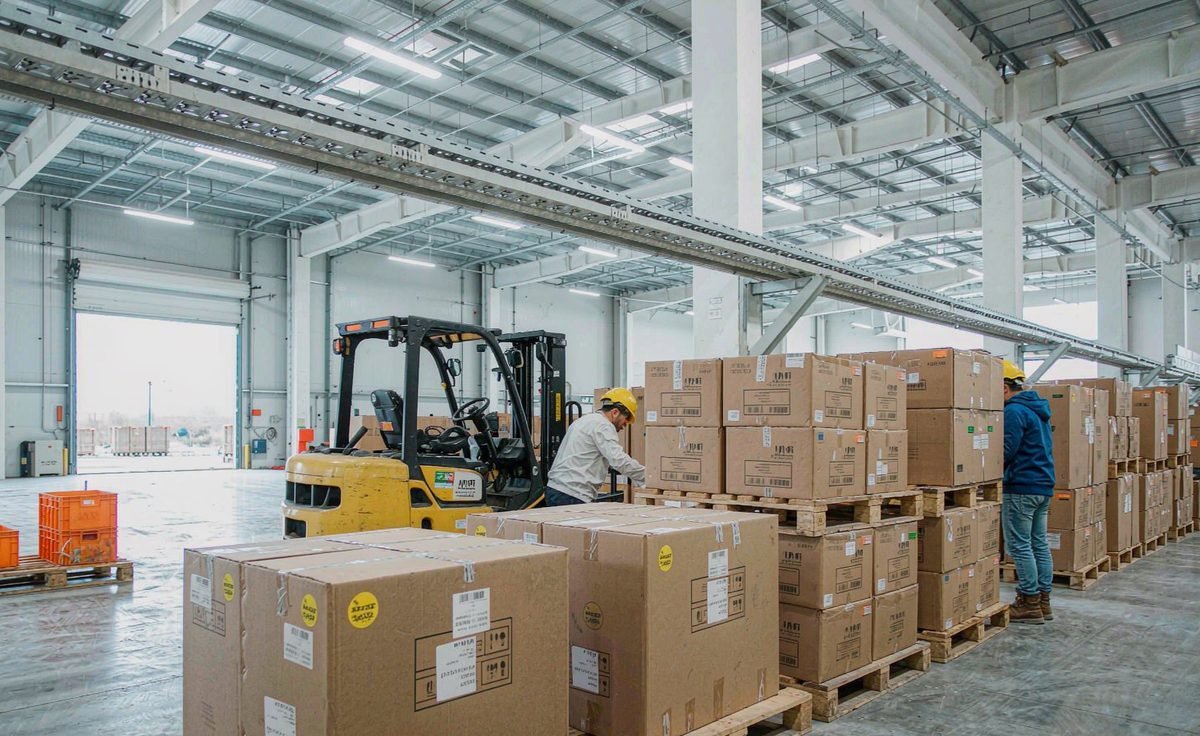
Airlines charge the greater of actual weight and volumetric weight, where volumetric weight (kg) = length × width × height (cm) ÷ 6000.
Examples from real quotes we ran in October 2026:
| Cargo | Cartons | Actual Weight | Volumetric Weight | Charged As |
|---|---|---|---|---|
| LED drivers (dense) | 8 × 45×35×30 cm | 96 kg | 50 kg | 96 kg → USD ~430 |
| Baby strollers (bulky) | 10 × 60×50×40 cm | 85 kg | 200 kg | 200 kg → USD ~940 |
| Phone cases (very light) | 6 × 50×40×30 cm | 14 kg | 120 kg | 120 kg → USD ~590 |
The stroller case shows the trap: actual weight 85 kg, billed 200 kg. Before you decide on air, run the volumetric math — our volumetric weight formula guide walks through it with more worked examples, and the broader air-vs-sea trade-offs are in air freight vs sea freight compared.
When Does Air Freight Beat Sea Freight to Morocco?
Choose air when:
- Shipment is under ~150–200 kg — below that, sea LCL's fixed origin/destination fees plus 5+ weeks of transit rarely justify the saving.
- Value density is high (goods worth USD 30+/kg): phones, drones, watch movements, jewelry, precision tooling. Freight is a small share of value, so speed costs little in percentage terms.
- It's urgent and specific: a machine-down spare part, a compliance sample for a Moroccan buyer, a launch stock for Ramadan-season retail.
- Cash flow matters: sea freight ties up inventory capital for 6+ weeks; air converts it to sellable stock in under 10 days.
Stick with sea when:
- Cargo exceeds ~500 kg of dense goods — the per-kg air price gap becomes a chasm (a 1,000 kg machine shipment at USD 4/kg is USD 4,000+ versus ~USD 600 as LCL).
- Cargo is bulky-light (furniture, packaging, toys) — volumetric pricing punishes you.
- Lead time is planned: 6 weeks of sea transit is only a problem if you didn't plan for it.
Mini-case: the hybrid play
A Casablanca electronics distributor ordered 3,600 kg of accessories ahead of the 2026 back-to-school window. We flew 400 kg of best-sellers (USD ~1,720) to keep shelves stocked and shipped the remaining 3,200 kg by a direct ocean loop (USD ~3,100) arriving five weeks later. Total premium over all-sea: under USD 1,200 — versus an all-air cost above USD 13,000. Splitting the shipment is the single most underused tactic on this lane.
What Documents and Rules Apply to Air Cargo into Morocco?
- Air Waybill (AWB) replaces the ocean B/L; same consignee discipline — your Moroccan entity with ICE number.
- Commercial invoice, packing list, certificate of origin — identical set to sea freight; Moroccan customs treats the DUM declaration the same.
- Battery rules: lithium batteries fly under IATA DG rules — UN3480/UN3481 with state-of-charge and packaging limits. If your goods contain batteries, flag it at quotation; not all Morocco routings accept them. See IATA for the framework, and our battery shipping guide for the practical version.
- NM conformity certificates for electronics and regulated goods are checked at import regardless of transport mode.
- Dangerous goods beyond limited quantities need DG declaration and approved carriers — our dangerous goods guide covers what's shippable from China.
What Does an Air Shipment to Morocco Look Like, Day by Day?
Knowing the timeline helps you decide whether air actually solves your problem. A typical booking we ran in October 2026 — 180 kg of drone spare parts, Guangzhou to Casablanca:
| Day | Step | Note |
|---|---|---|
| Day 0 | Booking confirmed; cargo collected from Shenzhen supplier | Pickup same-day within Pearl River Delta |
| Day 1 | Export declaration + airport handling at CAN | Security screening for lithium-containing goods adds hours |
| Day 2 | Flight CAN → DXB | Gulf hub routing |
| Day 3 | Transit connection DXB → CMN | Good connection: same-day; weak one: +1 day |
| Day 4 | Arrival CMN; deconsolidation; AWB available | Moroccan customs pre-alert already lodged by our partner |
| Day 5 | Clearance (duty + VAT assessed) and delivery in Casablanca | Total door-to-door: 5 days |
Compare that to the ocean reality on this lane: 28–45 days transit plus clearance — roughly a 35–50 day difference. That's the whole air-value proposition in one line. Where the timeline breaks: weekend arrivals (CMN cargo processing slows), DG cargo needing acceptances (add 2–3 days), and document mismatches — an AWB that doesn't match the invoice is as fatal in air freight as at sea. Our air express vs sea express comparison also maps the courier alternative for sub-50 kg parcels.
What Kinds of Cargo Actually Fly on the China–Morocco Route?
Based on our 2026 booking mix to CMN, the cargo profile splits into four clear groups:
- Electronics and accessories (≈40% of our air volume): phones, accessories, drones, LED products. High value density means the USD 4–6/kg freight is under 3% of goods value — air is simply rational.
- Samples and pre-production units (≈25%): the fastest way to close a Moroccan wholesale deal is a sample set in the buyer's hands within a week. One good order repays years of sample airfreight.
- Urgent industrial spares (≈20%): a stopped production line in Tangier's auto cluster justifies almost any freight bill. We've flown single 8 kg gearbox sensors that saved weeks of downtime.
- Fashion and seasonal top-ups (≈15%): Moroccan retail runs hard ahead of Ramadan and summer; mid-season restocks by air keep shelves full while the bulk moves by sea — the hybrid strategy below.
How Do You Cut Air Freight Costs Without Cutting Corners?
- Hit the next weight break: the difference between the +100 kg and +300 kg rates can be 15–20%. Adding 20 kg of low-urgency cartons to reach 300 kg sometimes costs less than shipping 280 kg — always ask us to price both sides of the break.
- Compress the volume: volumetric pricing means packaging design is freight cost. Two clients cut air spend 12–18% purely by switching to slimmer cartons and vacuum-packed soft goods.
- Use the split-shipment model: as the mini-case above showed, flying the urgent 10% and sailing the rest typically beats all-air by 80–90% on total spend.
- Consolidate at our CFS before airport: palletizing loose cartons from several suppliers into one AWB reduces per-shipment fixed fees and improves the weight break simultaneously — the same logic as our ocean consolidation service, applied to air.
- Book Tuesday–Thursday departures: capacity is loosest midweek; weekend-crowded Friday and Sunday routings price firmer on the Gulf hubs.
- Guard the chargeable weight at quotation: get the volumetric calculation in writing before committing, per the formula section above — disputes after flying are unresolvable, as our quote-comparison guide explains.
What About Air Freight for E-commerce Sellers Shipping to Morocco?
Morocco's e-commerce sector is growing fast, and small sellers ask whether parcel-by-air consolidation makes sense. The pattern that works: consolidate customer orders weekly at our CFS into one airport-to-airport shipment, then use a local last-mile partner in Casablanca for distribution. Below ~30 kg per week, international couriers (DHL/FedEx-style) are simpler despite a higher per-kg rate — they handle clearance end-to-end. Above that, consolidated air freight with a clearance partner typically runs 40–60% cheaper per kg with 2–3 extra days of transit. The threshold shifts with duty rates on your category; if your goods are in Morocco's 40% textile band, model the tax line first — it will dominate the decision more than freight mode. Our small parcels vs LCL guide frames the same threshold logic for ocean freight.
Frequently Asked Questions
How much does air freight from China to Morocco cost?
In late 2026, general cargo rates run roughly USD 3.5–6.0 per kg from Shanghai (PVG) or Guangzhou (CAN) to Casablanca (CMN), with 45 kg shipments at the top of the range and 300+ kg shipments at the bottom. Add pickup, export clearance and airport handling of roughly USD 120–220 per shipment.
How long does air freight from China to Morocco take?
Airport-to-airport transit is 3–6 days on routings via Dubai, Doha, Istanbul or Paris. Door-to-door including pickup, export clearance and Moroccan airport clearance, plan 5–9 days total.
When is air freight worth it for Morocco shipments?
Air freight wins for shipments under roughly 150–200 kg, high-value density goods above USD 30–40 per kg of product value, samples and urgent spare parts, and time-critical retail launches. For dense bulk cargo over 500 kg, sea freight is almost always the right call.
How is chargeable weight calculated for air freight?
Airlines charge the greater of actual weight and volumetric weight. Volumetric weight = length × width × height in cm ÷ 6000. A 60×50×40 cm carton of 12 kg has a volumetric weight of 20 kg, so you pay for 20 kg. Light, bulky cargo is priced on volume, not weight.
- China to Morocco Customs Clearance: Documents, Duties & Process
- DDP Shipping from China to Morocco: Costs, Rules & Pitfalls
- How Much Does It Cost to Ship a Container from China to Morocco?
- Air Freight from China to Kuwait: Costs & When to Use It
- Air Freight from China to Spain: Costs & When to Use It
- Air Freight from China to India: Costs & When to Use It
Get Today's Rate & Lock Your Discount
Waymore Shipping offers FCL & LCL ocean freight from every major port in China — Shanghai, Ningbo, Shenzhen, Guangzhou, Qingdao, Xiamen, Tianjin and more. Rates updated weekly with carrier discounts.