Shipping from Guangzhou to Dubai: Rates, Transit Times & Booking Guide
- Direct Nansha→Jebel Ali strings take 18–22 days; via-Singapore services run 20–24 days.
- November 2026 planning rates: 40HC ≈ USD 1,500–2,100, 20GP ≈ USD 1,000–1,400, LCL ≈ USD 28–45/CBM.
- UAE customs needs a trade license, importer code and (often attested) certificate of origin; duty is a flat 5% on most goods.
- Arabic labeling and ESMA/GSO conformity rules catch many first-time importers — fix them before shipping, not at Jebel Ali.
- Jebel Ali is also the re-export hub for the wider GCC — a big reason Dubai-bound cargo routes there.
Shipping from Guangzhou to Dubai takes about 18–22 days by direct FCL service to Jebel Ali and costs roughly USD 1,000–1,400 for a 20GP or 1,500–2,100 for a 40HC all-in ocean freight as of November 2026. It is one of the fastest, cheapest and simplest major lanes out of South China — but UAE-specific rules on labeling and product conformity still trip up unprepared importers.
Our Guangzhou desk books Jebel Ali cargo weekly for UAE traders, GCC distributors and companies using Dubai as a re-export base for Saudi Arabia, Oman and East Africa. Here is the full operational picture: services, rates, documents, and the labeling rules that decide whether your cargo clears in a day or sits for weeks.
Service Options: Guangzhou to Jebel Ali
The Middle East trade is short, frequent and competitive — you have more service choices on this lane than on almost any other from South China:
| Service type | Load terminal | Typical routing | Transit | Frequency |
|---|---|---|---|---|
| FCL direct | Nansha | Nansha → Singapore → Jebel Ali (transit call only) | 18–22 days | 2–3 weekly |
| FCL via hub | Nansha / Shekou | Via Singapore or Port Klang onto Gulf feeder | 22–28 days | Weekly |
| LCL consolidation | Nansha CFS | Weekly consol on direct strings | 22–27 days + release | Weekly (Wed cut-off) |
| Air freight | Guangzhou Baiyun (CAN) | CAN → DXB direct/1-stop | 1–3 days | Daily |
Carriers on the strings include COSCO, Maersk, MSC, CMA CGM and Emirates Shipping Line. Jebel Ali's T2 and T3 terminals (DP World) discharge most China-origin boxes; transit is honest and congestion rare, though check IMF PortWatch during regional disruptions — the 2024 Red Sea period pushed Gulf strings onto Cape routings and stretched transits by up to two weeks, a pattern market analysts like Sea-Intelligence documented extensively.
How Much Does It Cost to Ship from Guangzhou to Dubai?
The Gulf lane is among the lowest-rate long-haul trades from China. Mid-November 2026 bands from our Guangzhou desk:
| Shipment type | Rate band (USD) | Typical cargo |
|---|---|---|
| 20GP FCL | 1,000 – 1,400 | Building materials, machinery parts, dense cargo |
| 40GP FCL | 1,300 – 1,800 | Mixed dense cargo |
| 40HC FCL | 1,500 – 2,100 | Consumer goods, electronics, hardware, auto parts |
| LCL | 28 – 45 per CBM | Jebel Ali destination charges ≈ USD 20–35/CBM |
| Air freight | 2.50 – 4.00 per kg (≥100 kg) | CAN→DXB direct; electronics, samples, urgent stock |
Dubai-bound rates move with the general market pulse visible on the Freightos Baltic Index and Drewry WCI, plus two regional factors: Ramadan/Eid demand surges (typically adding USD 100–300 per box in the pre-Ramadan window) and repositioning after Gulf carriers re-deliver containers elsewhere.
UAE destination costs and taxes
- Terminal & documentation at Jebel Ali: typically AED 800–1,500 (~USD 220–400) per box including THC, BL and delivery order fees.
- Duty: a flat 5% CIF on most goods — one of the world's simplest tariff regimes. Tobacco, alcohol and a few categories are exceptions; some goods enter free via free zones for re-export.
- VAT: 5% UAE VAT applies on imports for local consumption; free-zone traders with proper designation can often avoid it on re-export flows.
- Storage/demurrage: Jebel Ali free time is reasonable but not generous; DubaTrade (Dubai Customs' platform) clearance is fast when documents are right, and most boxes clear within 24–48 hours of discharge. Our demurrage guide covers the free-time mechanics.
UAE Compliance: The Rules That Actually Bite
- Trade license & importer code — the consignee must hold a valid UAE trade license and be registered with Dubai Customs (or the relevant emirate). We check this before issuing BL drafts; wrong consignee details are the top reason boxes sit at Jebel Ali.
- Certificate of origin — issued by CCPIT or customs in China; some consignees (especially for LC payments or government tenders) require it attested by the UAE embassy. Attestation takes days — build it into the timeline.
- Arabic labeling — UAE requires Arabic on retail packaging for many consumer categories (alongside or instead of English). Cargo arriving without compliant labels can be held pending re-labeling at importer cost.
- ESMA/GSO conformity — regulated products (electronics, toys, cosmetics, some food-contact items) need conformity certificates under Emirates Authority schemes; Dubai Municipality and other authorities enforce at clearance for relevant categories.
- Restricted goods — drones, some radio equipment, and various chemicals need prior approvals. When in doubt, send us the product and we'll verify before you book, not after it ships.
On the China export side, declaration at Nansha is routine — our export documents guide covers the checklist. For the country-level UAE picture including DDP mechanics, our China-to-UAE customs guide goes deeper.
Mini-Case: Consol to Jebel Ali, Re-export to Riyadh
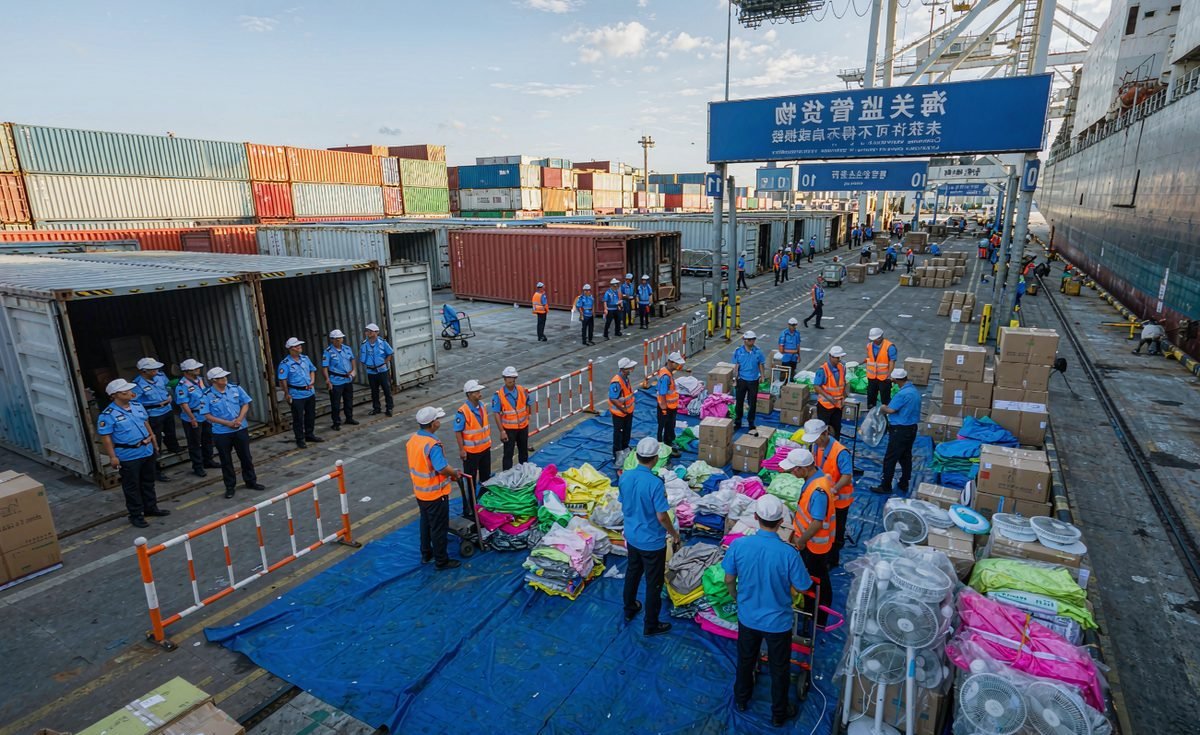
A Dubai trading company sourced hardware from three Pearl River Delta suppliers in November 2026 — 4.1 CBM from Foshan, 3.2 CBM from Zhongshan, 2.6 CBM from Dongguan. None was worth a full box; three separate LCLs would have tripled destination charges. We consolidated all three at Nansha under one BL (cut-off Wed Nov 11, ETD Nov 14), shipped to Jebel Ali, and his free-zone entity re-exported part of the volume to Riyadh within a week of discharge.
Door-to-release ran 26 days, with one set of destination charges instead of three — a pattern that repeats across most of our Gulf consolidations. If you buy from multiple factories, our consolidation guide and our 1688/Taobao consolidation guide both explain the mechanics. And for deciding between ocean and air on Gulf replenishment, see air vs sea freight.
The Gulf Booking Calendar: Ramadan, Eid and Summer
The Dubai trade has a demand clock unlike any other lane we run, and it's driven by the Islamic calendar plus Gulf summer patterns:
- 8–10 weeks before Ramadan: the year's strongest window. UAE traders stock food, consumer goods and gift categories ahead of the holy month; space on direct strings tightens and carriers apply pre-Ramadan surcharges, typically USD 100–300 per box.
- Ramadan itself: demand cools at destination; port operations continue on adjusted hours. Good months to ship cargo that isn't Eid-linked.
- Eid windows (both): a secondary consumption surge; retail replenishment is brisk for two to three weeks after each Eid.
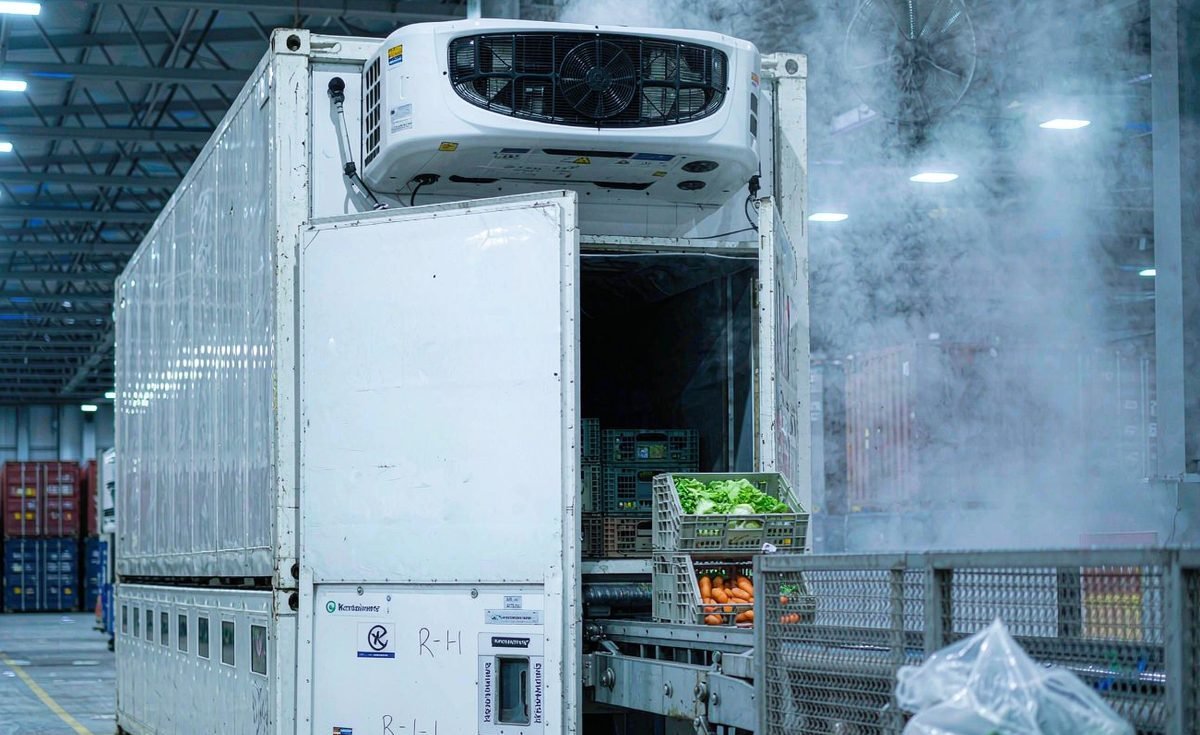
- June–September: extreme heat. Not a transit problem — but a cargo-handling one: heat-sensitive goods (cosmetics, electronics batteries, food) need heat-aware packing, and containers on tarmac can exceed 60°C internally.
- October–February: steady, comfortable baseline demand — the best all-round shipping conditions of the Gulf year.
Because Ramadan shifts ~11 days earlier each Gregorian year, "the pre-Ramadan window" lands in a different month annually — check the dates for your shipping year and plan bookings 6–8 weeks ahead of them, not 2. Our 12-month freight season calendar keeps the dates current.
Air Freight to Dubai: When the 1–3 Day Option Pays
Guangzhou–Dubai is one of the lanes where air freight genuinely competes with sea more often than importers expect — the price gap per kilo is modest and the transit gap enormous:
- Air economics: at USD 2.50–4.00/kg for 100 kg+ shipments from Baiyun (CAN) to DXB, a 500 kg urgent consignment costs roughly USD 1,500–2,000 — comparable to a 20GP by sea, but in 2 days instead of 20.
- Volumetric weight: light, bulky cargo is billed on dimensional weight (length × width × height in cm ÷ 6000); dense cargo ships at true weight. Our volumetric weight guide has the formula.
- Best-fit cargo: phone accessories, watches, spare parts, samples for trade-show deadlines, and top-up stock between sea shipments.
- Battery rules: lithium batteries ship under IATA dangerous-goods provisions with UN3480/UN3481 classifications — compliant packing and documentation are non-negotiable; our battery shipping guide covers the requirements.
Five Mistakes We See on the Gulf Lane
- Consignee details that don't match the trade license. Dubai Customs matches the BL against the importer's registered name and code; a mismatched spelling stalls the box at Jebel Ali until a corrected BL cycles back from China — five to seven days on a short lane.
- Skipping Arabic labeling to "handle it in Dubai." Re-labeling at destination runs AED 3–8 per carton plus inspection delays; doing it at the Guangzhou factory costs a fraction.
- Shipping without checking conformity status. ESMA/GSO-regulated products from unregistered factories are a seizure risk, not just a delay risk. Verify before production.
- Treating Dubai as the final destination when it's the re-export hub. If the real destination is Riyadh or Muscat, the documentation should be structured for transit from day one — retro-fitting GCC transit paperwork after mainland clearance is expensive.
- Underestimating summer heat. June–September sailings need heat-aware packing for sensitive cargo; we've seen cosmetics and electronics arrive degraded from tarmac dwell alone.
Frequently Asked Questions
How long does shipping from Guangzhou to Dubai take?
Direct FCL services from Nansha to Jebel Ali take about 18–22 days port to port, with some strings via Singapore at 20–24 days. LCL adds 5–7 days for consolidation and release, and air freight from Guangzhou Baiyun runs 1–3 days.
How much does a 40ft container from Guangzhou to Dubai cost?
As of November 2026, an all-in 40HC from Guangzhou Nansha to Jebel Ali typically costs USD 1,500–2,100 in ocean freight plus origin charges; a 20GP runs about USD 1,000–1,400. LCL is roughly USD 28–45 per CBM.
What documents do UAE customs require for imports from China?
You need a UAE trade license, an importer code with Dubai Customs, a certificate of origin attested as required, a commercial invoice and packing list, and a bill of lading. Regulated products also need ESMA/GSO conformity certificates and Arabic-language labeling.
Is Jebel Ali the right port for all UAE cargo?
Jebel Ali handles most container volume and is ideal for Dubai and onward GCC re-export, especially via its free zone. Port Rashid serves central Dubai conveniently; Khalifa Port (Abu Dhabi) suits that emirate. Northern emirates cargo often still clears through Jebel Ali.
Do you offer DDP shipping from Guangzhou to Dubai?
Yes — DDP Dubai is one of our most-booked services, covering export clearance, ocean freight, Dubai Customs entry, 5% duty and final delivery. See the general framework in our DDP to UAE guide, then send your packing list for a specific door quote.
- Shipping from Guangzhou to Rotterdam: Rates, Transit Times & Booking Guide
- Shipping from Tianjin to Dubai: Rates, Transit Times & Booking Guide
- Shipping from Qingdao to Dubai: Rates, Transit Times & Booking Guide
- Shipping from Guangzhou to Santos: Rates, Transit Times & Booking Guide
- Shipping from Ningbo to Dubai: Rates, Transit Times & Booking Guide
- Shipping from Guangzhou to Lagos: Rates, Transit Times & Booking Guide
Get Today's Rate & Lock Your Discount
Waymore Shipping offers FCL & LCL ocean freight from every major port in China — Shanghai, Ningbo, Shenzhen, Guangzhou, Qingdao, Xiamen, Tianjin and more. Rates updated weekly with carrier discounts.